Auto Parts

lsd for drifting

Is LSD Good for Drifting?

Drifting isn’t just a flashy way to turn heads; it’s a precise driving skill that demands the right equipment. If you’ve ever wondered how drivers maintain those controlled slides, the secret often lies in their differential setup. The Limited Slip Differential (LSD) is a critical component in achieving those smooth, controlled drifts. But is LSD really the best choice for drifting? Let’s dive into the mechanics and benefits to find out.

Is LSD Good for Drifting? Read More »

Best Differential for Drifting

Choosing the Best Differential for Drifting

In the world of automotive sports, drifting is an art that requires precise control and the right equipment. For a successful drift car, the differential is one of the most critical components. The differential transfers power from the driveshaft to the wheels, allowing them to rotate at different speeds when turning. However, not all differentials meet the demands of drifting.

Choosing the Best Differential for Drifting Read More »

Limited Slip vs Locking Differential

Limited Slip vs Locking Differential

When it comes to enhancing the off-road capabilities of your vehicle, the choice between a Limited Slip Differential (LSD) and a Locking Differential (Locker) is crucial. Each type of differential has its advantages and is suited to different driving conditions. Understanding the key differences, benefits, and real-world applications can help you make an informed decision.

Limited Slip vs Locking Differential Read More »

Torsen limited slip differential

What is a Limited-Slip Differential (LSD)?

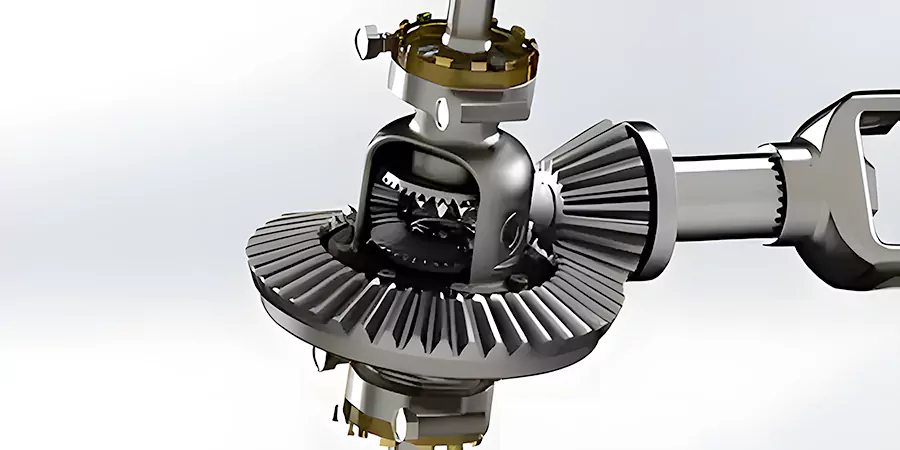
L.S.D stands for Limited-Slip Differential, a term that many experienced car enthusiasts are familiar with. In a regular household car, there is typically a differential placed in the center of the left and right drive axles, which serves to distribute torque. However, a regular differential is not a limited-slip differential. In terms of functionality and performance, the difference between the two can be understood as night and day. Simply put, a limited-slip differential allows two drive axles to rotate at different speeds while minimizing the difference in their rotational speeds. The key difference between a limited-slip differential and a regular differential is that the former can finely adjust the speed difference, whereas the latter distributes speed more uniformly.

What is a Limited-Slip Differential (LSD)? Read More »

Clutch-type Limited Slip Differential Structure

Understanding Clutch-type Limited Slip Differential

In the world of racing, many enthusiasts equip their vehicles with LSDs (Limited Slip Differentials) to enhance the vehicle’s power response in corners. However, misconceptions about LSDs have arisen, partly due to a lack of understanding among enthusiasts and partly due to imprecise installation practices. Today, I’ll take this opportunity to share my knowledge with

Understanding Clutch-type Limited Slip Differential Read More »

Limited Slip Differential

Limited Slip Differential Advantages and Disadvantages

A limited-slip differential (LSD) is a significant advancement in automotive engineering designed to tackle the issue of uneven torque distribution between a vehicle’s drive wheels. Unlike a traditional open differential, which directs power to the wheel with the least resistance, an LSD smartly allocates torque to both wheels. This improves traction and stability, enabling vehicles to handle different terrains, sharp corners, and slippery conditions with greater control and efficiency.

Limited Slip Differential Advantages and Disadvantages Read More »

Mazda's Asymmetric Limited Slip Differential

Detailed Look at Mazda’s Asymmetric Limited Slip Differential

An asymmetric limited-slip differential (LSD) is a sophisticated component in a vehicle’s drivetrain designed to provide variable torque distribution to the wheels, enhancing traction and handling, especially under challenging driving conditions. Mazda has integrated this technology into some of their performance models, aiming to deliver a superior driving experience by optimizing traction and stability.

Detailed Look at Mazda’s Asymmetric Limited Slip Differential Read More »

Audi's Quattro System

Is the Torsen Slip Differential the Key Technology in Audi’s Quattro System?

The origin of Quattro can be traced back to a forest in Finland, located within the Arctic Circle. During a test drive, Audi’s head of testing was driving a 75 hp Volkswagen Iltis 4WD off-road vehicle, following behind a convoy of front-wheel-drive cars based on the Audi 100, which had 200 horsepower. Due to the significant power difference, the Audi 100 easily outpaced the Volkswagen Iltis on straight roads. However, the situation reversed on bends. This interesting observation led them to conclude that the Volkswagen Iltis’ 4WD system was the reason for its superior performance on bends. They decided to transplant the 4WD system from the Volkswagen Iltis to Audi’s passenger cars. This happened in the year 1977.

Is the Torsen Slip Differential the Key Technology in Audi’s Quattro System? Read More »

Shopping Cart