
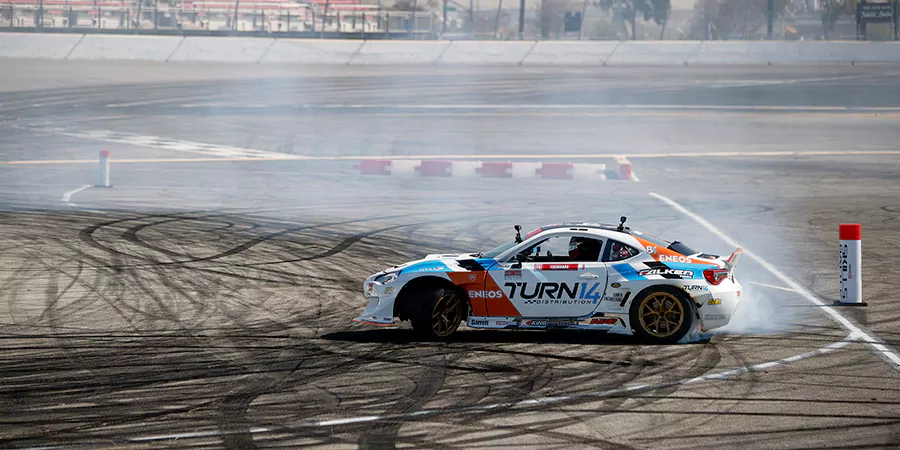
Drifting is a captivating driving technique and motorsport where the driver maintains the vehicle in a controlled slide around a turn. This skill requires precision, practice, and often a specially modified vehicle. This article explores the fundamentals of drifting, the vehicles best suited for this practice, and how to assess the quality of a drift.
The Fundamentals of Drifting
Drifting involves inducing oversteer and maintaining the vehicle’s sideways motion through a corner while controlling the car’s speed and direction. Key techniques used in drifting include:
- Power Oversteer Drift
This technique involves applying full throttle to break traction in the rear wheels, inducing oversteer and initiating a drift.
As the vehicle enters a corner, the driver rapidly accelerates, transferring weight to the rear wheels and causing them to lose grip. This allows the rear of the car to slide outwards, initiating the drift.
Controlling the drift in a power oversteer requires precise throttle modulation to maintain the slide angle and prevent the car from spinning out.
- Handbrake Drift
In this technique, the driver uses the handbrake to lock the rear wheels, initiating a slide and inducing oversteer.
As the driver approaches a corner, they pull the handbrake while simultaneously turning the steering wheel. This locks the rear wheels, causing them to lose traction and the rear of the car to slide out.
Once the drift is initiated, the driver must modulate the handbrake and throttle to control the slide and maintain the desired drift angle.
- Brake Drift
Brake drift involves using heavy braking to shift weight to the front wheels, causing the rear wheels to lose traction and initiating a slide.
As the driver enters a corner, they apply heavy braking, transferring weight to the front wheels. This unloads the rear wheels, causing them to lose grip and the rear of the car to slide out.
Controlling a brake drift requires precise modulation of the brakes and throttle to maintain the slide and prevent the car from spinning.
- Clutch Kick Drift
This technique involves quickly depressing and releasing the clutch to send a burst of power to the rear wheels, inducing oversteer.
As the driver enters a corner, they quickly depress the clutch, then immediately release it while simultaneously applying throttle. This sends a burst of power to the rear wheels, breaking traction and initiating the drift.
Controlling a clutch kick drift requires precise throttle modulation and steering input to maintain the slide and control the drift angle.
- Feint Drift
The feint drift technique is initiated by making a quick steering input in the opposite direction of the turn, followed by a sharp turn into the corner.
As the driver approaches a corner, they make a quick steering input in the opposite direction of the turn, then quickly steer into the corner. This shift in weight causes the rear wheels to lose grip and the rear of the car to slide out.
Controlling a feint drift requires precise steering and throttle control to maintain the slide and control the drift angle.
Vehicle Requirements for Drifting
While many cars can technically drift, certain features and modifications enhance a vehicle’s drift capability:
- Rear-Wheel Drive (RWD): Essential for drifting as it allows the rear wheels to break traction more easily.
- Manual Transmission: Provides better control over power delivery and vehicle speed.
- Limited Slip Differential (LSD): Ensures even torque distribution between rear wheels, improving traction and stability.
- Enhanced Suspension: Upgraded suspension systems offer better handling and stability during a drift.
- Increased Power: More power from the engine helps maintain higher speeds and more controlled drifts.
- Improved Brakes: Upgraded braking systems ensure better control and safety.
- Lightweight Body: Reducing the vehicle’s weight enhances agility and responsiveness.
- Specialized Tires: Drift-specific tires provide the necessary grip and durability under extreme conditions.
Common drift cars include the Nissan Silvia (S13, S14, S15), Toyota AE86, BMW E36 and E46, Mazda RX-7, and Ford Mustang. These vehicles are popular for their rear-wheel drive layout, modifiability, and performance characteristics.
Evaluating Drift Quality
Several factors contribute to the quality of a drift, which can be assessed using the following criteria:
- Drift Angle: The degree to which the car deviates from its direction of travel. An optimal drift angle should be maintained without oversteering excessively or understeering.
- Vehicle Control: The driver’s ability to keep the car stable and controllable throughout the drift, avoiding jerky movements or loss of control.
- Drift Line: The path taken by the vehicle during the drift. Ideally, the car should follow a smooth, precise line through the turn.
- Continuous Drifting: The ability to maintain a drift through multiple turns without interruption.
- Drift Speed: Maintaining a high but manageable speed during the drift adds to the difficulty and impressiveness.
- Tire Smoke: The amount of smoke produced by the tires can indicate the intensity and power of the drift, enhancing the visual spectacle.
- Audience Reaction: In competitions or shows, audience engagement and reaction can reflect the drift’s appeal.
- Drift Stability: Consistently maintaining the drift without the car snapping back into grip or spinning out.
- Drift Duration: The length of time the vehicle remains in a drift. Longer drifts showcase better control and technique.
- Technical Difficulty: The complexity of the drift maneuvers, such as tandem drifting (multiple cars drifting in sync) or high-speed entries, adds to the overall quality.
Conclusion
Drifting is both a thrilling motorsport and a demanding driving technique that requires skill, practice, and often specialized vehicles. By understanding the principles, vehicle requirements, and evaluation criteria, enthusiasts can appreciate the nuances of drifting and work towards mastering this exhilarating art. Whether on a professional track or in a controlled environment, the pursuit of the perfect drift continues to captivate drivers and spectators alike.
