
Whether you’re sourcing drivetrain components for a performance vehicle, managing a commercial fleet, or building a race car from the ground up, the differential is one of the most consequential decisions you’ll make. And among all differential types, the limited slip differential — commonly called an LSD — sits at the intersection of performance, reliability, and everyday usability.
This guide breaks down exactly what a limited slip differential is, how it works, the key types available, and what to look for when specifying or purchasing one. If you’re comparing suppliers or planning a custom build, this is the technical reference you need.
What Is a Limited Slip Differential?
A limited slip differential is a type of differential that allows the two output shafts — typically the driven wheels — to rotate at different speeds under normal conditions, while automatically transferring torque to the wheel with more traction when slip is detected.
To understand why this matters, consider what a standard open differential does: it always splits torque equally between both wheels. In everyday driving, this works fine. But as soon as one wheel loses traction — on ice, loose gravel, or in a corner — all of the available torque goes to the spinning (low-resistance) wheel, leaving you with zero drive to the wheel that could actually move the vehicle forward.
A limited slip differential solves this. It “limits” how much slip is permitted between the two outputs, and when that threshold is crossed, it biases torque toward the wheel with grip. The result is better traction, improved stability, and more predictable power delivery across a much wider range of conditions.
How Does a Limited Slip Differential Work?
The mechanism behind an LSD depends on the type — but all of them share the same core principle: they create internal resistance that prevents one output shaft from spinning freely relative to the other.
When one wheel begins to slip, the differential’s internal components engage to transfer torque bias to the opposite wheel. This engagement can be triggered by speed difference between the two outputs, by torque load, or by a combination of both — depending on the design.
The amount of torque transfer, the speed of engagement, and the conditions under which the LSD releases are all design variables that differ significantly between types. This is why choosing the right LSD type matters as much as choosing an LSD at all.
Types of Limited Slip Differentials
There are several distinct LSD designs on the market, each with different operating characteristics, maintenance requirements, and ideal use cases. Here is a technical breakdown of the most widely used types.
1. Torsen (Torque-Sensing) Differential
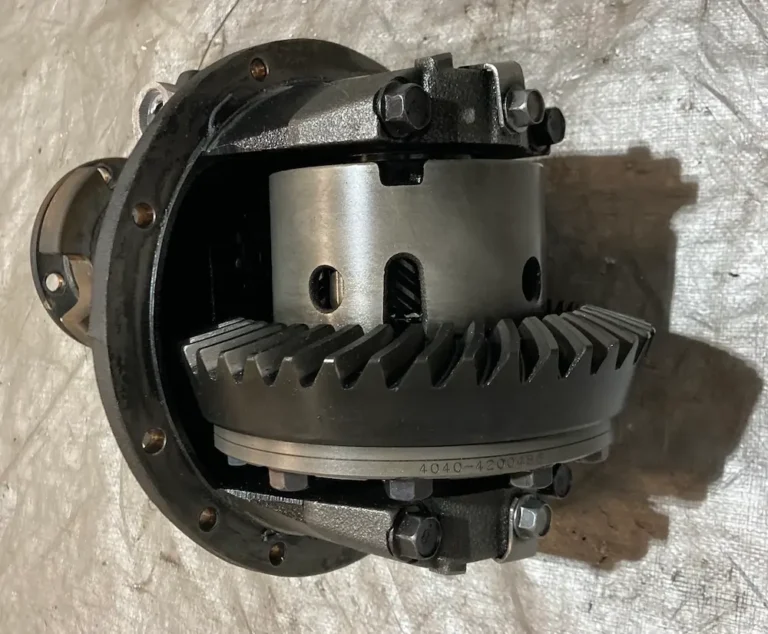
The Torsen differential is a gear-based LSD that operates entirely through mechanical advantage — no clutch plates, no friction modifiers, no electronics. It uses worm gears or helical gears to detect torque differences between the two outputs and transfer load accordingly.
How it works: When both wheels have equal traction, the Torsen behaves like an open differential. The moment torque imbalance occurs, the worm gear geometry creates a self-locking effect proportional to the torque difference, transferring drive to the higher-grip wheel.
Torque bias ratio (TBR): Torsen differentials are rated by their TBR — typically ranging from 2.5:1 to 5:1. A TBR of 3:1 means the unit can send up to three times as much torque to one wheel as the other. Higher TBR values are common in performance and off-road applications.
Best suited for: Passenger vehicles, sports cars, front-wheel-drive applications, track use, and any build where low maintenance and linear response are priorities.
2. Clutch-Type LSD
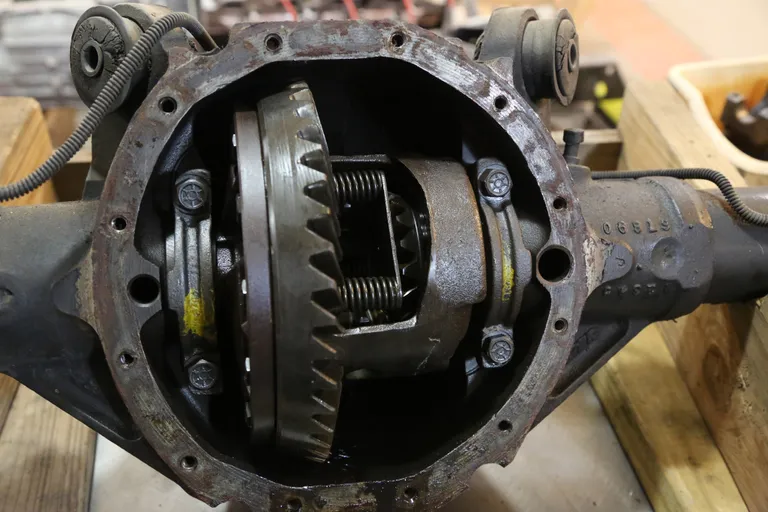
The clutch-type LSD uses a stack of friction discs (clutch packs) to create resistance between the differential housing and the side gears. It is one of the most common LSD types in performance and motorsport applications due to its tunability.
How it works: Spring preload holds the clutch packs in partial engagement. Under torque input, the ramp angles on the pressure ring force the clutch packs to engage further, limiting differential action between the two outputs. Ramp angles can be configured differently for acceleration and deceleration to tailor the handling balance.
Maintenance consideration: Clutch-type LSDs require periodic inspection and rebuild of the friction material. Fluid choice matters — many require a specific LSD additive or dedicated fluid to prevent chatter and maintain correct engagement behavior.
Best suited for: Motorsport, rear-wheel-drive performance builds, drift and circuit racing applications, and vehicles where tunable bias ratios are required.
3. Welded Differential
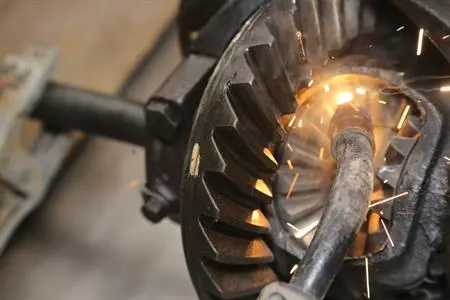
A welded differential — sometimes called a spool, though technically distinct — is a differential case where the spider gears have been welded together, eliminating differential action entirely. Both outputs are locked in a fixed 1:1 ratio at all times.
Performance implications: Maximum traction and torque delivery, zero slip. Both driven wheels always rotate at the same speed regardless of corner geometry or surface conditions.
Trade-off: Because both wheels are forced to rotate together, the inside wheel must scrub during cornering. This increases tire wear significantly and can make the vehicle difficult to drive on high-grip surfaces. On loose surfaces (dirt, gravel, ice), scrub is minimal and traction gains are substantial.
Best suited for: Off-road rock crawlers, straight-line drag applications, entry-level rally, budget builds where ultimate traction is prioritized over tire life and on-road manners.
LSD Type Comparison: At a Glance
| Feature | Torsen | Clutch-Type | Welded |
|---|---|---|---|
|
Engagement Type |
Gear/mechanical |
Friction clutch |
Fixed (no diff) |
|
Torque Bias |
Up to 5:1 |
Adjustable |
100% locked |
|
Maintenance |
Very low |
Regular rebuild |
None |
|
Tunable |
Limited |
Yes |
No |
|
On-road Usability |
Excellent |
Good |
Poor |
|
Typical Use |
Street/Track |
Motorsport |
Off-road/Drag |
|
Cost |
Medium-High |
Medium |
Low |
How to Choose the Right Limited Slip Differential
Choosing an LSD is not a one-size-fits-all decision. The right unit depends on the vehicle platform, the application, and the performance targets. Here are the key factors to evaluate:
Vehicle Type and Drivetrain Layout
Front-wheel-drive vehicles have different LSD requirements than rear-wheel-drive or all-wheel-drive platforms. The torque characteristics, axle loading, and packaging constraints are all different. Torsen-type units are frequently used in FWD and AWD center differentials due to their smooth, automatic response. Clutch-type units are more common in RWD performance and motorsport applications.
Use Case: Street, Track, or Off-Road
- Street use: Prioritize smooth engagement, low noise, and minimal maintenance. Torsen or a well-specified clutch-type with moderate preload is typical.
- Track/circuit use: Adjustable clutch-type LSD with specific ramp angles for the track’s corner profile gives the most competitive advantage.
- Off-road/trail: Mechanical locking differentials or high-preload clutch-type units are preferred. Welded differentials are used where budget is the primary constraint.
- Drag racing: Spool or welded differential for maximum straight-line traction with no cornering requirement.
Torque Capacity and Ring & Pinion Ratio
The LSD must be matched to the engine’s torque output and the final drive ratio. An undersized LSD will wear prematurely or fail under hard use. When sourcing for a high-output engine or supercharged application, always confirm the unit’s rated torque capacity and confirm compatibility with your ring and pinion specification.
Customization and Application-Specific Requirements
Many OEM and aftermarket LSD units are designed for specific vehicle platforms. For custom builds, fleet specifications, or unique application requirements, standard catalog units may not be the right fit. In these cases, working with a manufacturer that offers custom-specified differentials — adjusted for input torque, output spline count, housing dimensions, and bias ratio — delivers a more reliable result than adapting an off-the-shelf product.
Common Limited Slip Differential Applications
Limited slip differentials are used across a wide range of vehicle categories:
- Performance passenger cars and sports cars (factory and aftermarket fitment)
- Racing vehicles across disciplines: circuit, rally, endurance, and drag
- Light commercial vehicles requiring predictable traction in variable terrain
- Agricultural and industrial machinery where wheel slip wastes power and causes ground damage
- Custom builds and kit cars where the drivetrain is specified from the ground up
Limited Slip Differential vs. Open Differential vs. Locking Differential
Buyers frequently compare these three differential types when specifying a build. Here is a brief summary of the key differences:
| Differential Type | Traction Behavior | Traction Behavior |
|---|---|---|
|
Open Differential |
Equal torque split; all torque to slipping wheel |
Smooth roads, low-power vehicles |
|
Limited Slip Differential |
Biased torque to grip wheel; partial locking |
Performance street & track, mixed terrain |
|
Locking Differential |
Full lock: 50/50 split at all times |
Extreme off-road, maximum traction needs |
For most performance and commercial applications, the limited slip differential represents the best balance between all-conditions traction and daily drivability. Full locking differentials sacrifice on-road behavior for extreme off-road capability, while open differentials leave performance gains on the table.
Custom Limited Slip Differentials: Factory-Direct Supply
If you are sourcing limited slip differentials for a specific vehicle platform, a fleet specification, or a custom performance build, standard aftermarket units may not meet your exact requirements for torque capacity, spline configuration, or housing dimensions.
As a differential manufacturer, we produce Torsen-type and clutch-type limited slip differentials with custom specifications available. Our engineering team works directly with procurement managers, vehicle builders, and motorsport teams to develop units matched to your application — not adapted from a catalog product.
Capabilities include:
- Custom torque bias ratios for Torsen-type units
- Adjustable ramp angles and preload for clutch-type LSD
- Custom output spline counts and housing dimensions
- OEM-specification and prototype volume production
- Full material and quality certification on request
Contact Xinjin Auto Parts to discuss your requirements, request a technical consultation, or submit an RFQ. We respond to all B2B inquiries within one business day.
