
When it comes to enhancing the performance of your vehicle’s differential for off-road adventures, choosing the right locker is critical. Two popular options in the automotive aftermarket are Torq Lockers and ELockers. Both are designed to improve traction in challenging terrains by locking the differential — a mechanism that forces both wheels to rotate at the same speed, preventing wheel slippage on uneven surfaces. This article dives deep into the differences between Torq Lockers and ELockers, helping you make an informed decision for your off-road rig.
What Are Torq Lockers?
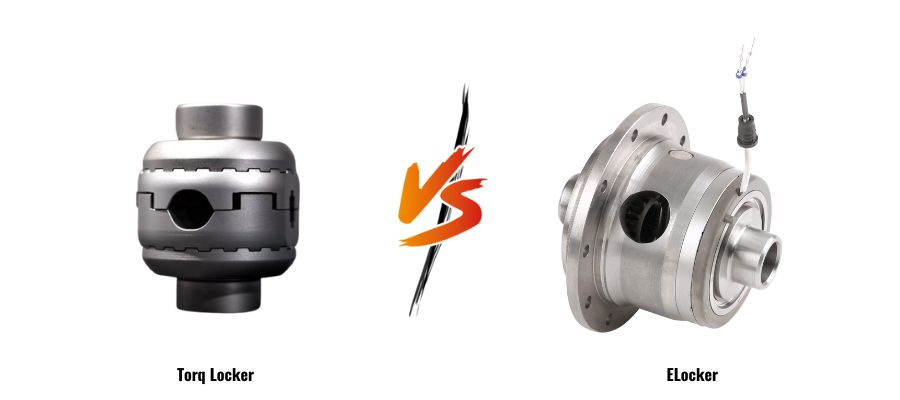
Torq Lockers, often referred to as lunchbox lockers, are automatic locking differentials designed for simplicity and affordability. They are mechanical devices that replace the spider gears in an open differential, transforming it into a fully locked system under specific conditions. Torq Lockers engage automatically when torque is applied, making them a popular choice for off-road enthusiasts on a budget.
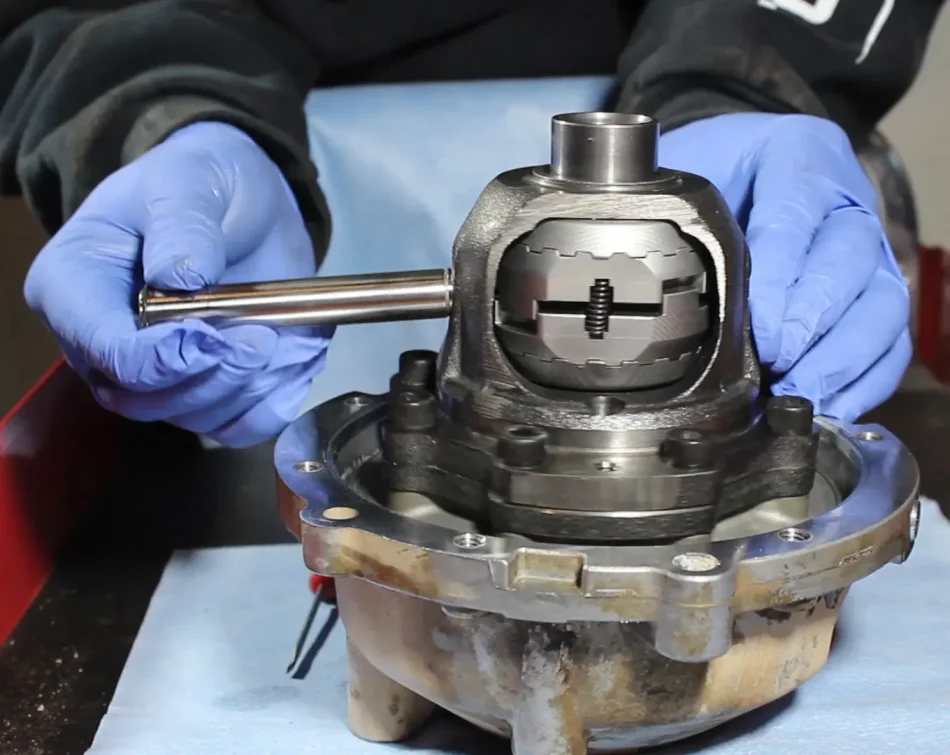
Key Features of Torq Lockers
Automatic Engagement: Torq Lockers lock both wheels when torque is applied, such as during acceleration or climbing obstacles, and unlock during coasting or light throttle to allow for smoother handling.
Mechanical Design: No external controls or electronics are required, making them reliable in harsh environments.
Ease of Installation: Designed to fit inside existing differential carriers, Torq Lockers are relatively easy to install without requiring a complete differential overhaul.
Affordability: Compared to other locking differentials, Torq Lockers are cost-effective, offering significant performance gains for the price.
Advantages of Torq Lockers
Cost-Effective Performance: Torq Lockers provide excellent traction at a fraction of the cost of more complex systems, making them ideal for entry-level off-roaders or those building a budget rig.
Reliability: With no electronic components, Torq Lockers are less prone to failure in water, mud, or extreme temperatures.
Low Maintenance: Their simple design requires minimal upkeep, perfect for those who prioritize durability over sophistication.
Instant Traction: The automatic locking mechanism ensures immediate engagement when traction is needed, without driver input.
Drawbacks of Torq Lockers
On-Road Handling: Torq Lockers can cause chirping noises or abrupt handling during tight turns on pavement due to their automatic locking nature, making them less ideal for daily-driven vehicles.
Limited Control: Since they engage automatically, drivers have no manual control over when the locker activates, which can be a drawback in certain situations.
Not Suitable for All Differentials: Torq Lockers are designed for specific differential types, limiting their compatibility with some vehicles.
What Are ELockers?
ELockers, or electronic locking differentials, are advanced systems that allow drivers to manually control the locking mechanism via a switch or button. Developed by brands like Eaton, ELockers use an electromagnetic actuator to engage the locker, providing on-demand traction. They are a premium option for off-roaders who want versatility and control.
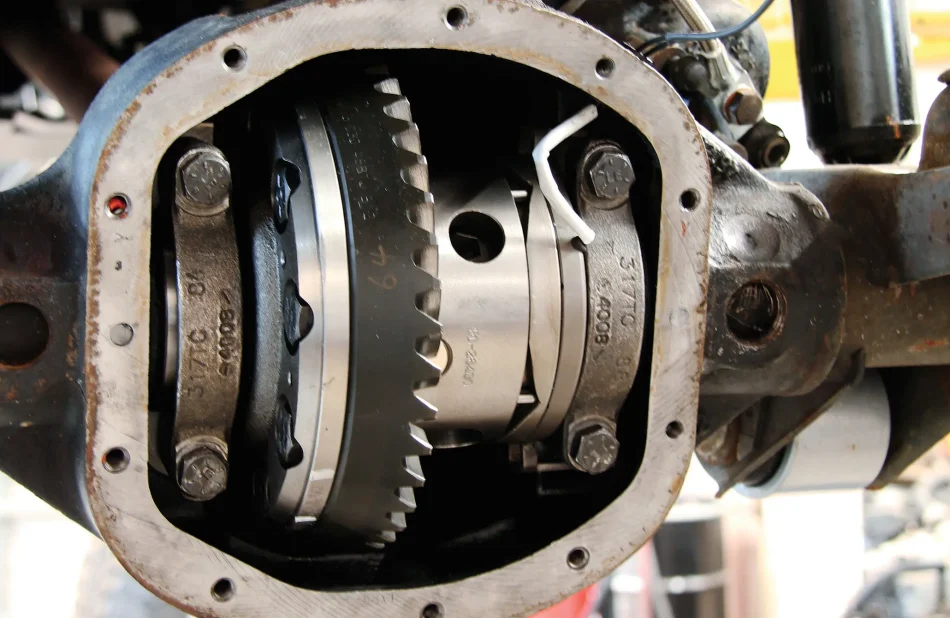
Key Features of ELockers
Manual Control: ELockers can be engaged or disengaged with a switch, giving drivers full control over when the differential locks.
Electronic Actuation: The system uses an electromagnetic coil to lock the differential, ensuring precise and reliable operation.
Versatility: ELockers function as an open differential when unlocked, offering smooth handling for on-road driving.
Robust Construction: Built with heavy-duty components, ELockers are designed to withstand extreme off-road conditions.
Advantages of ELockers
On-Demand Traction: Drivers can choose when to lock the differential, making ELockers ideal for navigating varied terrains where selective locking is beneficial.
On-Road Comfort: When disengaged, ELockers behave like an open differential, providing smooth, quiet operation for daily driving.
Wide Compatibility: ELockers are available for a broad range of vehicles and differential types, offering more flexibility than Torq Lockers.
Durability: High-quality materials and engineering ensure ELockers can handle intense off-road abuse.
Drawbacks of ELockers
Higher Cost: ELockers are significantly more expensive than Torq Lockers, both in terms of initial purchase and installation.
Complex Installation: Installing an ELocker often requires professional expertise and additional wiring, increasing labor costs.
Electronic Dependency: The reliance on electrical components makes ELockers vulnerable to water damage or electrical failures if not properly sealed.
Maintenance Needs: Wiring and electronic components may require periodic checks to ensure reliable performance.
Torq Lockers vs. ELockers: Head-to-Head Comparison
Now that we’ve explored the individual features of Torq Lockers and ELockers, let’s compare them directly across key factors to help you decide which is best for your off-road setup.
| Feature | Torq Lockers | ELockers |
|---|---|---|
|
Engagement Type |
Automatic (engages under torque) |
Manual (via driver-controlled switch) |
|
On-Road Comfort |
Rough handling, tire chirping |
Smooth and quiet when disengaged |
|
Cost |
$300–$600 |
$800–$1,500+ |
|
Installation |
DIY-friendly, simple install |
Complex, requires wiring and possible carrier |
|
Reliability |
Mechanical, low maintenance |
Electronic, requires inspections |
|
Compatibility |
Limited to open differentials |
Broad compatibility with many vehicles |
1. Performance and Traction
Both Torq Lockers and ELockers deliver excellent traction in off-road conditions, but their approaches differ. Torq Lockers provide instant, automatic locking when torque is applied, ensuring immediate traction in challenging situations like rock crawling or muddy trails. However, their automatic nature means they may remain locked during scenarios where an open differential would be preferable, potentially causing tire wear or handling issues.
ELockers, on the other hand, offer on-demand locking, allowing drivers to engage the locker only when needed. This makes them more versatile for mixed terrains, such as trails with alternating high- and low-traction sections. For example, you can keep the differential unlocked on flat, sandy stretches and lock it when climbing steep, rocky inclines. The trade-off is that ELockers require driver input, which may be less convenient in fast-paced off-road scenarios.
Winner: ELockers for versatility, Torq Lockers for instant engagement.
2. On-Road Drivability
For vehicles used both on and off the road, on-road drivability is a critical consideration. Torq Lockers are less suited for daily driving due to their automatic locking mechanism, which can cause tire chirping, understeer, or abrupt handling during turns on pavement. While some drivers tolerate these quirks, they can be annoying for those who frequently drive on highways or city streets.
ELockers excel in this area. When disengaged, they function as an open differential, providing smooth, predictable handling comparable to a stock setup. This makes ELockers a better choice for dual-purpose vehicles that split time between trails and tarmac.
Winner: ELockers for superior on-road performance.
| Aspect | Torq Lockers | ELockers |
|---|---|---|
|
Handling on Pavement |
Abrupt, may cause understeer or tire chirping |
Smooth and predictable when disengaged |
|
City/Highway Suitability |
Poor – not ideal for daily driving |
Excellent – behaves like stock differential |
|
Noise Level |
Audible during turns |
Silent in normal driving conditions |
|
Driving Control |
No manual control |
Full manual control via switch |
3. Cost and Installation
Budget is often a deciding factor when upgrading a differential. Torq Lockers are the clear winner in terms of affordability, with prices typically ranging from $300 to $600, depending on the vehicle and differential type. Their lunchbox design also simplifies installation, as they fit inside existing carriers, often allowing DIY installation for those with mechanical skills.
ELockers, by contrast, are a premium investment, with prices starting around $800 and going up to $1,500 or more. Installation is more complex, requiring wiring for the electronic actuator and potentially a new carrier, which often necessitates professional help. The higher upfront and labor costs make ELockers less accessible for budget-conscious off-roaders.
Winner: Torq Lockers for affordability and ease of installation.
| Category | Torq Lockers | ELockers |
|---|---|---|
|
Price Range |
$300 – $600 |
$800 – $1,500+ |
|
Installation Type |
DIY-friendly, drop-in design |
Complex, often requires professional help |
|
Electrical Wiring |
Not required |
Required (switch, actuator, power connection) |
|
Differential Changes |
No new carrier needed |
May require new carrier or housing |
4. Reliability and Maintenance
Off-road environments are harsh, and reliability is paramount. Torq Lockers’ mechanical design gives them an edge in durability, as they have no electronic components to fail. They’re built to withstand mud, water, and extreme temperatures with minimal maintenance, making them a set-it-and-forget-it solution.
ELockers are robust but rely on electrical components, which introduce potential points of failure. While modern ELockers are sealed against water and dust, wiring issues or actuator failures can occur over time, especially in extreme conditions. Regular inspections of the wiring and connections are recommended to maintain performance.
Winner: Torq Lockers for simplicity and reliability.
5. Vehicle Compatibility
Compatibility with your vehicle’s differential is another key factor. Torq Lockers are designed for specific differential models, such as Dana 30, Dana 44, or GM 10-bolt, but their lunchbox design limits their application to open differentials with compatible carrier breaks. If your vehicle has a limited-slip differential or an incompatible carrier, you may need to upgrade the entire differential housing.
ELockers offer broader compatibility, with models available for a wide range of differentials and vehicles, including both front and rear axles. However, you’ll need to ensure your vehicle has the necessary wiring and mounting provisions for the electronic actuator.
Winner: ELockers for wider compatibility.
| Factor | Torq Lockers | ELockers |
|---|---|---|
|
Differential Type Support |
Only fits certain open differentials |
Supports a wide range of axle and diff setups |
|
Application Range |
Limited to select models (e.g., Dana 30, 44) |
Available for front and rear axles of many vehicles |
|
Modifications Required |
Minimal (plug-and-play in some cases) |
Requires wiring setup, switch mounting |
Which Locker Is Right for You?
Choosing between a Torq Locker and an ELocker depends on your driving habits, budget, and off-road goals. Here’s a quick guide to help you decide:
Choose a Torq Locker if:
You’re on a tight budget and want a cost-effective traction solution.
Your vehicle is primarily used for off-road adventures, with minimal on-road driving.
You prefer a simple, low-maintenance system that doesn’t rely on electronics.
You’re comfortable with automatic locking and don’t need manual control.
Choose an ELocker if:
You drive your vehicle both on and off the road and want smooth on-road handling.
You value the flexibility of on-demand locking for varied terrains.
You’re willing to invest in a premium system with higher upfront and installation costs.
Your vehicle’s differential is compatible, and you can handle the wiring requirements.
Real-World Applications
To illustrate the differences, consider two common off-road scenarios:
Rock Crawling: In slow, technical rock crawling, Torq Lockers shine due to their instant engagement, ensuring both wheels grip the surface without delay. However, ELockers can also perform well if the driver locks the differential in advance, offering the added benefit of unlocking for easier navigation on less challenging sections.
Mixed Trails: On trails with sand, gravel, and mud, ELockers’ on-demand control allows drivers to lock the differential only when needed, reducing wear and improving efficiency. Torq Lockers may lock unnecessarily in high-traction sections, potentially causing handling quirks.
Final Thoughts
Torq Lockers and ELockers are both excellent choices for upgrading your vehicle’s differential, but they cater to different needs. Torq Lockers offer unbeatable value and simplicity, making them a go-to for budget builds and hardcore off-roaders who prioritize reliability. ELockers, with their on-demand control and on-road comfort, are ideal for dual-purpose vehicles and drivers who want maximum versatility.
Before making a decision, assess your vehicle’s differential type, your driving style, and your budget. Whether you choose the rugged simplicity of a Torq Locker or the sophisticated control of an ELocker, both will significantly enhance your off-road capability, ensuring you conquer the toughest trails with confidence.
