
Whether you’re a vehicle manufacturer, aftermarket distributor, or specialty automotive builder, this guide walks you through the key factors to evaluate before committing to a supplier — so you can source with confidence.
What Is a Limited Slip Differential and Why Does Quality Matter?
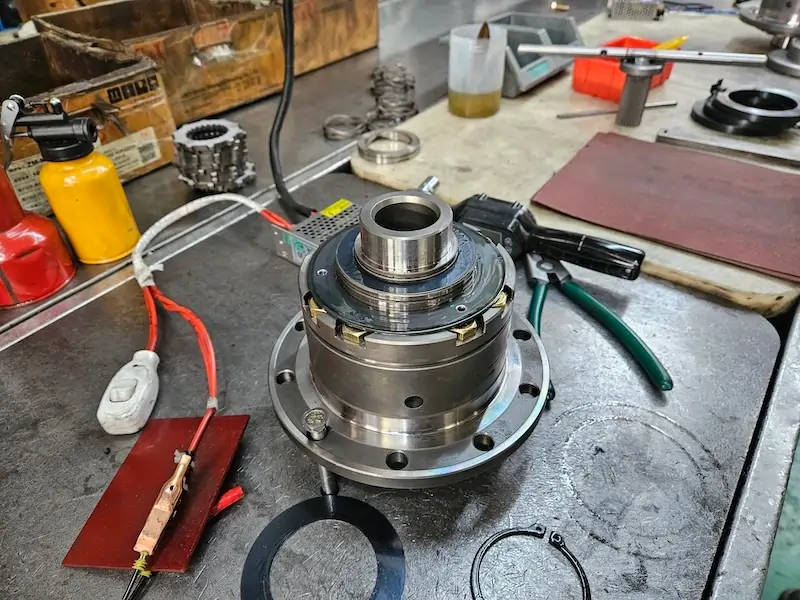
A limited slip differential (LSD) is a mechanical device that distributes torque between the drive wheels while allowing them to rotate at different speeds. Unlike an open differential, an LSD transfers power to the wheel with more traction when slippage is detected — making it essential for off-road vehicles, performance cars, trucks, and heavy machinery.
Because the LSD operates under extreme mechanical stress, even minor defects in materials or manufacturing tolerances can lead to premature failure, noise, or unpredictable handling. This makes supplier quality non-negotiable.
1. Verify Manufacturing Capabilities, Not Just Product Catalogs
Many distributors pass themselves off as manufacturers. The first step in evaluating any LSD supplier is to confirm they actually produce the components themselves.
Ask directly:
- Do you have your own production facility?
- What machining equipment do you use (CNC lathes, gear hobbing machines, heat treatment furnaces)?
- Can you provide factory photos or arrange a factory audit?
A genuine factory will be able to answer these questions in detail and invite inspection. A trading company typically cannot.
Why it matters: Working directly with a manufacturer gives you better pricing, shorter lead times, tighter quality control, and the ability to request custom specifications — something intermediaries simply can’t offer.
2. Assess Customization and Engineering Support
Not all LSD applications are the same. If you’re sourcing for a specific vehicle platform, off-road application, or OEM project, you’ll likely need components built to precise specifications — not off-the-shelf units.
- Manufacture to your drawings or modify existing designs
- Advise on material selection (case-hardened steel grades, heat treatment specs)
- Accommodate different torque bias ratios or friction plate configurations
- Provide engineering consultation during the design phase
Suppliers that offer only standard catalog products are fine for simple replacements, but for growing B2B relationships, customization capability is a strong indicator of technical depth and long-term partnership value.
3. Evaluate Quality Control Processes
Asking “do you have quality control?” isn’t enough. Every supplier will say yes. The real question is: how is QC implemented throughout the production process?
Look for:
- Incoming material inspection — Are raw materials (steel billets, forgings) tested before entering production?
- In-process inspection — Are tolerances checked during machining, not just at the end?
- Final inspection standards — Do they use CMM (coordinate measuring machines), gear testers, or hardness testers?
- Traceability — Can components be traced back to specific production batches?
Additionally, certifications like ISO 9001 are a baseline indicator that the supplier follows documented quality management processes. While certification alone isn’t a guarantee, its absence from a supplier claiming high-quality production should raise a flag.
4. Review Material and Heat Treatment Standards
The durability of a limited slip differential is largely determined by the quality of materials and the precision of heat treatment. A supplier who cuts costs on steel grade or shortens heat treatment cycles to increase throughput is selling you a shorter-lived component.
Questions to ask:
- What steel grades are used for the differential case, gears, and friction components?
- What heat treatment process is applied — carburizing, induction hardening, nitriding?
- What is the target surface hardness (HRC) and case depth?
- Can you provide material certificates (mill certs) upon request?
Reputable limited slip differential suppliers will be transparent about their material specifications and provide documentation when requested, especially for OEM or large volume orders.
5. Check Production Capacity and Lead Time Reliability
- What is your monthly production capacity for this product?
- What is the standard lead time for a regular order? For a custom order?
- How do you handle peak season or rush orders?
- Do you maintain safety stock for standard SKUs?
Lead time delays in automotive supply chains have a cascading effect. A supplier who regularly misses delivery windows — even if their product quality is acceptable — can become a serious liability. Request references or case studies from existing customers who can speak to on-time delivery performance.
6. Understand Their Export and Logistics Experience
- Standard shipping terms (FOB, CIF, EXW)
- Export documentation (commercial invoice, packing list, certificate of origin, test reports)
- HS code classification for differential components
- Experience shipping to your target market (US, EU, Middle East, etc.)
A supplier with extensive export experience will handle customs documentation smoothly and proactively flag any compliance requirements specific to your region. Inexperienced exporters can cause delays, misdeclarations, or additional costs that fall on you.
7. Request Samples Before Committing to Volume Orders
No matter how convincing a supplier’s website or sales pitch may be, always request physical samples before placing a bulk order. A sample order allows you to:
- Verify dimensional accuracy against your specs
- Test fit and function in your application
- Assess surface finish and overall workmanship
- Run your own material or performance tests if needed
Most professional limited slip differential manufacturers will accommodate sample requests, sometimes at a nominal charge. Be wary of suppliers who refuse samples or set unreasonably high minimum orders before you’ve had a chance to validate quality.
8. Evaluate Communication and After-Sales Support
The supplier relationship doesn’t end when the shipment leaves the factory. Strong communication throughout the order process — and responsive after-sales support if issues arise — is a sign of a professional, customer-oriented operation.
Pay attention to:
- Response time to your initial inquiry
- Technical knowledge demonstrated in their replies
- Willingness to provide documentation, test reports, or customization details
- Willingness to provide documentation, test reports, or customization details
A supplier who is difficult to communicate with before you’ve placed an order is unlikely to improve once they have your money.
9. Compare Total Value, Not Just Unit Price
- Unit price × volume
- Tooling or setup fees for custom parts
- Shipping and import duties
- Cost of quality failures or returns
- Time spent managing supplier issues
A supplier who is 10% cheaper per unit but delivers inconsistent quality will cost you far more in rework, warranty claims, and customer complaints than a slightly higher-priced but reliable partner.
Red Flags to Watch Out For
- Unable or unwilling to provide factory photos or audit access
- No certifications and no clear QC process
- Unusually low prices without any justification
- Vague answers to technical questions
- No sample policy or unreasonably high MOQ before samples
- Poor responsiveness or communication gaps during initial contact
Final Thoughts
Choosing the right limited slip differential supplier takes more than a quick search and a price comparison. It requires due diligence across manufacturing capability, quality standards, customization support, and logistics reliability. Taking the time to vet suppliers thoroughly upfront protects your business, your customers, and your reputation.
The best supplier relationships are built on transparency, technical competence, and consistent delivery — not just the lowest quote.
Looking for a Reliable Limited Slip Differential Manufacturer?
We are a specialized factory with years of experience manufacturing and customizing limited slip differentials for automotive, off-road, and industrial applications. From standard catalog products to fully custom OEM solutions, we work directly with distributors, builders, and vehicle manufacturers worldwide.
If you’re looking for a manufacturing partner you can count on, we’d love to hear about your project. Contact us today to discuss your requirements and request a sample or quote.
