
Contents
A Practical Guide to Improving Traction, Strength, and Reliability
The Dana 35 limited slip differential has long been a common choice in light-duty trucks and SUVs, especially in platforms like the Jeep Wrangler and Cherokee. While it offers a cost-effective solution for everyday driving, it quickly reveals its limitations under increased torque, larger tires, or off-road conditions. For many vehicle owners and fleet buyers, upgrading becomes less of an option and more of a necessity.
This guide explores the most effective limited slip upgrade alternatives to the Dana 35, focusing on real-world performance, durability, and application-specific suitability. Whether your goal is off-road capability, towing stability, or improved daily traction, understanding these upgrade paths will help you make a more informed decision.
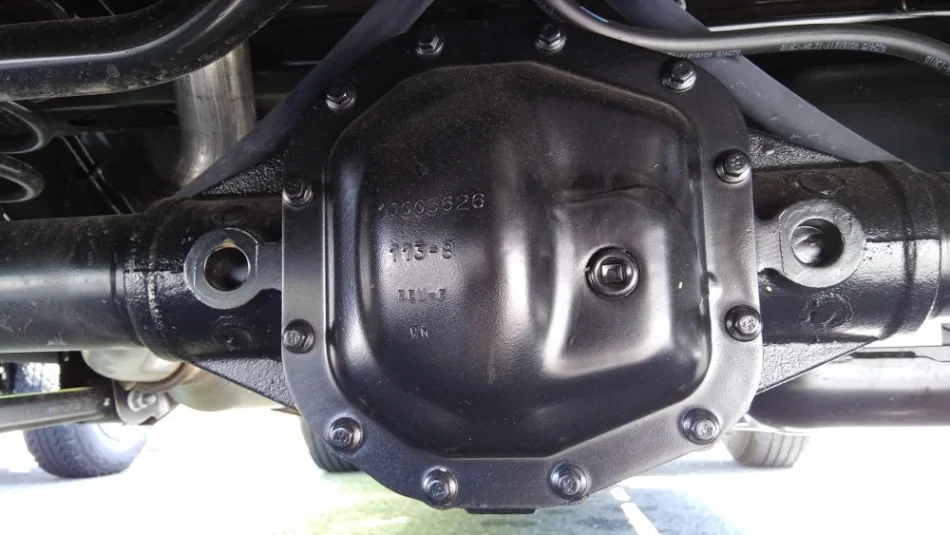
Understanding the Limitations of the Dana 35 Limited Slip Differential
- Low torque capacity: Not ideal for high-power applications or modified engines
- Weak axle shafts: Prone to failure under stress, especially with oversized tires
- Clutch wear over time: Reduced effectiveness as friction materials degrade
- Inconsistent traction delivery: Particularly noticeable in uneven terrain
Upgrade Strategy: Replace vs. Reinforce
- Internal upgrade (retain housing, upgrade differential unit)
- Full axle swap (replace entire Dana 35 assembly)
The right approach depends on budget, application, and expected load conditions.
Option 1: Upgraded Limited Slip Units for Dana 35
For users who prefer to retain the Dana 35 housing, upgrading the internal differential remains the most accessible and cost-effective approach. This strategy avoids the complexity of a full axle swap while still delivering a noticeable improvement in traction and drivability.
However, it’s important to understand that while the differential unit can be upgraded, the overall strength of the Dana 35 axle—especially its shafts and housing—remains unchanged. As a result, this approach is best suited for moderate performance gains rather than heavy-duty use.
Clutch-Type Performance LSD
- Higher preload springs for stronger initial engagement
- Improved friction materials for better heat resistance and longevity
- More aggressive lock-up characteristics under load
That said, clutch-type LSDs are inherently wear-based systems. Over time, the friction discs degrade, leading to reduced effectiveness and the need for periodic maintenance or rebuilds. Performance can also vary depending on oil type and driving conditions.
Best for:
- Daily-driven vehicles needing improved traction
- Light off-road use (gravel, mud, mild trails)
- Mild tire upgrades (typically up to ~31–32 inches)
Helical (Torsen) Limited Slip Differential
Rather than “locking” the wheels together, a helical LSD continuously biases torque toward the wheel with more grip. The result is smoother, more predictable power delivery without the abrupt engagement associated with clutch systems.
Advantages:
- No friction discs, meaning virtually no wear components
- Consistent performance over time with minimal maintenance
- Smooth and progressive torque transfer, ideal for on-road stability
- No need for special friction modifiers in most cases
Limitations:
- Requires some resistance on both wheels to function effectively
- Less effective in extreme off-road scenarios where one wheel is completely unloaded
In real-world driving—especially on pavement, wet roads, and mixed terrain—helical LSDs tend to provide a more refined and confidence-inspiring experience. For many users, the combination of low maintenance and consistent behavior makes them a highly practical upgrade within the limits of the Dana 35 platform.
Best suited for:
- Highway and daily driving with enhanced stability
- Mixed-use vehicles (on-road + light off-road)
- Performance-oriented builds prioritizing smooth power delivery
For a simple, low-cost upgrade, a clutch-type LSD works well and performs better in low-traction off-road situations. However, for smoother operation, lower maintenance, and consistent traction in daily and mixed driving, a helical LSD is often the more balanced choice.
Option 2: Locking Differential as an Alternative
In many cases, users upgrading a Dana 35 limited slip differential are trying to overcome fundamental traction limits rather than achieve small gains. Unlike LSDs, which rely on friction or torque biasing, a locking differential mechanically locks both axle shafts, ensuring equal torque delivery even if one wheel loses traction. For demanding off-road conditions, lockers are often the more effective solution.
Automatic Lockers
Automatic lockers engage and disengage without driver input, using internal mechanisms that respond to torque and wheel speed differences.
Advantages:
- Delivers maximum traction in low-traction environments
- Simple, robust mechanical design with minimal external components
- Typically more cost-effective than selectable systems
Trade-offs:
- Engagement can be abrupt, especially during cornering
- Increased noise, vibration, and tire wear on paved roads
- Reduced driving comfort in daily use
In practice, automatic lockers are highly effective in off-road conditions such as mud, loose gravel, and uneven terrain. However, their on-road behavior can feel unpredictable, particularly for drivers not accustomed to their characteristics.
Best suited for:
- Dedicated off-road vehicles
- Utility and work vehicles operating in rough environments
- Users prioritizing traction over comfort
Selectable Lockers (E-Locker / Air Locker)
Selectable lockers provide the highest level of control by allowing the driver to switch between an open differential and a fully locked state on demand.
When disengaged, the differential behaves like a standard open unit, offering smooth handling on pavement. When engaged, it delivers maximum traction similar to a fully locked axle.
Advantages:
- Full control over when locking occurs
- Maintains normal drivability for daily use
- Ideal balance between on-road comfort and off-road capability
Considerations:
- Higher initial cost compared to automatic lockers
- Requires additional systems (electrical wiring or air compressor)
- Installation complexity is typically higher
From a practical standpoint, selectable lockers are often the preferred solution for vehicles that must perform well both on-road and off-road. They eliminate many of the compromises associated with automatic lockers while still providing maximum traction when needed.
Best suited for:
- Dual-purpose vehicles (daily driving + off-road)
- Overlanding and expedition builds
- Users seeking maximum flexibility and control
While limited slip differentials improve traction to a certain extent, they still rely on partial grip to function effectively. Locking differentials, by contrast, remove this limitation entirely by forcing equal torque distribution.
Option 3: Dana 44 Swap — The Most Popular Upgrade
For users pushing beyond the limits of the Dana 35, upgrading to a Dana 44 axle is often the most practical long-term solution.
Why Dana 44?
- Stronger ring and pinion gears
- Larger axle shafts
- Higher load capacity
- Wider aftermarket support
A Dana 44 allows the use of more advanced limited slip differentials and lockers without the structural concerns of the Dana 35.
- Handles larger tires (33–35 inches or more)
- Supports higher torque applications
- Reduced failure rate under stress
Upgrading to a Dana 44 often involves more than just swapping the axle—it typically requires selecting the right gear ratio to match tire size, driving style, and engine output. An incorrect ratio can negatively affect acceleration, fuel efficiency, and overall drivability.
To simplify this process, you can use a gear ratio calculator to estimate the optimal setup based on your specific configuration:
Option 4: Ford 8.8 Swap — A Cost-Effective Alternative
Another widely adopted upgrade is the Ford 8.8 rear axle.
Key Benefits:
- Comparable strength to Dana 44
- Factory disc brakes (in many versions)
- Readily available in the used market
For workshops and distributors, this option offers strong value for customers seeking durability without premium pricing.
Choosing the Right Upgrade Based on Use Case
Selecting the best alternative to a Dana 35 limited slip differential depends heavily on how the vehicle is used.
Daily Driving + Light Off-Road:
- Helical LSD
- Upgraded clutch LSD
These options maintain comfort while improving traction.
Moderate Off-Road + Overlanding:
- Selectable locker (recommended)
- Dana 44 swap with LSD or locker
This category demands reliability without sacrificing drivability.
Heavy Off-Road / Rock Crawling:
- Full axle swap (Dana 44 or Ford 8.8)
- Locking differential (automatic or selectable)
At this level, the Dana 35 housing itself becomes the weakest link.
Commercial / Fleet Use:
- Prioritize durability over initial cost
- Reduce downtime and maintenance frequency
- Consider full axle upgrades for long-term ROI
Critical Factors to Evaluate Before Upgrading
Before committing to any Dana 35 limited slip differential upgrade—or moving to a stronger axle like a Dana 44—it’s essential to evaluate several key technical factors. Overlooking these details can lead to poor performance, premature failures, or costly rework.
1. Spline Count and Axle Compatibility
- Common Dana 35 configurations use 27-spline shafts
- Upgraded setups may require matching aftermarket components
- Always verify compatibility between differential, axle shafts, and side gears
For higher torque applications, upgrading axle shafts alongside the differential is strongly recommended.
2. Gear Ratio Selection
- Larger tires effectively reduce final drive ratio
- Lower (numerically higher) ratios improve torque but increase engine RPM
- Higher (numerically lower) ratios favor fuel efficiency but reduce pulling power
Improper gearing is one of the most common reasons upgraded setups fail to meet expectations. Selecting the correct ratio ensures the full benefit of any differential upgrade.
3. Tire Size and Vehicle Load
- Larger tires increase leverage on axle shafts and ring & pinion
- Heavier vehicles (overlanding builds, work trucks) amplify stress further
- Stock Dana 35 components may not tolerate aggressive tire upgrades
As a general rule, once tire size exceeds ~33 inches, the risk of axle failure rises sharply with a Dana 35 setup.
4. Engine Torque and Power Modifications
- Engine swaps, turbocharging, or tuning upgrades can exceed stock limits
- Sudden torque spikes (common in off-road driving) are particularly damaging
- Weak points typically include axle shafts and ring gear strength
If power output is significantly increased, reinforcing or replacing the entire axle becomes a more reliable solution than upgrading the differential alone.
5. Driving Conditions and Use Case
- Daily driving → prioritize smooth engagement and low noise
- Light off-road → balanced traction and drivability
- Technical off-road → maximum traction (often requires lockers)
Choosing the wrong type often leads to dissatisfaction, even if the component itself is high quality.
6. Maintenance Requirements
- Clutch LSD → requires periodic rebuilds and specific oil additives
- Helical LSD → minimal maintenance, no wearable friction components
- Lockers → generally durable, but may require system checks (especially air lockers)
Ignoring maintenance requirements can reduce lifespan and performance over time.
7. Installation Complexity and Total Cost
- Installation may require specialized tools and setup (gear pattern, backlash)
- Gear ratio changes often require professional setup
- Additional upgrades (bearings, seals, shafts) increase total cost
For many users, what starts as a “simple upgrade” can evolve into a full drivetrain rebuild if not planned properly.
Cost vs. Performance: A Realistic Perspective
While upgrading the Dana 35 limited slip differential may seem economical initially, it’s important to evaluate long-term value.
| Upgrade Type | Initial Cost | Durability | Performance Gain |
|---|---|---|---|
|
Clutch LSD Upgrade |
Low |
Moderate |
Moderate |
|
Helical LSD |
Medium |
High |
Moderate |
|
Locker (Dana 35) |
Medium |
Moderate |
High |
|
Dana 44 Swap |
High |
Very High |
Very High |
|
Ford 8.8 Swap |
Medium |
High |
High |
For professional buyers and distributors, recommending the right tier based on end-user needs is critical for building trust and reducing returns.
Final Thoughts
The Dana 35 limited slip differential serves its purpose in stock applications, but its limitations become evident under increased demand. Upgrading is not just about improving traction—it’s about ensuring reliability, safety, and long-term performance.
For light-duty improvements, upgraded LSD units can deliver noticeable gains. However, for serious off-road use or commercial applications, transitioning to a stronger axle platform such as Dana 44 or Ford 8.8 is often the smarter investment.
If you are sourcing reliable differential components or exploring bulk supply options, XinJin Auto Parts is a direct manufacturer specializing in drivetrain solutions.
