
An off road differential is a mechanical component in a vehicle’s drivetrain that allows the wheels on the same axle to rotate at different speeds while still receiving engine torque. On standard roads, this is essential for smooth cornering. Off road, however, the demands on a differential are far more extreme — mud, rocks, sand, and uneven terrain create conditions where a standard differential can leave you stuck.
Off road differentials are engineered to distribute torque more aggressively and intelligently than their street counterparts, giving drivers traction when one or more wheels lose contact with solid ground.
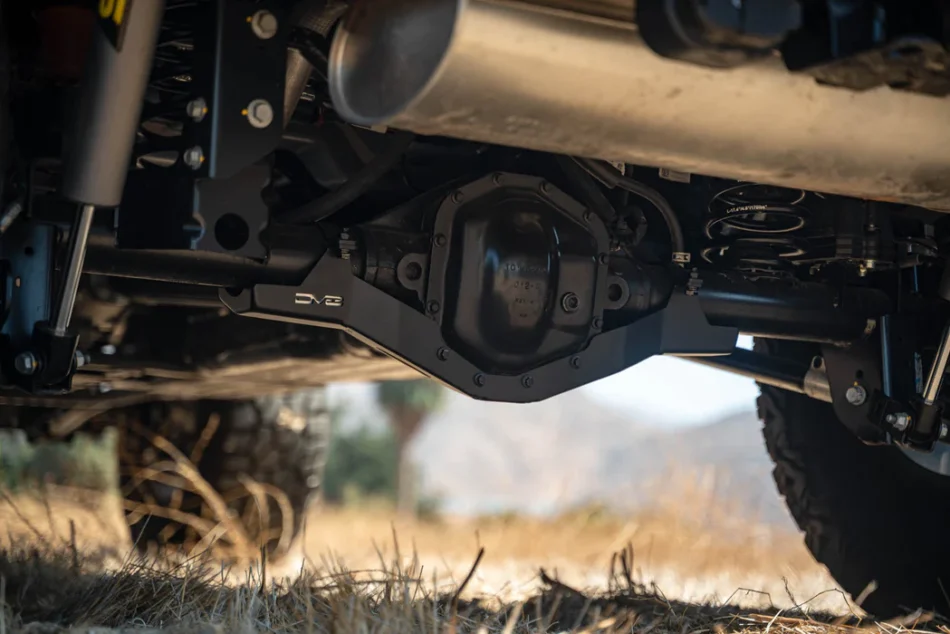
How Does a Differential Work Off Road?
In a conventional open differential, torque follows the path of least resistance. That means if one wheel is spinning freely in mud, all the engine power goes to that wheel — leaving the wheel with actual grip doing nothing.
Off road differentials solve this fundamental problem through mechanical or electronic means. Whether through clutch packs, locking rings, or helical gears, these systems redirect torque to the wheel that can actually use it.
Understanding this principle is the foundation for choosing the right differential for your build, terrain, and driving style.
Types of Off Road Differentials
1. Open Differential
The open differential is the baseline. It works perfectly on paved roads but is the least effective off road. Because torque always goes to the wheel with the least resistance, a single wheel stuck in mud can bring the entire vehicle to a halt.
Best for: Mild off road use, light trails, casual overlanding.
Limitation: Poor performance in deep mud, sand, or rock crawling.
2. Limited-Slip Differential (LSD)
A limited-slip differential uses clutch packs or gear mechanisms to resist the speed difference between two wheels. When one wheel begins to spin faster than the other (as in wheel slip), the LSD automatically applies resistance and transfers more torque to the slower — and usually better-gripping — wheel.
- Clutch-type LSD — uses friction plates to limit slip; effective but wears over time
- Helical gear LSD (Torsen-type) — purely mechanical, smooth engagement, no wear parts
- Viscous LSD — uses fluid resistance; common in OEM vehicles, less aggressive than mechanical types
Best for: Light-to-moderate off road use, overlanding, mixed on/off road driving.
Limitation: Not as effective as locking differentials in extreme conditions.
3. Locking Differential
A locking differential mechanically locks both wheels on an axle together, forcing them to rotate at exactly the same speed regardless of traction conditions. When locked, even if one wheel is completely off the ground, 100% of torque is delivered to the wheel still in contact with the ground.
Locking differentials fall into two main categories:
Selectable Lockers (Manual Lockers)
Selectable lockers give the driver direct control — you choose when to lock and unlock, typically via a switch or pneumatic valve inside the cab. The axle behaves like a standard open differential on the road, and switches to fully locked when needed off road. This makes them the preferred choice for dual-purpose vehicles.
Common selectable locker types include:
- Air lockers — engaged via an onboard air compressor; fast, reliable, and highly popular for serious trail builds
- Electric lockers (e-lockers) — engaged by an in-cab switch that sends a signal to an electromagnetic actuator; simpler installation than air systems, no compressor required
Automatic Lockers
Automatic lockers require no driver input. They engage mechanically under load and disengage slightly during cornering to allow for wheel speed differences. They provide constant traction without any action from the driver, making them well-suited for dedicated off road rigs.
Common automatic locker types include:
- Full-carrier lockers — replace the entire differential carrier; robust and suited for high-torque applications
- Lunchbox lockers — install inside the existing carrier without removing it; a more affordable entry point into automatic locking performance
Best for: Rock crawling, deep mud, extreme off road terrain, competition use.
Limitation: Automatic lockers can produce noticeable clunking during tight turns; neither type is ideal for sustained high-speed highway driving while locked.
Torsen e-Locker: The Emerging Hybrid Differential
One of the most significant developments in recent off road differential technology is the Torsen e-locker — a hybrid system that combines the smooth, passive torque-sensing behavior of a Torsen (torque-sensing) helical gear differential with the on-demand locking capability of an electronic locker.
Here’s why this matters: a traditional Torsen differential works silently in the background at all times, continuously redistributing torque between wheels based on traction differences without any driver input or mechanical engagement. It delivers a natural, predictable driving feel that works just as well on a highway as on a gravel trail. When conditions get truly extreme — deep mud, loose rocks, steep descents — the e-locker function can be activated electronically to fully lock the axle and maximize traction.Lorem ipsum dolor sit amet, consectetur adipiscing elit. Ut elit tellus, luctus nec ullamcorper mattis, pulvinar dapibus leo.
The result is a differential that genuinely covers the full spectrum of use cases without compromise:
- On road: The Torsen mechanism manages everyday torque distribution quietly and efficiently, with no noise, no lag, no clutch wear
- Moderate off road: The helical gear design proactively biases torque toward the wheel with more grip, handling most trail conditions without the driver ever touching a switch
- Extreme off road: The e-locker engages instantly when needed, converting the diff into a fully locked axle for maximum traction
This approach represents a broader trend in drivetrain engineering — moving away from systems that force drivers to choose between “street mode” and “off road mode,” toward differentials that adapt intelligently across the entire range. For overlanders, expedition rigs, and modern off road-capable daily drivers, the Torsen e-locker is increasingly the specification of choice.
Best for: Vehicles that need genuine all-terrain capability without sacrificing daily drivability.
Why it’s gaining traction: One differential, zero compromise — effective from commuting to rock crawling.
Front vs. Rear Differential Off Road: What's the Difference?
Most 4×4 vehicles have differentials on both the front and rear axles, plus a transfer case in the middle. Each plays a different role:
| Position | Primary Role | Off Road Priority |
|---|---|---|
|
Rear Differential |
Drives primary propulsion |
High — upgrade this first |
|
Front Differential |
Assists steering axle |
High — critical for rock crawling |
|
Center Differential |
Balances front/rear torque |
Moderate — important for full-time 4WD |
For most off road builds, upgrading the rear differential first provides the most noticeable improvement in traction. Adding a front locker dramatically improves control on technical terrain.
Ring and Pinion Gear Ratios in Off Road Differentials
- Torque multiplication — lower ratios (e.g., 4.88:1 or 5.13:1) multiply torque, helping larger tires feel responsive
- Tire size compensation — when upgrading to larger off road tires, re-gearing is often necessary to restore lost low-end power
- Crawl ratio — combined with the transfer case, the right ring and pinion ratio maximizes crawl speed on technical terrain
Choosing the correct gear ratio is as important as choosing the differential type. A mismatch between tire size and gear ratio can negate the benefits of even the best locking differential. If you’re unsure which ratio suits your setup, this differential gear ratio calculator can help you work out the right number based on your tire size and engine specs.
How to Choose the Right Off Road Differential
Selecting the right differential depends on four key factors:
1. Terrain Type
- Mild trails and forest roads → Limited-slip differential
- Mud, sand, and moderate climbs → Selectable locker or Torsen LSD
- Rock crawling and extreme terrain → Full locking differential (front and rear)
2. Vehicle Use Case
- Daily driver that occasionally goes off road → LSD or selectable locker
- Dedicated trail rig → Automatic or selectable locker
- Competition vehicle → Detroit Locker or full spool
3. Budget
- LSDs are typically the most affordable upgrade
- Air and electric lockers are a mid-to-high investment
- Full axle rebuilds with custom gearing are a premium solution
4. Existing Drivetrain
Always match the differential to your axle type (Dana 44, Ford 9-inch, GM 14-bolt, etc.). An incompatible differential housing or ring gear diameter will make fitment impossible.
Common Signs Your Off Road Differential Needs Attention
Even the toughest differentials wear out or suffer damage from extreme use. Watch for these warning signs:
- Grinding or humming noise from the axle area, especially under load
- Vibration felt through the floorboards or steering wheel during acceleration
- Fluid leaks from the differential housing (check for oil around the axle seals)
- Loss of traction where it wasn’t a problem before
- Whining noise that changes pitch with vehicle speed — often a sign of worn ring and pinion gears
Regular differential fluid changes (every 30,000–50,000 miles, or after water crossings) are the single most effective way to extend differential life.
Off Road Differential Maintenance Tips
- Change the gear oil regularly — especially after river crossings where water contamination is likely
- Inspect seals and gaskets — the differential housing is a common entry point for water and debris
- Check backlash and bearing preload during any differential rebuild
- Use the correct fluid viscosity — most off road differentials require GL-5 75W-90 or 75W-140
- Re-torque ring gear bolts after the first 500 miles on any rebuilt differential
Frequently Asked Questions About Off Road Differentials
Q: Can I run a locking differential on the street?
A: Yes, but only in unlocked mode. Driving with a locker engaged on pavement causes driveline binding, excessive tire wear, and can damage axle shafts. Always unlock on hard surfaces.
Q: Do I need both a front and rear locker?
A: For serious rock crawling, yes. For most trail use and overlanding, a rear locker alone provides a significant traction improvement. Add a front locker when the terrain demands it.
Q: What is the difference between a spool and a locker?
A: A spool permanently locks both wheels together with no ability to unlock. It offers maximum traction but is impractical for any on-road use. Spools are typically used in racing applications only.
Q: How long does an off road differential last?
A: With proper maintenance, a quality differential can last the lifetime of the vehicle. Abuse, improper fluid, and water contamination are the leading causes of premature failure.
Q: Can I install a locking differential myself?
A: Installation requires mechanical experience, proper tools, and precise setup of bearing preload and backlash. For most builds, professional installation is recommended unless you have differential rebuild experience.
Summary: Matching the Right Differential to Your Off Road Goals
| Differential Type | Traction Level | Street Comfort | Best Use Case |
|---|---|---|---|
|
Open |
Low |
High |
Mild off road, street |
|
Limited-Slip (LSD) |
Medium |
High |
Overlanding, mixed use |
|
Locking — Selectable (Air / e-Locker) |
Very High |
High (unlocked) |
Dual-purpose builds |
|
Locking — Automatic (Full-carrier / Lunchbox) |
High |
Medium |
Dedicated trail rigs |
|
Torsen e-Locker (Hybrid) |
Very High |
Very High |
All-terrain daily drivers, expedition builds |
Choosing the right off road differential is ultimately about matching the component to your terrain, vehicle, and driving demands. A well-specified differential, paired with the correct ring and pinion gear ratio, transforms a stock vehicle into a capable off road machine.
Need a reliable differential for your off road build? XinJin Auto Parts is a direct manufacturer of differentials and ring & pinion gears, with custom specifications available. Whether you’re building a trail rig or need OEM replacement parts, our team is ready to help. Contact us for a quote.
