
If you’ve ever searched for better traction, improved off-road capability, or maximum power delivery to your wheels, you’ve probably come across the term locking differential. But what does locking differential actually mean—and why is it such a critical upgrade for trucks, 4×4 vehicles, and performance builds?
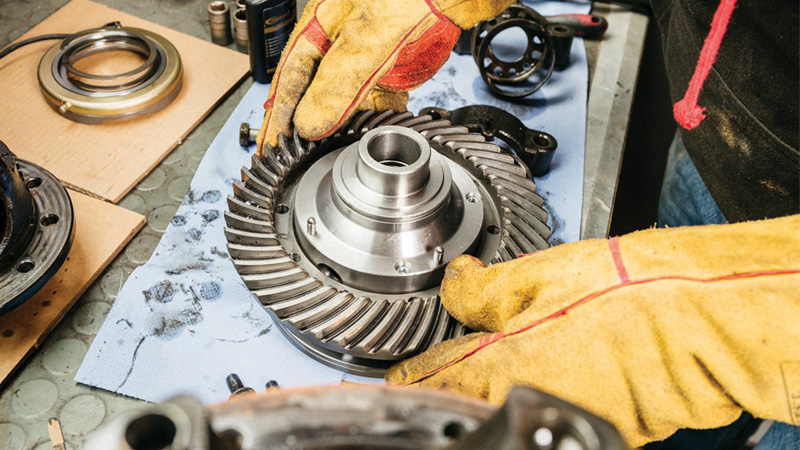
In this guide, we’ll break down everything you need to know about locking differentials, including how they work, types, benefits, use cases, and how they compare to limited-slip differentials (LSDs). Whether you’re an off-road enthusiast, a performance tuner, or a B2B buyer sourcing drivetrain components, this guide is for you.
What Is a Locking Differential?
A locking differential (often called a “diff lock” or “locker”) is a type of differential that forces both wheels on the same axle to rotate at the same speed, regardless of traction conditions.
Unlike a standard open differential—which allows wheels to spin at different speeds—a locking differential eliminates this difference entirely when engaged.
A locking differential ensures equal torque distribution to both wheels by mechanically locking them together.
Why Do Vehicles Need a Locking Differential?
To understand why locking differentials matter, you need to understand the limitations of a standard differential.
An open differential sends power to the wheel with the least resistance. This becomes a major issue when:
- One wheel is on mud, sand, or ice
- One wheel is lifted off the ground
- Traction is uneven between left and right wheels
In these situations, the wheel with less grip spins freely, while the other wheel—despite having traction—receives little or no power.
Result: The vehicle gets stuck.
Locking the Differential
A locking differential solves this problem by:
- Locking both axle shafts together
- Forcing both wheels to rotate at the same speed
- Delivering equal torque to both sides
Result: Even if one wheel slips, the other keeps pushing the vehicle forward.
How Does a Locking Differential Work?
When engaged, a locking differential mechanically connects both wheels, making them behave as if they are on a solid axle.
- Normal mode: Differential allows wheel speed difference
- Locked mode: No speed difference allowed
- Torque split: 50/50 to both wheels
This is especially useful in extreme conditions where traction is inconsistent.
Types of Locking Differentials
Electronic Locking Differential (E-Locker)
An electronic locking differential uses a switch to activate the locking mechanism.
Features
- Controlled via dashboard button
- Uses electric actuators
Advantages
- Easy to use
- Quick engagement
- Popular in modern 4×4 vehicles
Use Case
SUVs, pickup trucks, and OEM systems
Air Locking Differential
Air lockers use compressed air to engage the lock.
Key Components
- Air compressor
- Air lines
- Pneumatic actuator
Advantages
- Strong locking force
- Reliable under heavy load
Disadvantages
- More complex installation
- Requires air system maintenance
Automatic Locking Differential
Also known as auto lockers, these engage automatically when needed.
How it works
- Detects torque differences
- Locks without driver input
Advantages
- No manual operation required
- Always ready
Disadvantages
- Can be harsh in daily driving
- Noise and handling changes
Locking Differential vs Limited Slip Differential (LSD)
This is one of the most common comparisons in the automotive world.
- 100% lock (both wheels same speed)
- Best for extreme off-road
- Can affect handling on pavement
Limited Slip Differential (LSD)
- Allows some slip
- Distributes torque gradually
- Better for performance driving and daily use
Key Difference
A locking differential provides maximum traction, while an LSD provides controlled traction.
For example:
- Off-road rock crawling → Locking differential
- High-performance street driving → LSD (especially Torsen type)
Front vs Rear Locking Differential
Rear Locker
- More common
- Provides strong traction
- Less impact on steering
Front Locker
- Increases climbing ability
- Can affect steering control
Best setup for serious off-road: Front + Rear Locking Differentials
Conclusion
A locking differential is one of the most powerful traction tools available in automotive engineering. By forcing both wheels to rotate at the same speed, it ensures that power is never wasted—even in the harshest conditions.
Whether you’re climbing rocks, navigating deep mud, or building a high-performance off-road vehicle, a locking differential can make the difference between getting stuck and pushing forward.
For everyday driving, it may not always be necessary—but for serious traction demands, it’s an essential upgrade.
If you’re looking to source locking differentials, LSDs, or ring & pinion gear sets for your business, choosing the right supplier with consistent quality and bulk supply capability is just as important as choosing the right product.
