
When it comes to off-road vehicles and performance driving, differentials play a crucial role in ensuring traction, stability, and control. Among these, selectable lockers have emerged as a preferred choice for enthusiasts and professionals alike. This article explores selectable lockers in depth, compares them with automatic lockers, and highlights the main types available in the market.
What Are Selectable Lockers?
Selectable lockers, also known as switchable or engageable lockers, are specialized differential mechanisms that allow the driver to manually control the locking of the axle. Unlike conventional differentials that continuously distribute torque between wheels, selectable lockers enable full lock engagement when extra traction is needed, such as during off-road climbing or driving on slippery surfaces. When disengaged, the differential functions normally, allowing for smooth handling on paved roads.
The key advantage of selectable lockers lies in their flexibility: drivers can decide when to lock the wheels, combining the benefits of traction and drivability. This capability makes them especially popular in off-road vehicles, trucks, and high-performance applications where traction control is critical.
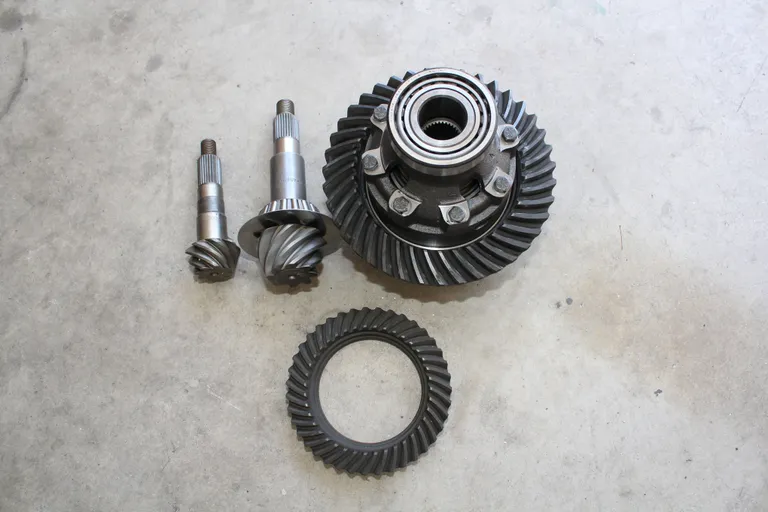
Automatic Lockers vs. Selectable Lockers
Automatic lockers, sometimes referred to as “auto lockers,” are engineered to automatically lock the axle when a wheel begins to slip, delivering torque to both wheels without any driver intervention. This hands-free operation is particularly appealing for drivers who want reliable traction in off-road conditions without the need to constantly monitor or adjust the differential. Automatic lockers are designed to respond instantaneously to changes in traction, making them highly effective in uneven or slippery terrain, such as mud, rocks, or steep inclines.
Despite their convenience, automatic lockers exhibit certain behaviors that drivers should understand. Because they engage automatically based on wheel slip, they can sometimes cause abrupt or unpredictable handling on paved roads, especially during tight turns or lane changes. This can lead to a phenomenon known as “wheel hopping,” where the tires momentarily lose contact with the surface or cause vibration through the drivetrain. Additionally, while they require minimal maintenance due to their simpler mechanical design, automatic lockers do not provide the driver with direct control over when the lock engages. This lack of manual control can be a disadvantage in situations where precise traction management is required.
The following table offers a detailed comparison of automatic lockers and selectable lockers, highlighting their differences in engagement, performance, handling, maintenance, and cost:
| Feature | Automatic Lockers | Selectable Lockers |
|---|---|---|
|
Engagement Control |
Automatic, triggered by wheel slip |
Manual, driver-controlled |
|
Handling on Pavement |
Can be abrupt, sometimes causes wheel hopping |
Smooth when disengaged, behaves like open differential |
|
Off-Road Traction |
Excellent, engages whenever slip occurs |
Excellent, but requires driver activation |
|
Maintenance |
Generally low, fewer components to manage |
Moderate, depends on type (eLocker, Air Locker, etc.) |
|
Noise Level |
Can be noisy during engagement |
Typically quieter when disengaged |
|
Complexity |
Simple to install and use |
Requires additional activation mechanisms (solenoids, switches, or pneumatic systems) |
|
Cost |
Usually lower |
Higher due to more complex components |
From this comparison, it’s evident that the choice between automatic and selectable lockers depends on the intended use. Automatic lockers are ideal for drivers who prefer simplicity and hands-free engagement, while selectable lockers offer more control and versatility, especially for mixed on- and off-road conditions.
Types of Selectable Lockers
Selectable lockers are specialized differential systems designed to give drivers the ability to manually control when the wheels are locked. They come in several designs, each with unique activation methods, performance characteristics, and ideal use cases. The most common types are electronic lockers (eLocker) and pneumatic lockers (Air Locker), though mechanical and cable-activated versions are also available.
1. eLocker (Electronic Locker)
Electronic lockers use an electric solenoid to engage and disengage the differential. The driver typically controls the system via a switch mounted on the dashboard or steering wheel. This setup allows for rapid, precise control over traction, which is especially useful in challenging off-road conditions.
Key advantages of eLockers include:
Instant Engagement: The solenoid mechanism can lock the differential immediately, delivering maximum torque to both wheels for improved traction.
Driver Convenience: Activation via a simple switch allows drivers to quickly respond to changing conditions without leaving the seat.
System Integration: Many modern eLockers can communicate with the vehicle’s traction control and stability systems, enhancing performance and safety.
Lower Mechanical Wear: Since engagement is electrically controlled, there is less mechanical stress compared to purely mechanical systems.
eLockers are particularly well-suited for vehicles that require frequent switching between open and locked differentials, such as rock crawlers or off-road competition trucks.
2. Air Locker (Pneumatic Locker)
Air lockers utilize compressed air, typically supplied by an onboard air compressor, to engage a piston inside the differential. When the driver activates the system, pressurized air moves the piston, locking the axle securely.
Advantages of air lockers include:
Strong, Positive Lock: The pneumatic system provides a reliable, complete lock, ideal for extreme off-road conditions or heavy-duty use.
Durability: Air lockers are engineered to withstand rugged terrain and high torque applications, making them a favorite for professional off-roaders.
Customizable Activation: Some systems allow partial engagement or timed activation, giving the driver precise control over traction in difficult scenarios.
Reduced Driver Fatigue: With air-assisted engagement, the driver doesn’t need to manually manipulate mechanical linkages, making operation easier over long periods.
3. Other Types
Mechanical or Cable-Activated Lockers: These systems rely on a physical cable or linkage to engage the differential. While less common today, they are appreciated for their simplicity and robustness, and they do not rely on electricity or compressed air. They are often found in older vehicles or heavy-duty industrial applications.
To help visualize the differences, the table below summarizes the main characteristics of each type:
| Type | Activation Method | Engagement Speed | Durability | Driver Effort | Ideal Use Cases |
|---|---|---|---|---|---|
|
eLocker (Electronic) |
Solenoid (electrical) |
Instant |
High |
Low (switch-activated) |
Off-road, rock crawling, mixed-use vehicles |
|
Air Locker (Pneumatic) |
Compressed air |
Fast, positive lock |
Very High |
Low (air-assisted) |
Extreme off-road, professional vehicles, heavy-duty applications |
|
Mechanical / Cable |
Manual cable/linkage |
Moderate |
High |
Moderate to High |
Older vehicles, industrial or utility applications |
Benefits of Using Selectable Lockers
Using selectable lockers offers several advantages over traditional or automatic differentials:
Enhanced Traction: Full wheel lock ensures maximum torque delivery to both wheels, minimizing the risk of getting stuck.
Flexibility: Drivers can engage or disengage the locker depending on road conditions, allowing for both off-road performance and smooth on-road driving.
Reduced Tire Wear: Since the differential can function normally when disengaged, selectable lockers prevent excessive tire wear on paved surfaces.
Improved Vehicle Control: Selectable lockers provide predictable handling during off-road maneuvers, giving drivers greater confidence on challenging terrain.
When to Choose a Selectable Locker
Selecting the right differential solution depends on your driving needs:
Off-Road Enthusiasts: If you frequently encounter loose gravel, mud, rocks, or steep inclines, selectable lockers provide superior control and traction.
Mixed Use Vehicles: For vehicles that travel both on-road and off-road, selectable lockers allow normal differential operation for smooth highway driving.
Professional Applications: Work trucks, recovery vehicles, and specialized fleets benefit from selectable lockers due to their reliability and versatility.
Maintenance and Installation Considerations
While selectable lockers offer advanced performance, they require proper installation and occasional maintenance:
Installation: Professional installation is recommended, particularly for air or electronic lockers, to ensure correct alignment and wiring or plumbing.
Lubrication: Regular differential fluid changes are essential for smooth operation and longevity.
Periodic Checks: Inspect activation mechanisms, solenoids, or air lines for wear or leaks.
Proper maintenance ensures that selectable lockers continue to provide reliable traction and performance over time.
Conclusion
Selectable lockers represent a sophisticated solution for drivers seeking both traction and flexibility. Compared to automatic lockers, they offer manual control, smoother on-road handling, and compatibility with various activation systems such as eLocker and Air Locker. By understanding the types, benefits, and maintenance requirements, vehicle owners can make informed decisions and optimize performance for a range of driving conditions.
For high-quality selectable lockers and reliable aftermarket components, XinJin Auto Parts provides factory-direct products. If you require further information or wish to place an order, please contact us here.
