
When it comes to upgrading your vehicle’s traction and handling, the choice of a limited slip differential (LSD) plays a critical role. Among the various types available, two mechanical LSDs often come up in conversations—Torsen and Truetrac. Both of these have earned their reputations as reliable torque-biasing differentials, but they differ in design, performance characteristics, and application suitability. This guide will explore the essential distinctions between Torsen and Truetrac, helping you decide which fits best with your driving needs and vehicle setup.
What Exactly Are Torsen and Truetrac Differentials?
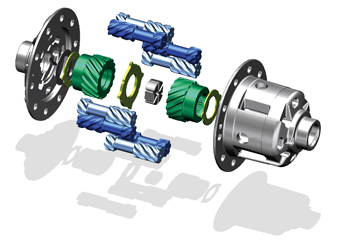
Before diving into the differences, it’s important to clarify what these two limited slip differentials are. Both Torsen and Truetrac are classified as helical gear-based limited slip differentials. Unlike clutch-type LSDs, which rely on friction plates to limit wheel slip, these units use a set of helical gears to distribute torque between wheels mechanically.
- Torsen (an acronym for Torque-Sensing) was among the first to popularize this design and has been widely adopted in both OEM applications and aftermarket upgrades.
- Truetrac follows a similar helical gear concept but introduces its own variations in gear arrangement and torque transfer mechanics.
Because neither system uses friction components, both Torsen and Truetrac LSDs tend to offer smoother operation with minimal maintenance.

The Mechanics Behind Torque Distribution: How They Differ
Though Torsen and Truetrac share the basic principle of using helical gears to bias torque to the wheel with better traction, their internal designs and resulting behaviors set them apart.
Torsen’s Design and Torque Bias
Torsen differentials rely on a system of worm gears meshed with spur gears. The unique geometry of the worm gears creates a self-locking effect: torque is transferred preferentially to the wheel that has more grip. The effectiveness of this transfer is measured by the torque bias ratio (TBR), which generally ranges between 2:1 and 5:1 for Torsen units, depending on the model. This means if one wheel loses traction, the differential can send up to five times more torque to the other wheel.
Truetrac’s Helical Gear Configuration
Truetrac also uses helical gears but arranges them differently to achieve torque biasing. It is often praised for its ability to maintain torque transfer even under very low traction conditions, such as when one wheel is airborne or on ice. Truetrac typically has a slightly lower torque bias ratio than Torsen, but its design allows smoother and more immediate torque transfer in these challenging scenarios.
Performance in Real Driving Conditions: What to Expect
Understanding how these differentials behave on the road can help narrow down which one suits your vehicle and driving style.
On Dry and High-Traction Surfaces
Both Torsen and Truetrac provide excellent traction and predictable handling on dry pavement. Their gear-driven mechanisms operate quietly and smoothly, avoiding the chatter and abrupt engagement sometimes associated with clutch-based LSDs.
Torsen’s slightly higher torque bias ratio means it can be more aggressive in torque transfer, which benefits spirited driving or performance applications where sharp response is needed.
In Wet, Snowy, or Low Traction Environments
Here, Truetrac has an edge. Its helical gear arrangement allows it to continue sending torque even if one wheel has minimal or no traction. This capability makes Truetrac a favored choice for off-road enthusiasts and drivers facing variable terrain and slippery conditions.
Torsen may occasionally struggle in these scenarios because its torque biasing depends on the load difference between wheels. If one wheel is completely free-spinning, the torque transfer may be less effective, potentially leading to temporary loss of drive.
Noise and Vibration Characteristics
Both systems are known for quiet operation relative to other LSD types. Truetrac, in particular, is often described as nearly silent during regular use, thanks to its gear geometry and build quality. Torsen is also quiet but may produce a subtle whir or gear noise under heavy load, which many users find reassuring rather than intrusive.
Vehicle Compatibility and Installation Considerations
When selecting between Torsen and Truetrac, the compatibility with your vehicle and ease of installation are important factors.
Fitment Range: Both types are widely available for a broad spectrum of vehicles, from street cars to trucks and SUVs. However, specific models and gear ratios vary, so it is essential to verify compatibility with your vehicle make and model.
OEM Adoption: Many premium manufacturers have adopted Torsen LSDs as factory equipment, particularly in performance-oriented or all-wheel-drive vehicles. Truetrac is primarily an aftermarket product, popular among enthusiasts looking to upgrade existing open differentials.
Maintenance: Neither differential requires regular maintenance beyond standard gear oil changes. Since there are no clutch packs or friction materials, there’s less wear and fewer consumable parts.
Cost and Availability: Generally, Torsen units command a higher price due to their brand reputation and OEM pedigree, while Truetrac offers a competitive alternative that delivers solid performance at a lower price point.
Pros and Cons at a Glance
| Aspect | Torsen | Truetrac |
|---|---|---|
|
Torque Bias Ratio |
Higher (up to 5:1) |
Slightly lower (around 3:1 to 4:1) |
|
Traction on Low Grip |
May be less effective if wheel spins freely |
Maintains torque transfer better in low traction |
|
Noise Level |
Quiet with slight gear whine |
Very quiet |
|
Maintenance |
Minimal |
Minimal |
|
OEM Integration |
Common in factory performance vehicles |
Primarily aftermarket |
|
Price |
Generally more expensive |
More affordable |
Which One Should You Choose?
There is no one-size-fits-all answer, but here are some considerations based on your specific use case:
For Everyday Driving and Performance: If you want a reliable, quiet, and smooth LSD with a strong torque bias and are willing to invest a bit more, the Torsen differential is a solid choice. It excels in performance vehicles and is well-suited for spirited street driving and track days.
For Variable Terrain and Off-Roading: If your driving involves a lot of low-traction environments—snow, mud, uneven surfaces—Truetrac may serve you better. Its ability to transfer torque even when one wheel has little to no grip enhances off-road traction without compromising daily drivability.
Budget Considerations: Truetrac’s generally lower price and maintenance ease make it attractive for those upgrading an open differential without breaking the bank.
Vehicle Type: Consider whether your vehicle originally came with a Torsen LSD or open differential, as installation complexity and compatibility can vary.
Final Thoughts on Making the Right Differential Choice
Choosing between Torsen and Truetrac ultimately depends on your driving preferences, vehicle type, and the environments where you most often drive. Both represent high-quality mechanical limited slip differentials with proven track records. The Torsen stands out for its heritage and torque bias strength, while the Truetrac impresses with its adaptability in challenging traction scenarios.
Consulting with a differential specialist or trusted automotive professional can help ensure the chosen LSD aligns perfectly with your needs. Remember, a well-matched differential not only improves traction and handling but also enhances safety and driving confidence.
