
Understanding the distinctions between open, limited-slip, and locking differentials is essential for optimizing your vehicle’s performance based on your driving requirements. Each type offers unique advantages and is suited to specific conditions. Choosing the right differential can significantly impact your vehicle’s handling, traction, and overall driving experience. In this guide, we’ll explore the characteristics, benefits, and considerations of each differential type to help you determine: Which differential is right for me?
Open Differential
Open differentials are the most common type found in standard passenger vehicles. They are typically the default choice for most cars, trucks, and SUVs due to their simplicity and cost-effectiveness. Regardless of the vehicle model, manufacturers often equip vehicles with open differentials as standard.
Functionality and Operation
An open differential allows the wheels on an axle to rotate at different speeds, which is essential during turns. When a vehicle turns, the outer wheels travel a greater distance than the inner wheels. An open differential accommodates this difference by enabling each wheel to rotate independently, preventing binding and ensuring smooth handling.
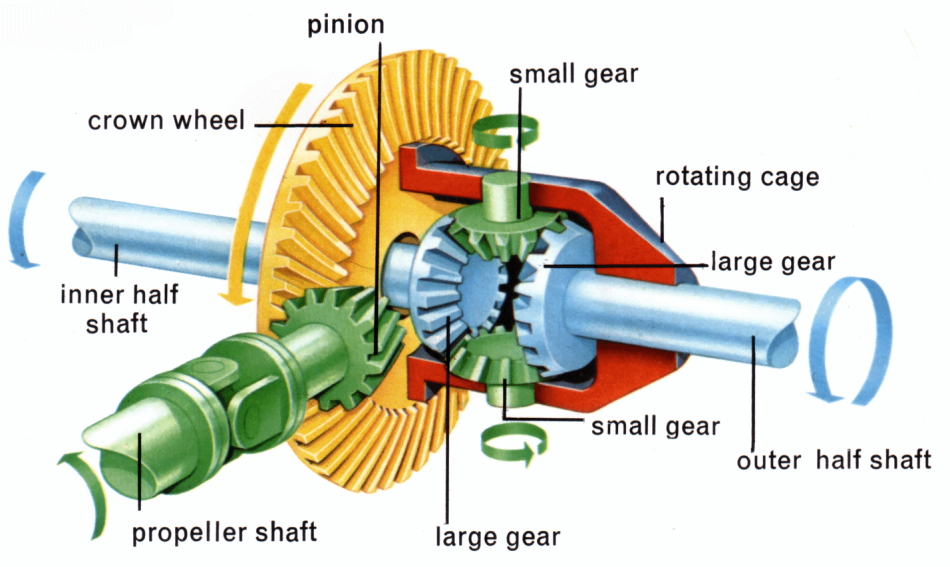
The basic components of an open differential include the ring gear, pinion gear, carrier, and side gears. The pinion gear, driven by the driveshaft, rotates the ring gear, which is attached to the differential case. Inside the case are the side gears connected to the axle shafts, and pinion gears that mesh with the side gears. This setup allows the side gears to rotate at different speeds, accommodating the varying distances traveled by each wheel during a turn.
Advantages
- Simplicity and Cost-Effectiveness: Open differentials have a straightforward design, making them less expensive to manufacture and maintain.
- Predictable Handling: They provide consistent handling characteristics, which can be advantageous for drivers seeking stable and familiar vehicle behavior.
Limitations
- Reduced Traction in Low-Adhesion Conditions: On slippery or uneven surfaces, open differentials may direct power to the wheel with less traction, leading to wheel spin and reduced vehicle mobility.
Limited-Slip Differential (LSD)
A Limited-Slip Differential (LSD) is a type of differential that enhances traction by limiting the speed difference between the two wheels on an axle. This mechanism ensures that power is effectively distributed to the wheel with better grip, especially when one wheel begins to spin.
Functionality and Operation
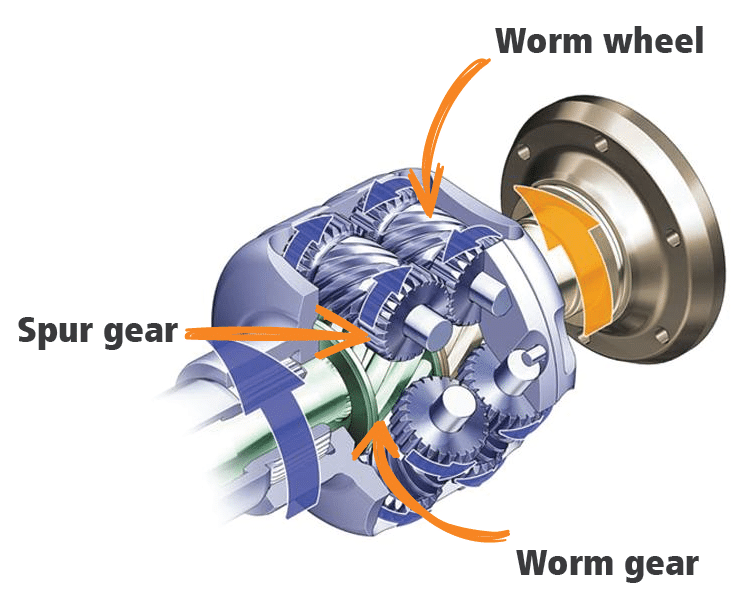
LSDs incorporate mechanisms, such as clutches or gears, that detect differences in wheel speed. When a discrepancy occurs, the LSD engages to transfer more torque to the wheel with greater traction, thereby reducing wheel spin and improving stability.
Advantages
- Enhanced Traction: LSDs improve vehicle stability and control by reducing wheel spin, particularly in conditions like wet, icy, or uneven terrains.
- Improved Handling and Acceleration: By distributing torque more effectively, LSDs enhance handling during cornering and provide better acceleration performance.
- Versatility: They offer a balance between everyday drivability and performance, making them suitable for various driving scenarios, from daily commuting to spirited driving.
Limitations
- Increased Complexity and Maintenance: LSDs are mechanically more intricate than open differentials, leading to higher manufacturing and maintenance complexity. They may require more frequent maintenance, such as fluid changes and inspections, to ensure optimal performance.
- Cost: Due to their complex design and additional components, LSDs generally come at a higher initial cost compared to open differentials.
- Noise and Vibration: Some LSDs can produce noise and vibrations during tight, low-speed turns, which may affect driving comfort.
Locking Differential
Functionality and Operation
Locking differentials can be manually or automatically engaged to lock both wheels on an axle together, ensuring they rotate at the same speed regardless of traction differences. This feature is particularly useful in off-road situations where maximum traction is essential.

Advantages
- Maximum Traction: Locking differentials provide superior traction in off-road conditions, such as mud, sand, or snow, by ensuring both wheels receive equal power.
- Driver Control: Selectable lockers allow drivers to engage or disengage the locking mechanism as needed, offering flexibility based on terrain and driving conditions.
Limitations
- On-Road Handling: Using lockers on paved roads can lead to handling challenges, such as increased turning radius and potential drivetrain stress.
- Complexity and Cost: Locking differentials are generally more complex and expensive than open differentials, both in terms of initial investment and maintenance.
Selecting the Appropriate Differential
Choosing the right differential is crucial for optimizing your vehicle’s performance across various driving scenarios. Below is a detailed guide to help you select the most suitable differential based on your specific requirements:
1. Daily Commuting and Highway Driving
Recommended Differential: Open Differential or Limited-Slip Differential (LSD)
- Open Differential: Ideal for standard daily driving, open differentials provide a balance between cost, efficiency, and adequate traction under typical road conditions. They allow wheels to rotate at different speeds, which is beneficial during turns. However, they may not perform optimally on slippery surfaces, as power is directed to the wheel with less traction.
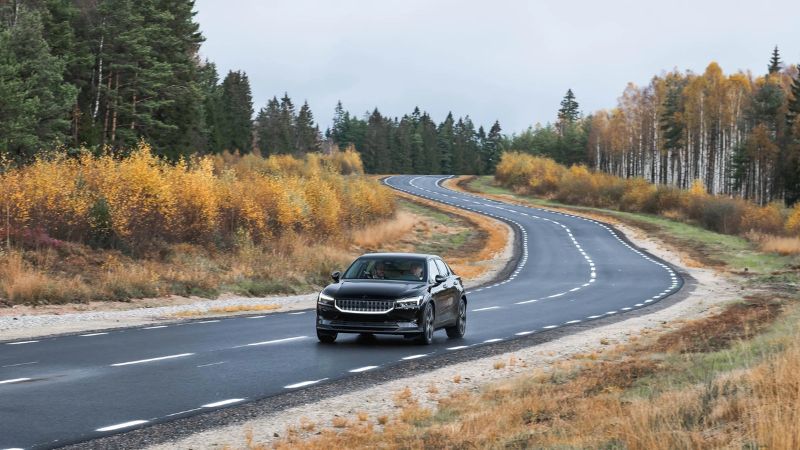
- Limited-Slip Differential (LSD): LSDs enhance traction by limiting the speed difference between the two wheels on an axle. They are particularly beneficial in conditions where one wheel might lose traction, such as wet or icy roads. LSDs provide improved stability and control without significantly increasing cost or complexity.
2. Performance and Sport Driving
Recommended Differential: Limited-Slip Differential (LSD)
- Enhanced Handling and Cornering: LSDs distribute torque more effectively between wheels, improving handling during aggressive cornering. This allows for earlier throttle application and better acceleration out of turns. Drivers may notice increased stability and responsiveness, enhancing the overall driving experience.

- Driving Dynamics: While open differentials can lead to understeer during spirited driving, LSDs mitigate this by ensuring both wheels receive appropriate torque, maintaining better control and balance.
3. Off-Road and Challenging Terrains
Recommended Differential: Locking Differential
- Locking Differential: Locking differentials are designed to provide maximum traction in off-road conditions. They can lock both wheels on an axle together, ensuring equal power distribution regardless of individual wheel traction. This feature is invaluable when navigating uneven, slippery, or loose terrains where wheel slippage is common.

- Selectable Lockers: For vehicles used both on and off-road, selectable lockers offer versatility. They allow drivers to engage or disengage the locking mechanism as needed, providing the benefits of a locking differential when required and the drivability of an open or LSD when not.
4.Additional Considerations
- Vehicle Usage: Assess how you primarily use your vehicle, whether for commuting, performance driving, or off-roading, to determine the most appropriate differential.
- Maintenance and Cost: Locking differentials and LSDs may require more maintenance and come at a higher initial cost compared to open differentials. Consider your budget and willingness to engage in regular maintenance when making your choice.
- Driving Conditions: Regularly encountering slippery or uneven surfaces may necessitate a differential that enhances traction, such as an LSD or locking differential. Conversely, primarily driving on well-maintained roads may not require advanced differential systems
By carefully evaluating your driving habits and conditions, you can select a differential that aligns with your performance needs and enhances your overall driving experience. Alternatively, you can contact us at XJX Auto Parts, where we offer professional services to help you choose a differential that best suits your requirements. We provide a wide range of differential types, including limited-slip and locking differentials, as well as other components such as crown wheels, pinions, and axle shafts.
