
The Torsen differential works by transferring torque when there is a torque difference between the output shafts connected to the differential.
The Torsen differential operates by distributing torque based on the difference in traction between the two output shafts. This mechanism relies on what’s known as a torque bias ratio (TBR). Essentially, the TBR can increase from a 1:1 ratio (where both wheels receive equal torque) to a higher value, such as 3:1. This means that the wheel with better traction can receive up to three times more torque than the wheel with less or no traction.
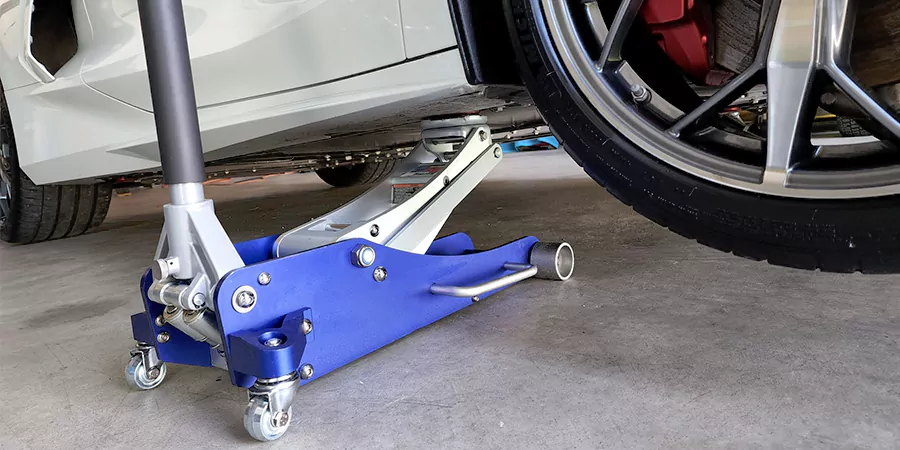
For instance, if one wheel is lifted off the ground, the resistance to traction on that wheel drops to nearly zero. Consequently, the torque needed to turn that wheel also drops to zero (ignoring minor resistances from other components). Since the torque on one side is zero, even with a TBR of 3:1, the total torque remains zero, and the Torsen differential behaves like an open differential in this situation.
To counteract this, you can apply the brake, either by hand or foot, to increase the torque required to turn the wheel with no traction. This brake-induced resistance mimics traction, prompting the Torsen differential to transfer torque to the wheel that’s still on the ground, allowing it to start moving.
Mechanically, each component in a Torsen differential is relatively simple, but when these components work together, the system’s operation can seem complex. When both wheels are turning, the outer wheel naturally rotates faster than the inner wheel. This difference in speed causes the worm gear on the drive shaft to rotate, which in turn causes the corresponding worm gear in the differential housing to rotate at the same rate but in the opposite direction. These worm gears mesh together via spur gears, allowing the differential case to continue spinning at the same rate as the drive shaft. The system works much like an open differential, distributing torque equally between both wheels when traction is equal.
It’s important to note that the Torsen differential doesn’t lock in the traditional sense. Instead, it operates on the principle that while the drive shaft worm gear can turn the worm gear on the differential, the reverse is not true. Suppose you’re driving straight, and the left wheel starts to lose traction, causing it to spin faster. This increased speed turns the left drive shaft worm gear, which then attempts to turn the corresponding worm gear. However, since the right wheel isn’t losing traction at the same rate, its worm gear doesn’t spin as quickly. This discrepancy leads to the left worm gear attempting to speed up the right wheel, but due to the design, the worm gear can’t override the drive shaft worm gear, leading to a “lock” that transfers more torque to the wheel with better traction.
As torque continues to be applied, the system balances out—torque increases on the constrained side and decreases on the side that’s spinning freely. This is how the Torsen differential effectively transfers torque to the wheel with more traction. Once the speeds of both wheels equalize, the constraint between the worm gears is released, allowing the differential to resume its normal operation.
