
Differentials play a crucial role in the performance and functionality of a vehicle, especially when navigating challenging terrain or adverse weather conditions. Two common types of differentials used in off-road vehicles are locking differentials (lockers) and limited-slip differentials (LSDs). While both serve the purpose of improving traction and control, they operate on different principles and offer distinct advantages and limitations.
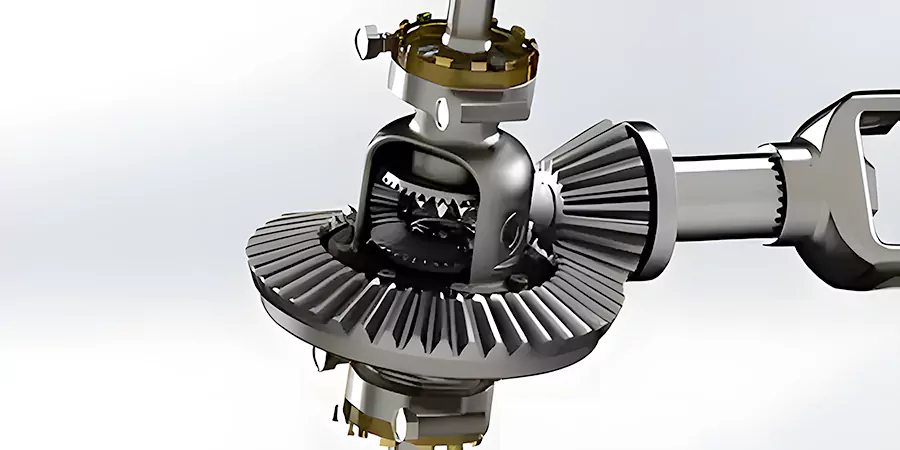
Differential
When a car is moving straight, power is evenly distributed to both left and right half-axles. However, during a turn, the wheels on each side travel different paths. The inner wheel travels a smaller radius than the outer wheel, requiring a device to adjust the speed difference between the left and right half-axles, known as the “differential.” The differential’s role is to ensure that while power is being transferred to both half-axles, it also allows them to rotate at different speeds. In essence, its purpose is to ensure that the vehicle can turn smoothly while ensuring that both wheels have power output during the turn.
Locking Differential (Locker)
- Locking differentials mechanically lock both drive wheels together, ensuring that they rotate at the same speed, regardless of traction differences.
- The primary function of a locker is to provide maximum traction in off-road or low-traction situations, such as deep mud, sand, or rock crawling.
- Lockers are typically engaged manually or automatically when wheel slip is detected, allowing the vehicle to maintain forward momentum and traverse challenging obstacles.
- However, lockers can cause handling issues on high-traction surfaces like pavement, as they can lead to drivetrain binding and tire scrubbing during turns.
Limited-Slip Differential (LSD)
- Limited-slip differentials allow some differentiation in wheel speeds but limit the difference to prevent excessive wheelspin.
- LSDs use various mechanisms such as clutch packs, gear sets, or viscous fluid to limit differentiation and improve traction.
- The primary function of an LSD is to enhance traction and stability, especially during acceleration, cornering, and driving in poor weather conditions.
- LSDs offer smoother operation compared to lockers and are suitable for both off-road and on-road driving applications.
Difference Between Locking Differential and Limited-Slip Differential
- The key difference between lockers and LSDs lies in their operation and behavior. Lockers provide maximum traction by mechanically locking both wheels together, while LSDs allow some differentiation to maintain stability and control.
- Lockers excel in extreme off-road conditions where maximum traction is required, but they can be cumbersome and cause handling issues on high-traction surfaces.
- LSDs offer a balance between traction and drivability, making them suitable for a wider range of driving conditions, including daily commuting and moderate off-roading.
- Both lockers and LSDs have their advantages and limitations, and the choice between them depends on the specific needs and preferences of the driver, as well as the intended use of the vehicle.
Conclusion
In conclusion, while locking differentials and limited-slip differentials serve similar purposes of improving traction and control in off-road vehicles, they operate on different principles and offer distinct advantages. Understanding the differences between these two types of differentials can help drivers make informed decisions when selecting the right drivetrain technology for their vehicles.
