
The Torsen center differential, short for Torque-Sensing Differential, is a critical component in modern all-wheel-drive (AWD) vehicles. Its primary function is to intelligently distribute torque between the front and rear axles, optimizing traction and stability across all wheels.
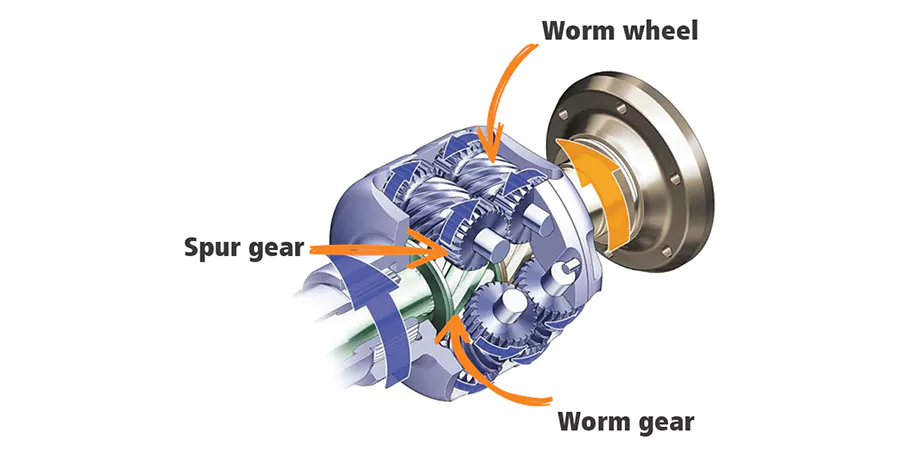
Understanding Torsen Differential Operation
Unlike conventional differentials, Torsen differentials have the ability to lock up under certain conditions of torque imbalance. This locking capability is governed by a Torque Bias Ratio (TBR), which defines how much torque one side of the differential can handle relative to the other. For instance, a Torsen differential with a 3:1 TBR means one side can handle up to three-quarters of the torque while the other side manages only one-quarter. This feature ensures that under asymmetric traction conditions during acceleration, the differential can prevent wheels from slipping excessively.
Role in Cornering and Torque Distribution
During cornering, the outer wheel of a vehicle naturally rotates faster than the inner wheel due to the differential action. The Torsen differential adjusts torque distribution asymmetrically, matching the TBR. This allows the outer wheel to handle more torque, thereby enhancing cornering stability and power delivery. In scenarios where the inner wheel loses traction, the differential can lock momentarily to transfer power effectively, ensuring that both wheels maintain adequate traction.
Use
Torsen differentials are versatile and can be employed in various positions on motor vehicles:
- Center Differential: Typically found in AWD systems, where it distributes torque between the front and rear axles based on traction demands.
- Rear Differential: Used in rear-wheel-drive or four-wheel-drive vehicles to distribute torque between the left and right sides of the rear axle.
- Front Differential: Utilized in front-wheel-drive or four-wheel-drive vehicles to distribute torque between the left and right sides of the front axle.
Certain variants of Torsen differentials, such as the T-2R RaceMaster, incorporate additional features like a preload clutch. This clutch ensures that torque distribution remains active even when one wheel loses contact with the ground, such as during off-road driving or high-performance maneuvers. By maintaining torque transfer under challenging conditions, these differentials enhance vehicle stability and control.
Conclusion
In summary, the Torsen center differential represents a sophisticated advancement in differential technology, offering enhanced traction control and stability across various driving conditions. By intelligently distributing torque between axles or between wheels, it enables vehicles to navigate challenging terrains with confidence and precision, ensuring optimal performance both on and off the road.
