
L.S.D stands for Limited-Slip Differential, a term that many experienced car enthusiasts are familiar with. In a regular household car, there is typically a differential placed in the center of the left and right drive axles, which serves to distribute torque. However, a regular differential is not a limited-slip differential. In terms of functionality and performance, the difference between the two can be understood as night and day. Simply put, a limited-slip differential allows two drive axles to rotate at different speeds while minimizing the difference in their rotational speeds. The key difference between a limited-slip differential and a regular differential is that the former can finely adjust the speed difference, whereas the latter distributes speed more uniformly.

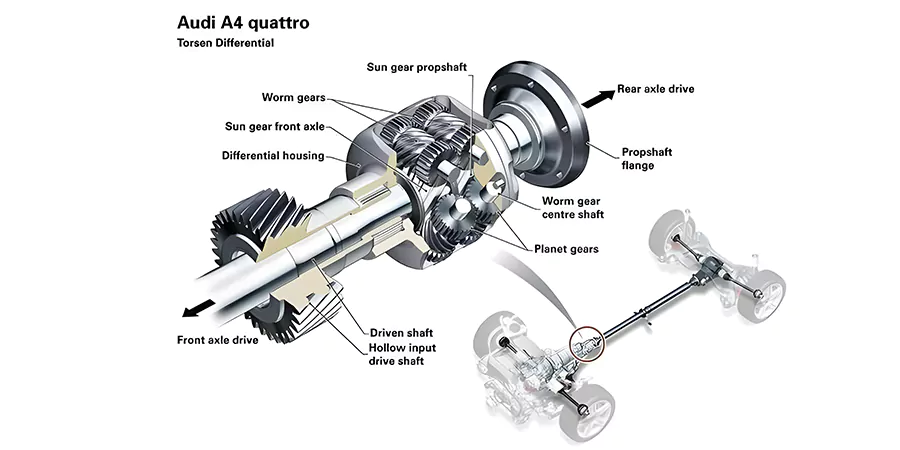
The torque-based limited-slip differentials can be broadly categorized into two main types: clutch-based and mechanical. These two types have vastly different parameters and working methods. The mechanical type, also known as the Torsen (torque sensing) differential, relies on screws for limiting slip, and the degree of limitation is expressed as a lock-up rate percentage.
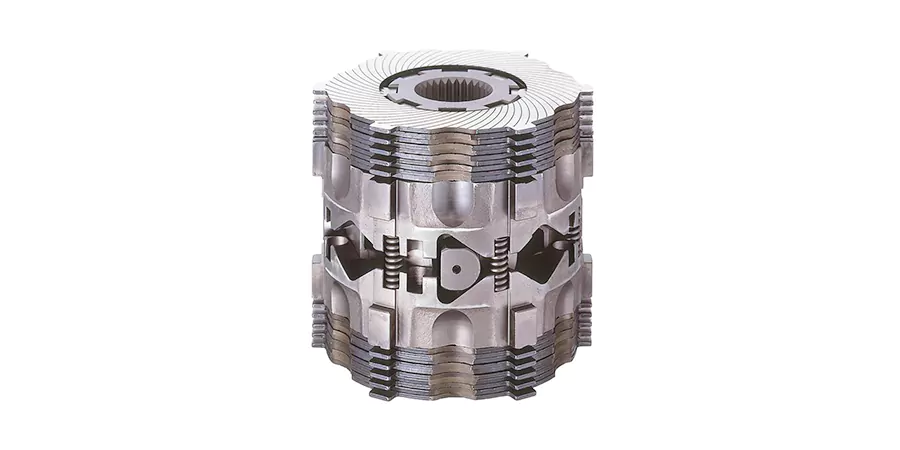
Clutch-based LSDs are more suitable for track use and aggressive driving. They are further divided into 2-way, 1.5-way, and 1-way models to suit different driving forms and vehicle uses. Only clutch-based products have these “way” classifications.
