
When driving off-road or on slippery terrain, maintaining traction can be a serious challenge. Vehicles equipped with all-wheel-drive (AWD) or four-wheel-drive (4WD) systems rely on differentials to distribute power between the wheels. Among these, the central differential lock plays a crucial role in balancing performance, stability, and traction. Understanding what a central differential lock is, how it works, and why it matters is essential for anyone interested in off-road vehicles, utility trucks, or high-performance SUVs.
Understanding the Role of a Differential
Before diving into the specifics of a central differential lock, it’s important to revisit the basic function of a differential. In simple terms, a differential allows wheels connected to the same axle to rotate at different speeds. This is necessary when a vehicle turns because the inside wheels travel a shorter distance than the outside wheels. Without a differential, turning would cause excessive tire wear, drivetrain strain, and handling issues.
In a 4WD or AWD system, there are typically three differentials:
Front differential – manages the left and right front wheels.
Rear differential – manages the left and right rear wheels.
Central differential – manages the power split between the front and rear axles.
The central differential becomes critical when a vehicle operates in all-wheel drive, as it ensures power is distributed appropriately between the front and rear wheels for both on-road comfort and off-road performance.
What Is a Central Differential Lock?
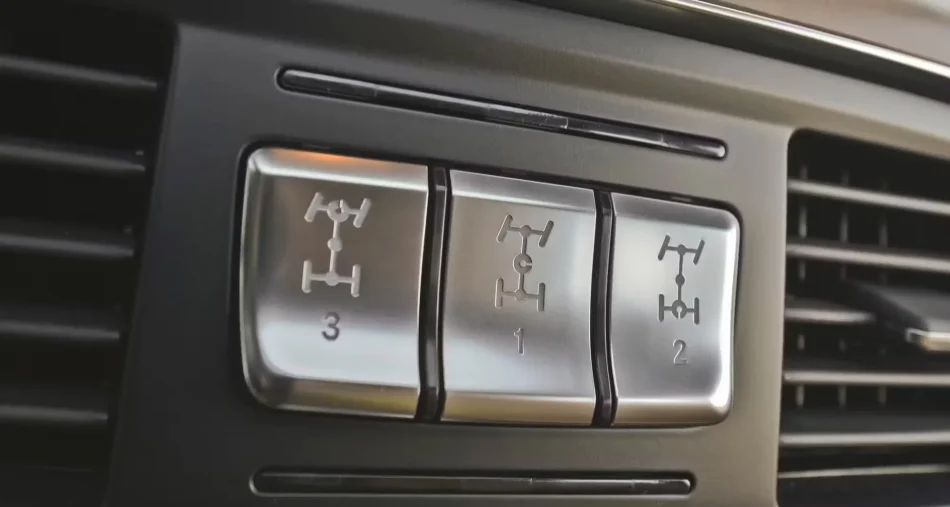
A central differential lock is a mechanism that disables the differential’s ability to let the front and rear axles rotate at different speeds. Normally, the central differential allows power to flow smoothly between the axles, which is great for highway driving. However, in off-road or low-traction conditions, this can lead to power loss.
For example, if one axle loses grip (say, the front wheels on ice), the open central differential will send most of the power to the path of least resistance. This means the slipping wheels spin freely while the axle with traction gets little to no power.
Engaging the central differential lock solves this problem by mechanically linking the front and rear axles together. Once locked, both axles rotate at the same speed, ensuring that power is evenly split and preventing energy from being wasted on slipping wheels. This significantly improves traction in mud, sand, snow, or rocky terrain.
How Does a Central Differential Lock Work?
The mechanism behind a central differential lock varies depending on vehicle design, but the principle remains the same: it forces the front and rear axles to move together. Here are the common types of central differential locks:
1. Mechanical Locking
This system uses gears and dog clutches to physically lock the differential. When activated, the driver or electronic control system engages the lock, connecting the front and rear driveshafts. Mechanical locks are known for their strength and reliability, especially in heavy-duty off-road vehicles.
2. Viscous Coupling
A viscous coupling uses a thick silicone fluid and a series of plates to manage slip between the axles. When one axle spins faster, the fluid heats up and thickens, creating resistance that transfers power to the other axle. While not a true lock, it functions as a limited-slip mechanism, offering smoother engagement but less aggressive traction compared to a mechanical lock.
3. Electronic Locking Systems
Modern SUVs and trucks often use electronically controlled differential locks. With the push of a button, sensors and actuators engage the lock. These systems may work in conjunction with traction control and stability programs, automatically engaging when slip is detected. Electronic locks provide a balance between driver convenience and effective performance.
Benefits of a Central Differential Lock
The central differential lock offers several advantages in both on-road and off-road driving conditions:
-
Improved Traction – The primary benefit is preventing loss of power when one axle slips. By locking both axles together, vehicles can continue moving even if one set of wheels is on a slippery surface.
-
Enhanced Off-Road Performance – For serious off-roaders, a central differential lock is a must-have. It helps navigate mud pits, sand dunes, snow trails, and uneven rocky terrain where grip is inconsistent.
-
Balanced Power Distribution – Unlike relying solely on traction control systems, the lock provides a mechanical solution, ensuring consistent power split regardless of surface conditions.
-
Increased Vehicle Stability – By ensuring both axles rotate together, the vehicle maintains forward momentum, reducing the likelihood of getting stuck.
-
Driver Confidence – Knowing that the vehicle has a reliable backup for difficult conditions gives drivers the confidence to explore challenging routes.
When Should You Use a Central Differential Lock?
While highly effective, the central differential lock is not meant for every situation. It should be used selectively depending on driving conditions.
-
Use it on:
-
Muddy or sandy tracks
-
Snow-covered roads
-
Uneven rocky trails
-
Low-traction surfaces where one axle may slip
-
-
Avoid using it on:
-
Dry pavement
-
High-speed highways
-
Tight turns on grippy surfaces
-
Driving with the central differential locked on firm pavement can cause drivetrain binding, increased tire wear, and potential mechanical damage. It is best to engage the lock only when extra traction is necessary.
When Should You Use an Axle Differential Lock?
While a central differential lock ensures that the front and rear axles rotate together, an axle differential lock (installed in the front or rear axle) takes control to the next level. By locking the left and right wheels on the same axle, it guarantees that both wheels rotate at the same speed, regardless of traction differences.
-
Use it on:
-
Rocky terrain where one wheel may lift off the ground
-
Cross-axle situations where one wheel spins freely while the opposite wheel has grip
-
Deep mud or snow where traction is uneven between the two sides of an axle
-
Steep off-road climbs where a single wheel losing grip could halt progress
-
-
Avoid using it on:
-
High-speed driving on solid pavement
-
Tight turns on high-traction surfaces, as locked wheels resist speed differences and may cause tire scrub or drivetrain stress
-
In practice, many drivers first engage the central differential lock to handle general low-traction surfaces. If conditions become more extreme—such as when one wheel on an axle is completely airborne—then the axle differential lock becomes essential to maintain forward motion. Together, these two systems form the backbone of serious off-road capability.
Central Differential Lock vs. Axle Locks
Many off-road vehicles also offer front and rear differential locks. While they sound similar, their roles are different:
| Feature | Central Differential Lock | Axle Differential Lock |
|---|---|---|
|
Function |
Locks power split between front and rear axles |
Locks left and right wheels on the same axle |
|
Purpose |
Ensures both axles rotate together |
Ensures both wheels on one axle rotate together |
|
Best Use |
General low-traction conditions |
Extreme off-road conditions where one wheel is airborne or slipping |
|
Common Vehicles |
SUVs, AWD cars, 4WD trucks |
Hardcore off-road vehicles, rock crawlers |
In essence, the central differential lock is the first step toward improving traction in difficult terrain, while axle locks provide an additional level of control for extreme scenarios.
Vehicles Equipped with Central Differential Locks
Central differential locks are commonly found in:
-
4WD SUVs such as Toyota Land Cruiser, Mitsubishi Pajero, and Jeep Grand Cherokee.
-
Off-road trucks like certain Land Rover Defenders and Toyota Hilux models.
-
High-performance AWD cars including some rally-bred models, where traction under variable conditions is crucial.
Not all AWD systems include a central differential lock. Some vehicles rely solely on electronic traction control systems. For serious off-road driving, however, having a physical lock provides a more dependable solution.
Maintenance and Reliability
Like any drivetrain component, the central differential lock requires proper maintenance to function effectively:
-
Regular Inspection – Ensure that linkages, actuators, or electronic systems are working properly.
-
Lubrication – For mechanical locks, proper lubrication prevents wear and overheating.
-
Engage Periodically – Even if you don’t frequently drive off-road, it’s recommended to engage the lock occasionally to keep the mechanism in good working order.
-
Check Warning Lights – If your vehicle has an electronic lock, pay attention to dashboard indicators signaling issues.
When maintained correctly, a central differential lock can last the lifetime of the vehicle, offering dependable performance whenever conditions demand it.
Conclusion
The central differential lock is one of the most valuable features in a four-wheel-drive or all-wheel-drive vehicle. By mechanically linking the front and rear axles, it ensures power is not wasted on slipping wheels, dramatically improving traction and off-road capability. While it should not be used on dry pavement, it becomes indispensable in mud, snow, sand, and rocky terrain.
For drivers who regularly encounter challenging road conditions—or those who demand maximum reliability from their vehicles—the central differential lock remains an essential component. Whether you are an off-road enthusiast, a utility vehicle operator, or simply curious about drivetrain technology, understanding how it works helps you make informed decisions about your vehicle’s capabilities and maintenance.
