Understanding Clutch-type Limited Slip Differential

In the world of racing, many enthusiasts equip their vehicles with LSDs (Limited Slip Differentials) to enhance the vehicle’s power response in corners. However, misconceptions about LSDs have arisen, partly due to a lack of understanding among enthusiasts and partly due to imprecise installation practices. Today, I’ll take this opportunity to share my knowledge with you.

LSDs are typically divided into mechanical and friction types, and today, we’ll focus on the latter. I’ll provide a step-by-step breakdown of a friction-type LSD to help you understand its working principle and adjustment methods.

Functionality of Friction Plates

In an LSD, friction plates serve two main functions. The first is the locking plate, which, when combined with the slots in the differential housing, provides locking. Mechanics often refer to it as the “male” plate. The second is the rotating plate, which primarily generates friction with the upper and lower locking plates to create a lock. Mechanics commonly call it the “female” plate. Now, let’s delve into the adjustment techniques and lock rates.

Adjusting Lock Rates

By combining the friction plates, you can adjust the LSD’s lock rate. For example, combining two locking plates theoretically results in a 1+1=1 state, as two locking plates together do not create a locking friction relationship. This means that the five sets of friction plates have now become four sets, as the lock rate is calculated in percentages. So, the LSD’s lock rate has changed from 100% to 80%. Similarly, further parallel combinations will decrease the lock rate.
When adjusting the combination of friction plate sets, remember to align the lubricating oil passages. This ensures adequate lubrication during LSD operation, preventing wear due to high temperatures. Severe overheating can cause the friction plates to turn blue, rendering them unusable, which can be costly to replace.

Key Adjustment Considerations

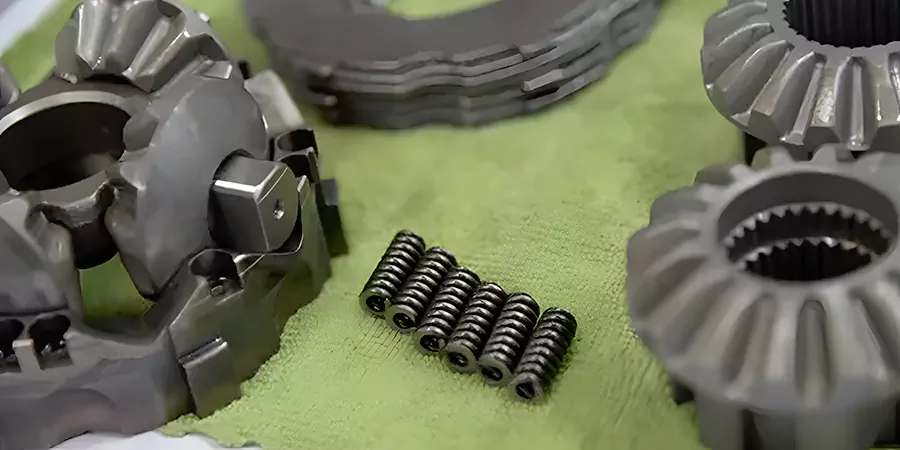
Clutch-type Limited Slip Differential Structure
Here’s a crucial point to remember: avoid adjusting the lock rate too low. When the power output is too high, the friction plates can generate high temperatures due to excessive speeds. If the plates turn blue due to annealing after high temperatures, they must be replaced. Additionally, it’s essential to adjust the upper and lower friction plates consistently to ensure uniform lock rates on both sides, which affects the LSD’s performance.
The friction plate set is a component for adjusting the LSD lock rate, but the planetary gear set between the two sets of friction plates is also crucial. Let’s explore them next.

The Role of Planetary Gear Sets

Above the planetary gear set, there are 12 slots. We can adjust the clearance between the friction plates by using springs rated in kilograms, which can also be understood as adjusting response time. During assembly, it’s crucial to install them diagonally for even force distribution. You can install a minimum of four springs and a maximum of twelve springs. The compression and release of the springs adjust the distance between the friction plates, changing the lock response time. Another fascinating aspect is the angle of the spring slot near the gear set, which sets and adjusts the number of ways.
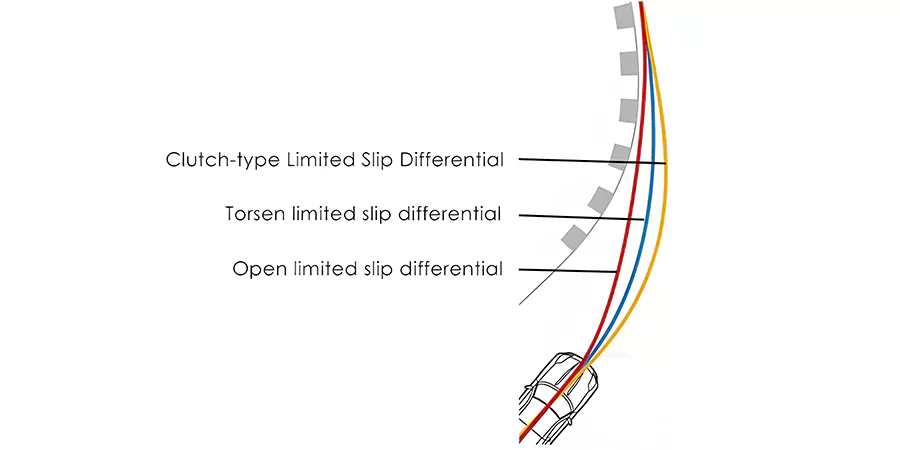
Comparison of cornering effects of different types of limited slip differentials
Finally, when the vehicle accelerates through corners, the red line represents a friction-type LSD with rapid lock response and a noticeable cornering suction sensation. The blue line represents a mechanical LSD, which requires experience and vehicle state compensation to overcome the low mechanical lock rate. Clearly, the yellow line represents the factory differential, which easily leads to insufficient steering when accelerating through corners.

Conclusion

In conclusion, understanding LSDs, especially the friction plate type, requires a grasp of these technical aspects. Proper installation and adjustment ensure optimal performance and longevity of these critical components in a vehicle’s drivetrain system.
Shopping Cart