
Buying your first 4×4 is an exhilarating moment. Whether you have purchased a brand-new truck or a used SUV, the urge to hit the trails and test its limits is natural. However, there is a common misconception among new enthusiasts that a factory-standard vehicle is ready to conquer any terrain immediately. While modern engineering is impressive, the reality is that stock vehicles are built primarily for fuel economy, highway comfort, and cost-efficiency—not for crawling over boulders or powering through deep mud.
If you start searching online, you will find thousands of accessories promising to transform your ride. It can be overwhelming. Do you need a light bar? A roof rack? A massive lift kit? The answer is often no, not yet.
To build a capable rig without wasting money, you need to focus on functionality first. We have compiled the definitive guide to the top 5 best off-road upgrades for beginners. These modifications prioritize performance, safety, and traction over aesthetics, ensuring that your vehicle can handle the wild and, more importantly, get you home safely.
1. All-Terrain or Mud-Terrain Tires
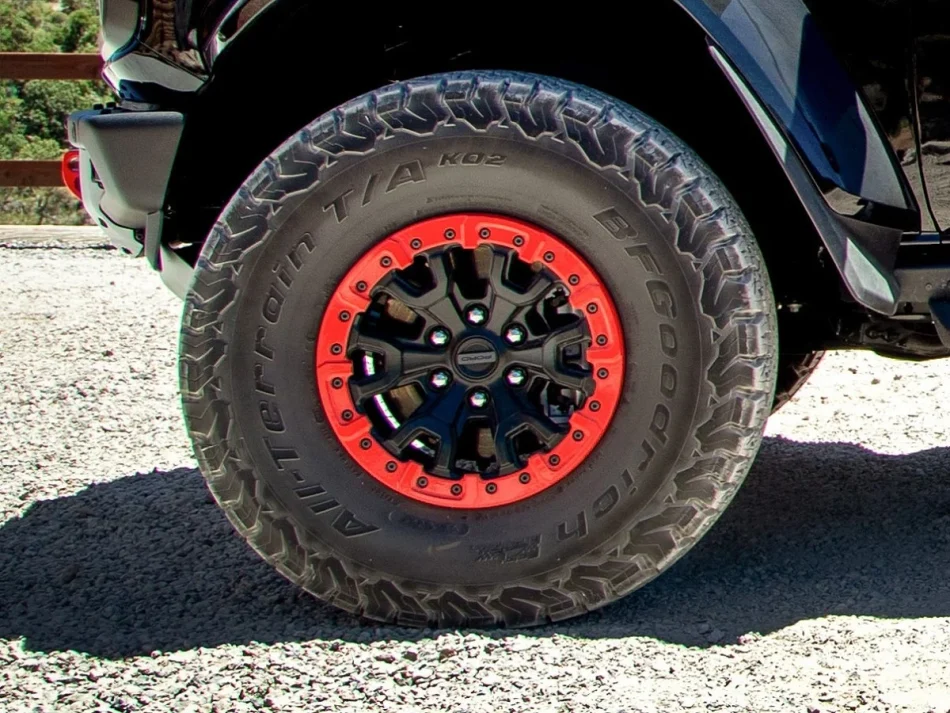
It is often said in the automotive world that tires are the only thing connecting your vehicle to the ground. This is doubly true off-road. No matter how much horsepower your engine produces or how advanced your suspension is, it is useless if your tires cannot grip the surface.
Why Stock Tires Fail
Most factory vehicles come equipped with Highway Terrain (H/T) tires. These are designed for low noise, good gas mileage, and longevity on pavement. The rubber compound is hard, and the tread pattern is tightly packed. When you take H/T tires into mud, the tread fills up instantly, turning your tire into a “slick” with zero traction. On rocks, the thin sidewalls of stock tires are prone to punctures and tears, which can leave you stranded.
Choosing the Right Rubber
For most beginners, the best upgrade is a high-quality set of All-Terrain (A/T) or Mud-Terrain (M/T) tires.
- All-Terrain (A/T): This is the sweet spot for a vehicle that serves as a daily driver during the week and an adventure rig on weekends. Modern A/T tires offer aggressive sidewalls for protection and deeper tread blocks for dirt and snow, yet they remain relatively quiet on the highway.
- Mud-Terrain (M/T): If your local trails are dominated by deep mud or sharp, jagged rocks, an M/T tire might be necessary. They feature massive voids between tread blocks to “self-clean” (eject mud as they spin). However, be prepared for more road noise and faster wear on pavement.
Pro Tip: When upgrading tires, consider the size carefully. You want the largest tire that fits without rubbing against your fenders or suspension components. This naturally lifts your differentials higher off the ground, providing true ground clearance.
2. Traction Upgrades: The Differential
While tires are the visible heroes of off-roading, the differential is the unsung hero that actually determines whether you move forward or get stuck. This is often the most overlooked upgrade for beginners, yet it yields the highest return on investment regarding vehicle capability.
The Problem with the "Open Differential"
Most stock 4×4 vehicles come from the factory with what is known as an “Open Differential.” This mechanism is excellent for driving on pavement because it allows the wheels on an axle to spin at different speeds—essential when turning a corner.
However, off-road, the open differential has a critical flaw: it sends power to the wheel with the least amount of resistance.
Imagine you are climbing a rocky hill. One wheel is firmly planted on a rock, but the other wheel lifts slightly into the air or hits a patch of loose gravel. An open differential will send 100% of the engine’s power to the wheel in the air (because it is easier to spin), while the wheel on the rock (which has traction) gets zero power. You are effectively stuck, despite having a powerful engine. This is often referred to as the “one-wheel peel.”
The Solution: LSD and Lockers
To fix this, you need to upgrade the internal components of your axle. There are two primary paths for this:
Limited Slip Differential (LSD)
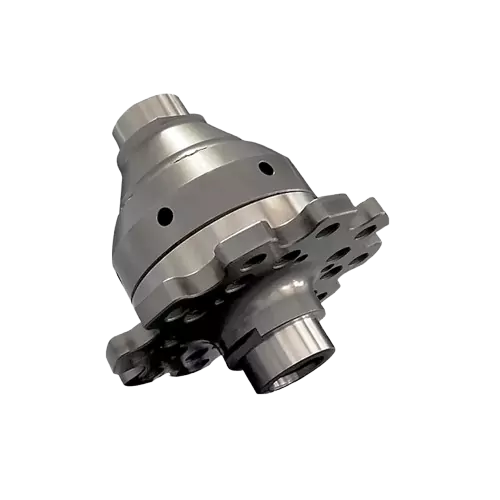
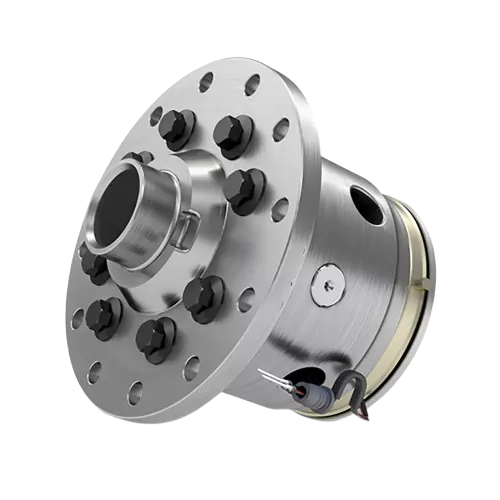
An LSD is an automatic system that detects when a wheel is slipping and transfers a portion of the power to the wheel with grip. It is a fantastic upgrade for vehicles that see a lot of snow, sand, or wet roads. It is smooth, requires no driver input, and drastically improves performance over an open differential without compromising daily driving manners.
Selectable Lockers (Air or E-Lockers)
For those serious about off-roading, a selectable locker is the gold standard. With the flip of a switch (Air Locker) or the push of a button (Electronic Locker), you mechanically lock the two axle shafts together. This forces both wheels to spin at the same speed, regardless of traction. Even if one wheel is completely off the ground, the other wheel will keep the vehicle moving forward.
Upgrading from an open diff to a locker or high-performance LSD changes the physics of how your vehicle drives. It reduces the need for momentum, allowing you to crawl over obstacles slowly and with control, thereby reducing the risk of damaging other parts.
3. Suspension Lift Kits
Once you have traction sorted, the next limitation you will encounter is ground clearance and suspension articulation. Trails are rarely flat; they are filled with ruts, stumps, and boulders waiting to snag your undercarriage.
Clearance vs. Articulation
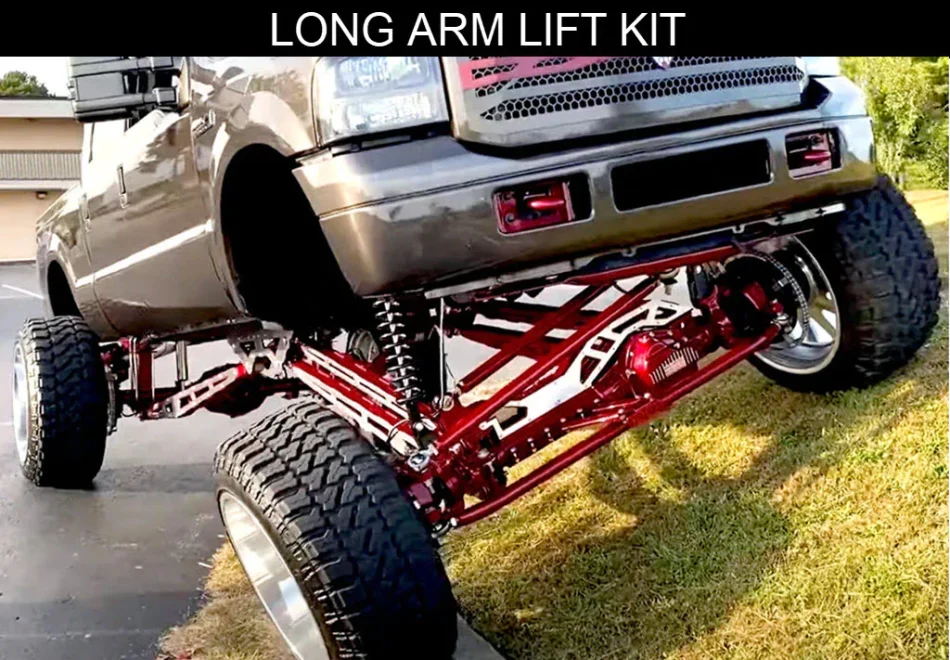
A suspension lift kit serves two main purposes. First, it raises the frame and body of the vehicle, increasing the “approach,” “breakover,” and “departure” angles. This means you can drive up steeper obstacles without smashing your front bumper or getting high-centered on your frame rails.
Second, a quality suspension upgrade improves articulation (or “flex”). Articulation refers to how far a wheel can travel up or down. Good articulation ensures that your tires stay in contact with the ground over uneven terrain. Remember, as we discussed in the differential section, tires on the ground equal traction.
Avoiding the "Cheap Lift" Trap
As a beginner, be wary of “spacer lifts” or “body lifts” that simply insert a block of metal or polyurethane above your springs to add height. While this makes the truck look cool and allows for bigger tires, it does nothing to improve performance and can actually make the ride quality worse.
Invest in a complete suspension system that includes new coil springs (or leaf springs) and longer shock absorbers. High-quality shocks are designed to dissipate heat and control the bouncing motion of the vehicle on rough corrugated roads, making your ride significantly more comfortable and controlled.
4. Armor and Protection (Skid Plates and Sliders)
Now that your vehicle is higher and has better traction, you will inevitably attempt harder trails. This increases the risk of impact. Off-road armor is like insurance: you hope you don’t need it, but you will be glad you have it when a mistake happens.
Skid Plates
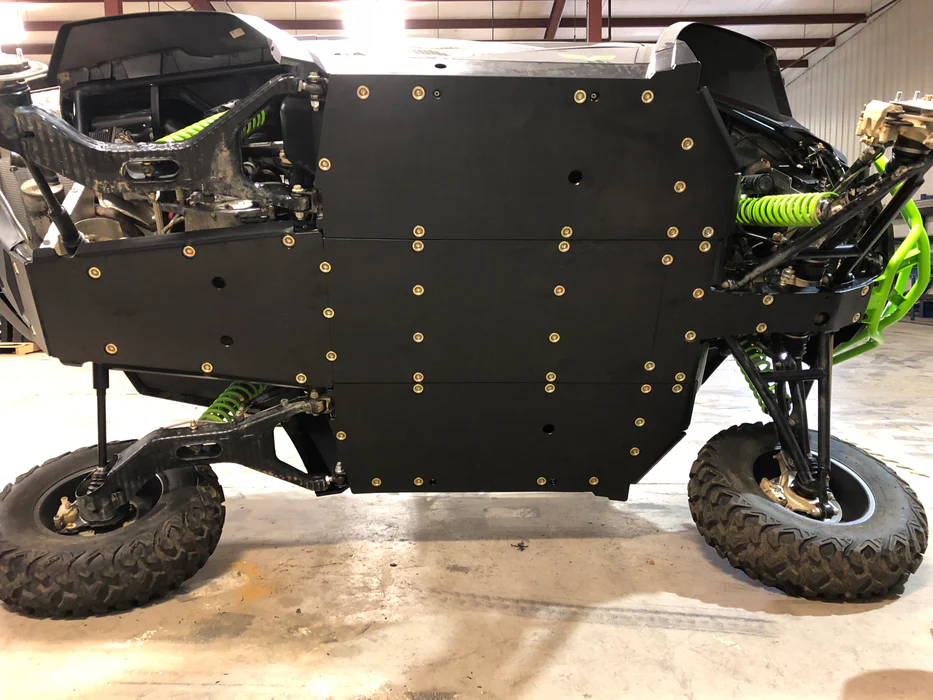
Factory vehicles often come with thin plastic or tin splash guards that look like skid plates but offer zero structural protection. One bad impact on a rock can crack an oil pan, puncture a fuel tank, or damage the transmission housing. These are catastrophic failures that can leave you stranded miles from civilization.
Installing aftermarket steel or aluminum skid plates protects these vital organs. They are designed to take the weight of the vehicle sliding over a rock, shielding the delicate mechanical parts above.
Rock Sliders
Rock sliders are heavy-duty steel rails that bolt to the side of your vehicle’s frame, running under the doors. They serve a dual purpose. First, they protect the rocker panels (the bodywork below the doors) from being crushed when dropping off a ledge. Second, they act as a pivot point. You can intentionally place the slider against a tree or rock to pivot the vehicle around a tight turn.
Unlike “side steps” or “running boards,” which are often made of thin tubing and mounted to the body, rock sliders are mounted to the frame and are built to support the entire weight of the truck.
5. Recovery Gear
The final item on our list of best off-road upgrades is not a part you bolt onto the truck for performance, but it is essential for safety. No matter how built your vehicle is—even with lockers and 40-inch tires—you will eventually get stuck. It is part of the sport.
The Essentials
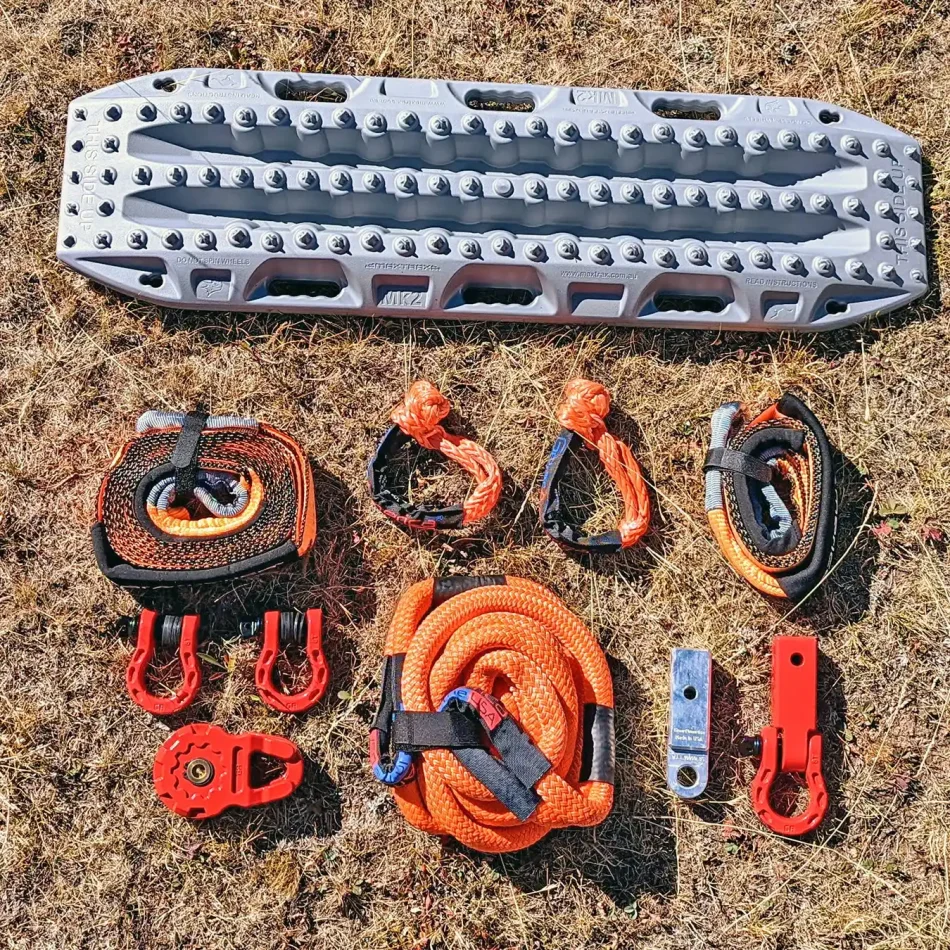
For beginners, a basic recovery kit is mandatory before heading out. This should include:
- Recovery Strap (Snatch Strap): Unlike a tow strap, a kinetic recovery strap is elastic. When a recovery vehicle pulls you, the strap stretches and uses kinetic energy to slingshot the stuck vehicle out of the mud or sand smoothly.
- Rated Shackles (D-Rings): You need safe points to attach your straps. Never use a tow ball for recovery; it can shear off and become a deadly projectile.
- Traction Boards: These are plastic boards with raised teeth. If you are stuck in sand or snow and don’t have another vehicle to pull you, you can jam these under your tires to gain instant grip.
The Winch
As you progress, a winch becomes a vital upgrade. A winch allows you to self-recover without relying on another vehicle. It mounts to your front bumper and gives you the ability to pull your vehicle up impossible inclines or out of deep bogs. However, a winch adds significant weight to the front of the vehicle, so it is often best installed after you have upgraded your front suspension to handle the load.
The Importance of Quality Components
When modifying your vehicle, the temptation to buy cheap, unbranded parts from auction sites is strong. However, in the off-road world, reliability is paramount. A cheap light bar failing is an annoyance; a cheap differential gear shattering or a suspension arm snapping in the middle of a trail is a disaster.
Quality parts are engineered with precise tolerances and superior metallurgy. They are tested to withstand the extreme torque loads and vibrations that occur when driving off-pavement. When you upgrade your differential, for example, the precision of the gear meshing determines whether the unit lasts for 100,000 miles or fails after the first difficult climb.
Choosing parts from reputable sources ensures that you are getting components that meet or exceed OEM specifications. This is particularly true for drivetrain components. The internal gears of a differential operate under immense pressure. Using substandard steel or poor heat-treatment processes in these components is a recipe for failure.
Conclusion
Building a capable off-road vehicle is a journey, not a sprint. By focusing on these top 5 best off-road upgrades—Tires, Differentials, Suspension, Protection, and Recovery—you build a solid foundation that balances performance with reliability.
Avoid the hype of flashy accessories and focus on what makes the vehicle work. Remember, a stock-looking truck with a rear locker and good tires will drive circles around a lifted truck with an open differential and cheap suspension. Prioritize traction and mechanical reliability, and you will be able to explore landscapes that few others get to see.
If you are ready to take your vehicle’s traction to the next level, or if you are looking for high-quality replacement parts to rebuild your drivetrain, quality manufacturing makes all the difference.
At XJXPARTS, we specialize in manufacturing precision auto parts, including high-performance differential components. As a factory-direct provider, we ensure that every gear, shaft, and assembly meets rigorous standards for durability and fitment. Whether you are looking to replace a limited-slip differential, a locking diff, or upgrade your system for better off-road performance, we are here to help you build a rig that lasts.
If you have specific requirements or need advice on the right parts for your vehicle model, please visit our Contact Us page. Our team is ready to assist you in finding the perfect solution for your off-road needs.
