
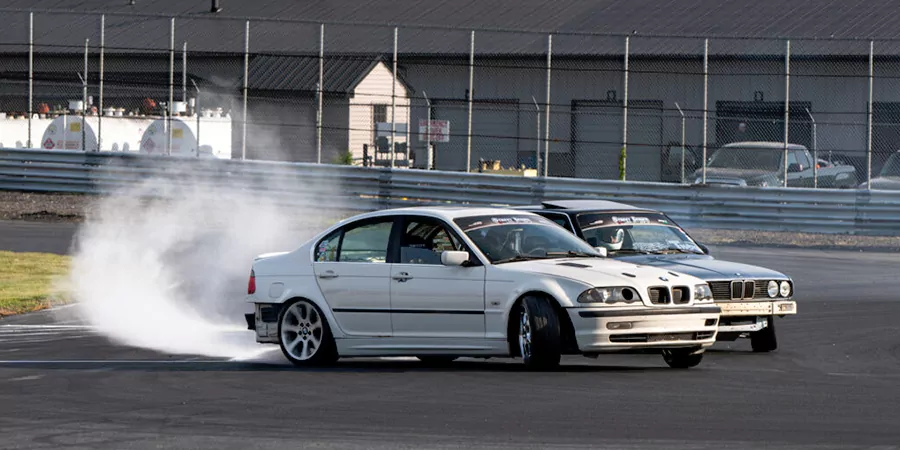
Drifting is a thrilling motorsport technique where the car’s direction is intentionally misaligned with its actual path, creating a dramatic sliding motion through corners. This captivating driving style is not only popular in motorsport events like rally racing but also serves as a spectator magnet due to its impressive visual appeal. Let’s delve into the intricacies of drifting, the methods used to achieve it, and the essential skills needed to master this exhilarating driving art.
Drifting Basics
At its core, drifting involves making the rear wheels lose most or all of their grip while the front wheels retain theirs, or even gain extra traction. When the front wheels maintain some lateral grip, the car can be controlled into a drift by initiating oversteer. The key to a successful drift lies in the delicate balance between the grip and slip of the tires, requiring precise control and timing.
- Conditions for Drifting
- Rear Wheel Traction Loss: The rear wheels must lose a significant amount of traction.
- Front Wheel Traction Maintenance: The front wheels should retain some traction to control the direction of the drift.
To achieve these conditions, drivers use various techniques to manipulate tire grip and weight distribution.
- Methods to Induce Rear Wheel Traction Loss
- Creating a Negative Speed Differential: Inducing a difference in speed between the rear wheels and the ground, such as through sudden braking or handbrake application.
- Reducing Rear Wheel Pressure: Lessening the downward force on the rear wheels, often by shifting the car’s weight forward.
- Maintaining Front Wheel Traction
- Minimizing Speed Differential: Ensuring the front wheels maintain a consistent speed relative to the ground.
- Sustaining Positive Pressure: Keeping enough downward force on the front wheels, ideally increasing it to enhance grip.
Both conditions must be met simultaneously for a successful drift.
Drifting Techniques
- Handbrake Drift
- On a straight path, pull the handbrake and steer into the desired direction.
- During a turn, pull the handbrake to initiate the drift.
- Braking Drift
- On a straight path, brake hard and then steer into the turn.
- During a turn, apply a sudden brake to shift weight forward, causing the rear to lose traction.
- Power Over Drift
In powerful rear-wheel-drive cars (or AWD cars with a rear bias), sharply accelerate while steering into the turn to break rear traction.
Drifting vs. Regular Cornering
While drifting and regular cornering both have speed limits, the limits for drifting can sometimes exceed those for regular cornering, though not always. On hard surfaces, the speed limit for drifting is often lower than for standard cornering due to the reduced grip of sliding tires.
Conclusion
Drifting is a complex yet highly rewarding driving technique that combines skill, precision, and a deep understanding of vehicle dynamics. Whether you’re looking to master drifting for competitive racing or simply to enjoy its spectacular nature, honing these skills requires practice and a keen sense of control. Remember, the essence of drifting lies in the balance between losing and maintaining traction, making it a true art form in the world of motorsports.
