
Off-road vehicles are designed to tackle rough terrains and challenging conditions that regular cars cannot. Here are the key characteristics that make a vehicle suitable for off-road driving, along with their importance and functions:
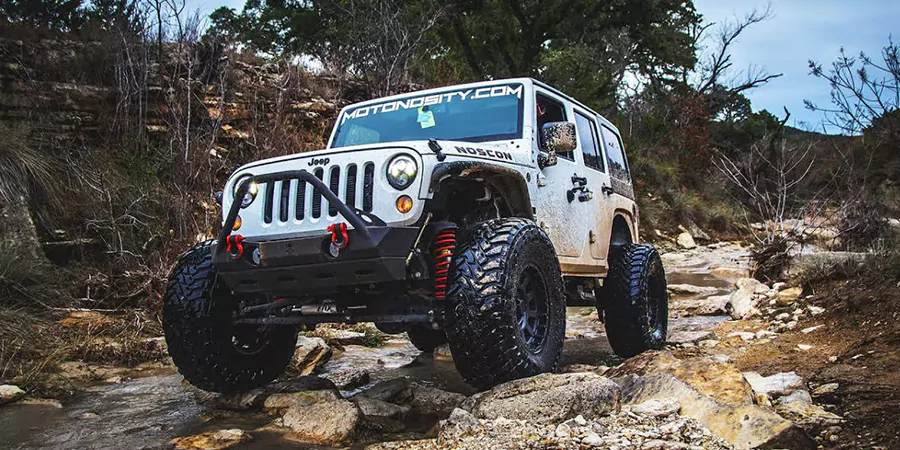
- High Ground Clearance
The distance between the lowest part of the vehicle and the ground. High ground clearance prevents the vehicle from getting stuck on rocks, logs, and other obstacles. It also reduces the risk of damage to the undercarriage.
- Four-Wheel Drive (4WD) or All-Wheel Drive (AWD)
Systems that provide power to all four wheels. 4WD or AWD systems improve traction on uneven and slippery surfaces, making it easier to navigate through mud, sand, snow, and rocky terrain.
- Robust Suspension System
The system that supports the vehicle and absorbs shocks from the terrain. A durable and flexible suspension system enhances ride comfort and keeps the wheels in contact with the ground, improving traction and stability on rough surfaces.
- Durable Tires
Tires designed specifically for off-road use, often with deep treads and reinforced sidewalls.
Off-road tires provide better grip and puncture resistance, essential for handling sharp rocks, mud, and uneven terrain.
- Powerful Engine
An engine with high torque output, particularly at low RPMs.
A powerful engine ensures that the vehicle can climb steep hills, navigate through deep mud, and overcome other challenging obstacles without losing momentum.
- Low-Range Gearbox
A gearbox that allows the driver to select a lower gear ratio for increased torque. Low-range gears provide the extra power needed for climbing steep inclines, descending sharp declines, and moving through tough terrain at slow speeds.
- Skid Plates
Protective metal plates attached to the underside of the vehicle.
Skid plates protect vital components like the engine, transmission, and fuel tank from damage caused by rocks and debris.
- Locking Differentials
Mechanisms that lock the differential to ensure both wheels on the same axle rotate at the same speed. Locking differentials improve traction by ensuring power is evenly distributed to both wheels, preventing one wheel from spinning while the other remains stationary.
- Approach, Departure, and Breakover Angles
Angles that determine how well a vehicle can handle steep inclines and declines without scraping the front, rear, or underside. High approach, departure, and breakover angles allow the vehicle to tackle steep slopes and uneven terrain without damaging the bumpers or getting stuck.
- Water Fording Capability
The ability of a vehicle to drive through water without flooding the engine or cabin. A high water fording capability ensures the vehicle can cross rivers and streams without sustaining damage.
- Winch and Recovery Points
A winch is a mechanical device used to pull the vehicle out of tough spots, while recovery points are reinforced areas on the vehicle to attach tow straps or winches. A winch and recovery points are essential for self-recovery and helping other vehicles when stuck in difficult conditions.
Conclusion
By considering these key characteristics, you can choose a vehicle that is capable of handling the demands of off-road driving and enjoy your adventures with confidence.
