How a Torsen Limited-Slip Differential Works?

The Torsen (Torque-Sensing) limited-slip differential (LSD) is a purely mechanical device designed to combine the smooth operation of a conventional differential with the ability to direct torque to the wheel that can use it most effectively. Widely applied in performance, sports, and off-road vehicles, the Torsen LSD addresses the key problem that open differentials cannot solve: the loss of drive when one wheel slips. Understanding its operation requires looking at torque distribution, axial forces, and the mechanical design that allows it to sense torque differences.
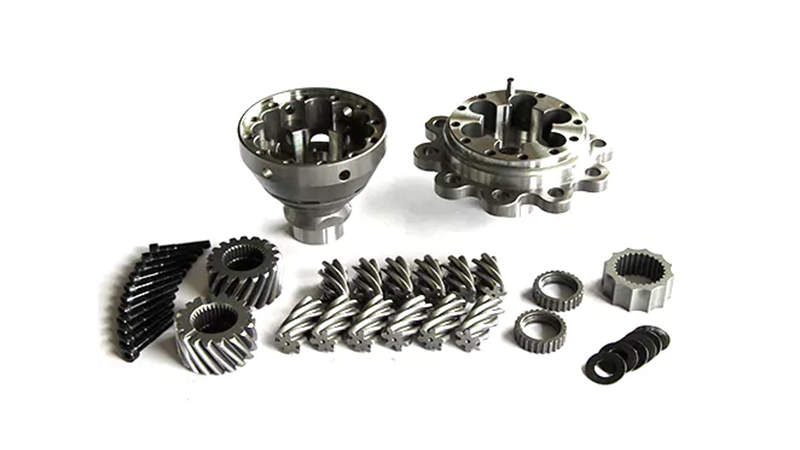
Torsen Limited-Slip Differential

Torque Bias Ratio

At the heart of the Torsen differential is the concept of torque bias. The Torque Bias Ratio (TBR) defines the maximum multiple of torque that can be sent to the wheel with better traction relative to the wheel losing traction. For instance, a Torsen with a 3:1 bias ratio can theoretically deliver up to three times as much torque to the gripping wheel as to the slipping wheel. Unlike electronic systems, this bias occurs entirely through the internal geometry of helical worm gears and side gears.
This mechanical torque sensing is fundamentally different from friction-based limited-slip differentials. It does not rely on clutches to transfer torque; instead, torque redistribution occurs naturally through the forces generated inside the gear set.

How Torque Is Distributed?

When both wheels have traction, the Torsen functions like a conventional differential, allowing each wheel to rotate at different speeds during cornering. When one wheel begins to slip—due to low traction or lifting—the semi-axis connected to that wheel drives its worm gear. The helical teeth of the gear generate axial forces along the gear axis. These forces push the worm gear against its mating components, creating resistance to relative rotation. This resistance, which arises purely from the mechanical design, limits the torque that can be “lost” through the slipping wheel.
The torque that the slipping wheel cannot handle due to traction limitations is mechanically transferred to the wheel with grip. This ensures that available engine power is applied to the wheel capable of using it, rather than being wasted on the wheel spinning freely.

Axial Force and Friction

Axial force is the key to how a Torsen works. When the helical worm gear tries to rotate faster than its mating gear, the geometry converts part of that rotational motion into a force along the axis of the gear. This axial force presses the worm gear into contact with its surrounding gears, generating friction that resists free spinning. The friction is not an energy-wasting component like in clutch-based LSDs; instead, it is an inherent consequence of the gear geometry that enables torque transfer.
This internal friction effectively limits the torque that the slipping wheel can consume. Because one wheel cannot absorb all the torque, the system automatically redirects the remaining torque to the wheel with traction. This is why a Torsen is able to improve traction without active electronic intervention.

Preload and Differential Responsiveness
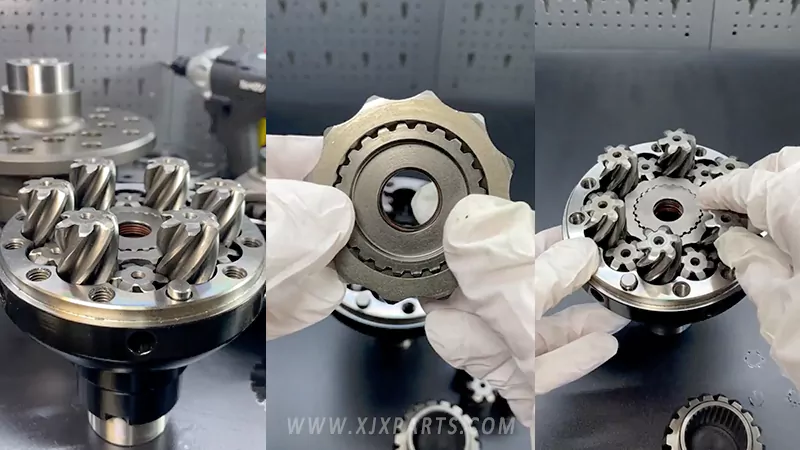
Torsen Limited-Slip Differential
Preload in a Torsen differential ensures that the system responds immediately to small torque differences, even when both wheels have similar traction. Preload applies a baseline axial pressure to the worm gears, keeping them engaged and ready to transmit torque as soon as a difference occurs. This prevents zero-torque lag, allowing the differential to react quickly when one wheel begins to slip.
It is important to note that preload does not create torque on its own. Its role is to maintain contact between the gears and prepare the differential for immediate engagement, which contributes to smoother operation and more predictable vehicle behavior.
Several misconceptions about Torsen differentials are common. First, many believe that the Torsen actively adds torque to the gripping wheel. In reality, it does not “push” torque to the wheel; it prevents the spinning wheel from wasting torque, allowing the available torque to flow to the wheel that can use it. Second, the bias ratio alone does not guarantee torque transfer if one wheel has zero traction—mechanical redistribution still requires the gripping wheel to be able to handle torque. Third, components that apply preload, such as washers or springs, are often mistaken for friction elements. Their purpose is only to maintain baseline axial engagement and ensure consistent responsiveness.
The Torsen differential offers several practical benefits. By mechanically converting axial forces into controlled resistance, it ensures torque is delivered where traction exists, improving acceleration, stability, and cornering performance. It does this smoothly and instantly, without electronic intervention. High-strength gears and precision machining allow the differential to handle high torque loads reliably. In everyday driving or aggressive maneuvers, a Torsen LSD provides consistent power delivery, reduces wheel spin, and enhances vehicle stability.

Conclusion

The Torsen limited-slip differential is a mechanically elegant solution to the limitations of open differentials. By relying on helical gear geometry, axial forces, and preload, it automatically biases torque toward the wheel with traction. Its purely mechanical nature ensures durability, instant responsiveness, and improved vehicle performance, making it a cornerstone of performance-oriented and off-road drivetrains.

Looking for high-quality Torsen limited-slip differentials? XJXPARTS is a professional factory with over 20 years of experience in designing and manufacturing LSDs. We offer OEM and custom solutions to meet your specific vehicle requirements. Contact us today to discuss your project and get a tailored solution directly from the manufacturer.

Shopping Cart