
When you’re tackling rugged trails, crawling over rocks, or dealing with slippery snow or mud, one thing becomes clear fast: traction is everything. A good set of tires can only get you so far. If you’re serious about off-road performance, upgrading your differential with a locking system is essential. But with so many options out there, many drivers find themselves asking the same question: Should I go with an eLocker or an air locker?
This article breaks down what these two systems are, how they work, what makes them different, and—most importantly—how to choose the one that best fits your vehicle and driving style.

What Is a Differential Locker?
A differential locker is a device that locks the left and right wheels on an axle together, forcing them to rotate at the same speed. In standard differentials, wheels can rotate at different speeds—great for cornering on pavement but a liability when you’re off-road and one tire loses traction.
Lockers fix this by eliminating wheel speed differences, ensuring that torque is evenly distributed to both wheels. That means you can keep moving forward even if one wheel is in the air or stuck in mud.
What Is an eLocker?
An eLocker is an electronically controlled differential locker. It uses an internal electromagnet to engage a mechanical locking mechanism inside the differential. When the driver flips a switch in the cabin, the system activates instantly.

How It Works
Inside the differential housing, the eLocker contains a set of gears and a locking ring. Under normal driving conditions, the differential operates like any open diff, allowing each wheel to spin at different speeds.
When the driver activates the locker via a dashboard switch, an electric current flows to the electromagnet. This magnet then pulls a locking pin or fork into place, causing the side gears to engage and the axle shafts to rotate together. Once engaged, the wheels are mechanically locked, and both receive equal torque.
When the switch is turned off, the magnet deactivates, the internal locking components disengage, and the differential returns to normal operation.
Key Features of eLockers:
- Electromagnetic activation — no air compressors or hoses.
- Simple installation — fewer components, cleaner setup.
- Minimal maintenance — fewer moving parts means less can go wrong.
- Instant response — lock or unlock with the push of a button.
eLockers are ideal for drivers who want reliable, easy-to-use traction assistance without adding a lot of complexity to their vehicle. They’re especially attractive for newer off-roaders or those who daily-drive their rigs.
What Is an Air Locker?
An air locker is a pneumatically controlled differential locker. It uses compressed air to engage a mechanical locking mechanism inside the differential. When the driver flips a switch, an onboard compressor sends air to activate the system instantly.
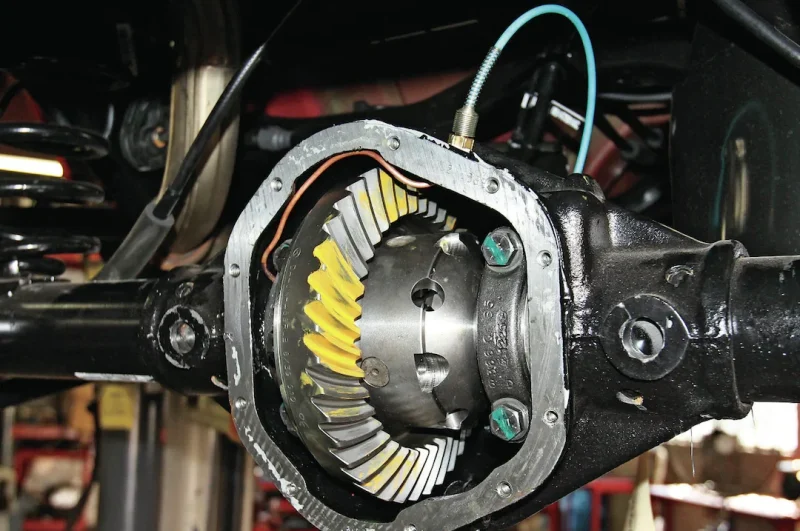
How It Works
Inside the differential housing, the air locker features gears and a locking collar. Under normal conditions, it functions like an open diff, allowing wheels to turn at different speeds.
When the driver activates the locker, compressed air pushes a piston that slides the locking collar into place. This locks the side gears together, forcing both axle shafts to rotate as one and delivering equal torque to each wheel.
When the switch is turned off, air pressure releases, the collar disengages, and the differential returns to normal operation.
Key Features of eLockers:
- Pneumatic activation — powered by onboard air system.
- Strong engagement — reliable locking under high loads.
- Proven off-road performance — trusted in extreme conditions.
- Selectable on demand — engage or disengage anytime via switch.
Air lockers are perfect for serious off-roaders who need maximum traction and durability in challenging terrain.
eLocker vs. Air Locker: Key Differences
While both eLockers and air lockers serve the same purpose — locking the differential for improved traction — they differ in how they operate, the components required, and their ideal applications. The table below highlights the main differences between the two systems for a quick and clear comparison.
| Feature | eLocker | Air Locker |
|---|---|---|
| Activation | Electromagnetic | Pneumatic (compressed air) |
| Components Required | Wiring harness, switch | Compressor, air lines, solenoid, switch |
| Installation | Simpler | More complex |
| Maintenance | Low | Higher (more parts to check) |
| Engagement Speed | Instant | Slight delay (compressor-dependent) |
| System Complexity | Low | High |
| Price (All-In) | Generally lower | Typically higher |
| Off-Road Suitability | Great for moderate use | Excellent for hardcore use |
Choosing the Right Locker for Your Setup
Daily Driver with Occasional Trails
- Recommendation: eLocker
- Why: It’s low-maintenance, clean to install, and user-friendly. Perfect for someone who hits trails a few times a year but needs day-to-day drivability.
Weekend Off-Road Enthusiast
- Recommendation: Either option
- Why: If you want plug-and-play simplicity, go eLocker. If you plan to build out your rig with onboard air anyway, an air locker can add value.
Serious Overlander or Rock Crawler
- Recommendation: Air Locker
- Why: The ability to control locking under extreme stress, plus integration with onboard air systems, makes air lockers the better fit for advanced use.
Installation Considerations
When it comes to installation, there’s no contest: eLockers are easier to install. With fewer components and no need for routing air lines, they can often be installed in a single afternoon.
Air lockers, by contrast, require careful planning. You’ll need space for a compressor, proper wiring, leak-free air line routing, and possibly more frequent post-installation checks. However, for experienced builders, the added complexity can be worth the performance gains.
| Installation Factor | eLocker | Air Locker |
|---|---|---|
| Time Required | Shorter (3–5 hours) | Longer (6–10+ hours) |
| Parts to Install | Few | Many |
| DIY Friendly | Yes | Not recommended |
| Post-Install Tuning | Minimal | Possible adjustments |
Conclusion
Whether you go with an eLocker or an air locker, the key is choosing a system that matches your needs. If you’re after simplicity, ease of use, and minimal maintenance, an eLocker makes a lot of sense. If you demand peak performance in punishing conditions and don’t mind a more involved setup, air lockers might be your best bet.
The right locker can transform your rig’s capabilities. It’s not just about getting unstuck—it’s about pushing boundaries, exploring confidently, and knowing your vehicle will respond when the terrain turns hostile. Make the right call, and your locker won’t just be a tool. It’ll be your trail insurance.
