
Cable-actuated differential lockers have long been favored in utility and off-road applications due to their mechanical simplicity and cost efficiency. However, the growing demand for integration-ready, low-maintenance, and high-precision drivetrain components is reshaping the market landscape. This paper reviews the working principle, design characteristics, and typical use cases of cable-actuated lockers, followed by a comparative analysis with electronically actuated alternatives currently adopted by OEMs and Tier 1 suppliers.
Differential lockers are critical components in traction control, particularly in off-road vehicles and commercial platforms operating under variable grip conditions. Among the available types, the cable-actuated locker represents a purely mechanical solution, designed to function independently of electronic or pneumatic subsystems. Its relevance persists in certain market segments; however, with the increasing electrification and modularization of vehicular systems, the limitations of cable-based actuation become more evident. This article explores these issues in depth from a systems engineering perspective.
Structural Design and Actuation Principle
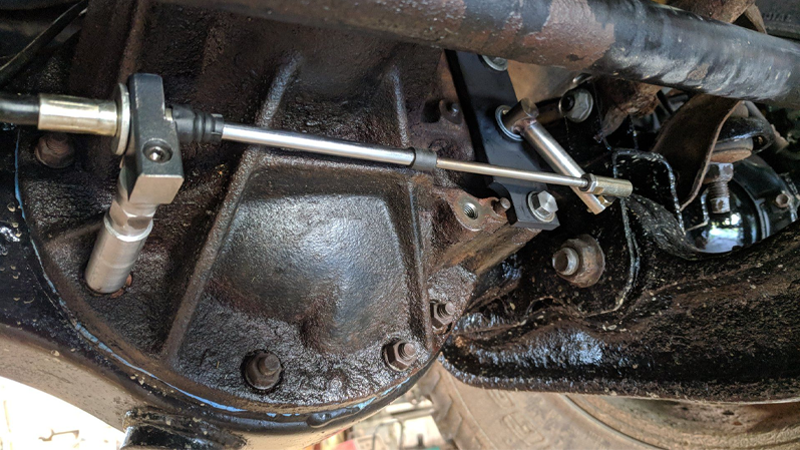
The cable-actuated locker is characterized by a manually operated mechanical control system. A stainless-steel cable, housed in a sheath, connects a cockpit-mounted lever to a mechanical engagement mechanism housed within the differential carrier. Upon actuation, the cable translates linear motion to rotate or slide an engagement collar, effectively locking the side gears and synchronizing axle shaft speeds.
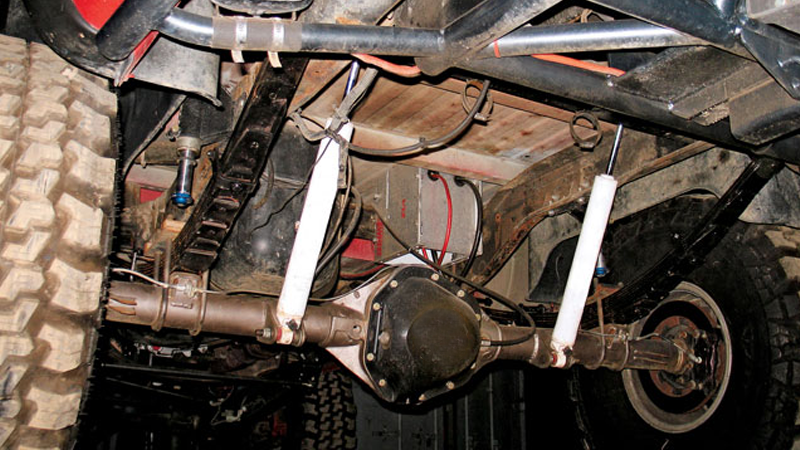
Because the actuation is fully mechanical, it is not subject to voltage fluctuations or compressor failures. However, its effectiveness relies heavily on precise cable routing, physical effort at the lever, and mechanical condition of the actuator interface. In heavy-duty applications, engagement may be delayed or partially effective due to tension loss or debris accumulation in the cable path.
Manufacturing and Integration Considerations
From a manufacturing standpoint, cable-actuated lockers offer simplicity and relatively low BOM costs. They do not require control modules, wiring harnesses, or compressed air systems, which is advantageous in budget-sensitive applications or retrofit markets. However, the mechanical linkage introduces constraints on cabin layout, routing geometry, and overall system packaging. Furthermore, during installation, vehicle-specific adaptations such as custom brackets or interior modifications are often required.
In modern OEM integration, these factors pose serious challenges. Vehicle platforms increasingly demand subsystems that support diagnostic feedback, electronic control unit (ECU) communication, and minimal physical intervention. The cable-actuated locker, by design, lacks digital interface capability, rendering it incompatible with advanced traction management systems and vehicle network architectures.
Operational Limitations in Field Use
While cable-actuated lockers have proven reliable in many field conditions, their mechanical nature inherently limits responsiveness and operational consistency. For example, in scenarios involving axle wind-up, uneven suspension articulation, or thermal expansion, the cable system may fail to fully engage or disengage, requiring manual correction. Moreover, the physical actuation force increases under drivetrain load, which may introduce safety risks or driver distraction in demanding terrain.
Routine maintenance is also a concern. Cables are subject to corrosion, mechanical fatigue, and sheath deformation over time. In high-dust or moisture-prone environments, these effects are accelerated, leading to engagement failures or false positives—conditions unacceptable in critical applications such as search & rescue, military, or high-speed logistics support vehicles.
The Rise of Electric Lockers
In contrast, the electronically actuated locker addresses many of these engineering limitations. Designed to operate via a switch, relay, or ECU command, the electric locker provides consistent engagement response under all load conditions. Modern designs utilize compact, high-torque actuators that require minimal current and integrate seamlessly with vehicle electronic systems. More importantly, electric lockers eliminate the need for mechanical routing, enabling greater flexibility in vehicle layout and reduced installation variability.
Conclusion
Cable-actuated lockers maintain relevance in specific niche segments, particularly in legacy platforms, recreational off-road builds, or cost-constrained fleets. Their mechanical design ensures independence from complex subsystems and offers reasonable reliability when maintained properly.
However, for forward-looking vehicle programs seeking integration readiness, reduced assembly time, and enhanced operational consistency, electric lockers represent a superior solution. They align with modern vehicle architecture trends and offer the scalability, modularity, and driver experience that B2B clients now expect.
Our company offers a series of electric differential lockers that meet these criteria. Engineered for consistent performance and simplified installation, our solutions are suitable for OEMs, axle manufacturers, and retrofit kit providers aiming to modernize their drivetrain offerings without overcomplicating system design.
We welcome collaboration with manufacturers and distributors seeking long-term, scalable locker solutions tailored for today’s mobility demands.
