
Understanding how a clutch-type LSD works, why it remains the gold standard for many performance applications, and how to maintain it is essential for any automotive enthusiast or fleet operator looking to optimize vehicle dynamics.
The Fundamental Problem of the Open Differential
To appreciate the clutch-type LSD, one must first understand the limitations of the “open” differential. When a vehicle enters a corner, the outer wheel travels a longer path than the inner wheel. The differential allows this speed variance so the tires don’t scrub or skip.
However, the open differential follows the path of least resistance. If one wheel is on ice or lifted in the air during hard cornering, the internal spider gears transfer all the engine’s torque to that wheel. The result? The wheel with no grip spins uselessly, while the wheel with traction receives zero torque. This is the primary catalyst for the development of limited-slip technology.
How a Clutch-Type LSD Operates: The Mechanics of Friction
The clutch-type LSD, often referred to as a mechanical plate LSD, solves the traction issue by using a series of friction discs and steel plates—collectively known as a clutch pack. These packs are situated between the side gears (which drive the axles) and the differential housing.
The Internal Components
- Pressure Rings: These house the spider gear cross-shafts and are responsible for expanding under load.
- Clutch Plates and Discs: Alternating layers where “plates” are keyed to the differential housing and “discs” are splined to the side gears.
- Pre-load Springs: These provide a baseline level of friction even when the vehicle is at a standstill or under very low load.
The Locking Mechanism
The genius of the clutch-type LSD lies in its load-sensing nature. When torque is applied through the driveshaft, the cross-shaft inside the differential pushes against the ramps in the pressure rings. This outward movement compresses the clutch packs.
As the plates are squeezed together, they create a mechanical bridge between the two half-shafts. This resistance prevents one wheel from spinning significantly faster than the other. Unlike a “locker” which forces both wheels to spin at the exact same speed regardless of conditions, the clutch-type LSD allows for some slip during tight maneuvers while ensuring that torque is always being sent to the wheel with the most grip.
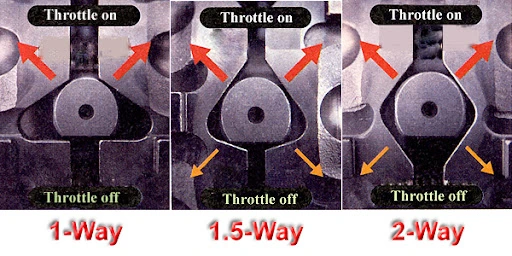
1-Way, 1.5-Way, and 2-Way: Understanding Cam Ramps
If you are sourcing components for specific driving disciplines, you will encounter the “Way” terminology. This refers to the shape of the cam ramps within the pressure rings, which dictates when the LSD activates.
1-Way LSD
A 1-way LSD only applies locking force under acceleration. When you lift off the throttle (deceleration), the cams return to a neutral position, allowing the differential to act like an open unit. This is ideal for front-wheel-drive cars to prevent understeer during turn-in.
2-Way LSD
A 2-way LSD applies locking force under both acceleration and deceleration. The ramps are symmetrical. This is the preferred setup for drifting, as it keeps the rear wheels locked together even when the driver lifts off the gas, allowing for more predictable slides.
1.5-Way LSD
The 1.5-way is the most popular “all-rounder” for track days and performance street cars. It provides full lock under acceleration and a partial, subtler lock under braking. This stabilizes the car during high-speed entry into corners without the aggressive “push” associated with a full 2-way system.
Comparing Differential Technologies: The Case for Torsen and Geared Systems
While the clutch-type LSD is a traditional staple in motor racing, modern drivetrain engineering has seen a significant shift toward Torsen (Torque-Sensing) and geared limited-slip differentials. For many drivers and fleet operators, geared systems offer several distinct advantages that make them a superior choice for both performance and daily utility.
1. Maintenance-Free Reliability
The most significant benefit of a Torsen or geared LSD is the lack of wear items. Unlike clutch-type units, which rely on friction discs that eventually thin out and require replacement, a geared LSD uses a complex arrangement of worm gears or spur gears. There are no plates to wear down and no “breakaway torque” to lose over time. For a vehicle owner, this means the differential performs the same on day 1,000 as it did on day one, without the need for expensive rebuilds.
2. No Need for Special Friction Modifiers
Clutch-type differentials are notoriously sensitive to fluid chemistry. They often require specific friction modifiers to prevent “chatter” or “shudder” during low-speed turns. Geared differentials, however, typically operate flawlessly with standard high-quality gear oil. This simplifies maintenance schedules and reduces the risk of mechanical noise or component failure due to incorrect fluid additives.
3. Progressive and Seamless Torque Transfer
While clutch-type units can sometimes feel “aggressive” or “binary” when they lock up, a Torsen-style differential is purely torque-sensing. It constantly and infinitely redistributes power to the wheel with more grip based on the input torque. This results in a much smoother driving experience, particularly in high-performance street cars or AWD vehicles, where seamless transitions are vital for stability and steering feel.
4. Precision Engineering and Durability
Because geared LSDs rely on the geometry of the gears themselves to manage traction, they are often perceived as more “elegant” mechanical solutions. They generate less heat than friction-based systems under prolonged use, making them an excellent choice for endurance applications where consistent performance is a priority.
Technical Comparison: Geared (Torsen) vs. Clutch-Type LSD
| Feature | Geared / Torsen LSD | Clutch-Type LSD |
|---|---|---|
|
Wear Mechanism |
Negligible (Solid Gears) |
High (Friction Discs Wear Out) |
|
Maintenance |
Fit and Forget |
Requires Periodic Rebuilds |
|
Oil Requirement |
Standard Gear Oil |
Specialized Oil + Friction Modifiers |
|
Noise Level |
Silent Operation |
Potential Chattering/Groaning |
|
Engagement |
Smooth & Instantaneous |
Can Be Harsh or Abrupt |
|
Best For |
Street, Track Days, OEM Upgrades |
Dedicated Professional Drifting |
|
Longevity |
Lifespan of the Vehicle |
Limited by Friction Material |
Maintenance and Longevity: The Reality of Friction
Because a clutch-type LSD relies on friction, it is a “wear item.” Over tens of thousands of miles—or hundreds of laps—the friction material on the discs will eventually wear down. When this happens, the “breakaway torque” (the amount of force required to make the wheels spin at different speeds) decreases, and the unit begins to behave more like an open differential.
The Role of Friction Modifiers
To ensure longevity and smooth operation, these differentials require specific gear oil. Most manufacturers recommend a high-quality 75W-90 or 75W-140 gear oil infused with Friction Modifiers (FM).
Without the correct additives, the clutches may “chatter” or “shudder” during low-speed tight turns (like parking). This noise is the result of the plates sticking and releasing rapidly (stick-slip phenomenon). While chatter isn’t always damaging, it is an indicator that the lubrication isn’t optimized for the clutch material.
Installation Considerations and Technical Precision
- Backlash: The amount of play between the ring gear and the pinion gear.
- Carrier Pre-load: The tension placed on the bearings holding the differential in the housing.
- Tooth Pattern: Ensuring the gears mesh at the correct depth to prevent premature failure and whining noises.
For fleet operators or performance shops, sourcing units with high-quality metallurgy is the difference between a differential that lasts a season and one that lasts the life of the vehicle. High-carbon steel plates and precision-machined housings are non-negotiable for high-torque applications.
Troubleshooting Common Issues
- Excessive Noise: Usually caused by old oil or a lack of a friction modifier. A simple fluid flush often resolves this.
- Lack of Traction: If the car is “one-wheeling” under power, the clutch packs are likely worn beyond their service limit and require a rebuild.
- Overheating: Common in heavy-duty towing or endurance racing. This can lead to fluid breakdown. In these cases, an aftermarket differential cover with increased fluid capacity and cooling fins is recommended.
Summary
The clutch-type limited slip differential remains a pinnacle of mechanical engineering. It offers a level of control and tunability that electronic “brake-based” traction control systems simply cannot replicate. By mechanically managing torque at the source—the axles—it preserves brake life and provides a more visceral, connected driving experience.
Whether you are building a dedicated track car, restoring a classic muscle car, or maintaining a fleet of utility vehicles that face challenging terrain, understanding the nuances of the clutch pack LSD is the key to superior driveline performance.
Maintaining peak performance requires precision-engineered parts. As a specialized factory, XinJin Auto Parts provides high-quality drivetrain components and clutch-type LSD solutions designed for durability and performance. If you require expert manufacturing or bulk supplies, feel free to contact us to discuss your specific requirements.
