
Upgrading a 4×4 with a locking differential is one of the most transformative modifications a driver can invest in. It is the difference between spinning a single tire helplessly in the mud and crawling confidently over jagged rocks. However, for off-road workshops and performance mechanics, a differential lock installation is a high-stakes precision task. Unlike bolt-on accessories like light bars or roof racks, a “locker” integrates directly into the vehicle’s drivetrain.
Even a minor oversight during the installation process can lead to catastrophic mechanical failure, voided warranties, and a compromised reputation for the shop. To ensure peak performance and longevity, technicians must avoid the common pitfalls that plague differential setups. Here are the five most critical installation mistakes that can ruin a 4×4 differential lock and how to prevent them.
1. Incorrect Backlash Adjustment and Gear Patterning
The most frequent cause of premature differential failure is improper gear mesh. When you install a new locker, you are often reusing the existing ring and pinion or installing a new set. The relationship between these two gears is defined by “backlash”—the small amount of clearance between the mating gear teeth.
If the backlash is too tight, the gears will generate excessive heat, leading to oil breakdown and eventual metal fatigue. If it is too loose, the gears will “slap” against each other under load, which can chip teeth or cause a total shear-off during high-torque off-road maneuvers.
🛠️ Professional Installation Tip
A professional installation must never rely on “feel.” Technicians must use a dial indicator to measure backlash to the thousandth of an inch, typically sticking within the manufacturer’s spec (often between 0.006 and 0.010 inches).
Furthermore, applying gear marking compound to check the “contact pattern” is non-negotiable. To ensure your gear mesh is perfect before sealing the housing, you should follow this expert guide on reading tooth contact of crown wheel and pinion. A centered heel-to-toe pattern is the only way to ensure the load is distributed evenly across the tooth surface.

2. Improper Bearing Preload
🛠️ Professional Installation Tip
Always use a housing spreader if the service manual calls for it, and never force shims in with a hammer in a way that could deform them. For shops, investing in a high-quality inch-pound torque wrench to measure rotational torque is essential. Getting the preload right ensures the locker remains rigid even when the vehicle is bouncing over uneven terrain.
3. Neglecting Air Line or Electrical Routing
For selectable lockers, such as pneumatic (air) or electromagnetic (E-lockers), the installation doesn’t end inside the pumpkin. One of the most common “rookie” mistakes occurs during the routing of the activation lines.
If an air line is routed too close to the exhaust pipe, it will melt. If a wire harness is left with too much slack near the driveshaft or suspension links, it will be snagged and ripped out during the first high-speed trail run. Even worse is failing to account for “axle wrap” or suspension travel; a line that looks fine on a lift may be pulled taut and snapped when the suspension fully articulates (drops down).
🛠️ Professional Installation Tip
Route all lines along the top of the axle housing and follow the path of existing brake lines whenever possible. Use heavy-duty zip ties and heat-shielding sleeves in high-temperature zones. Always cycle the suspension on a hoist or floor jacks to ensure there is enough “loop” in the line to accommodate the maximum travel of the shocks. A locker is useless if the signal to engage it never reaches the carrier.
4. Contamination and Poor Housing Sanitation
The inside of a differential housing is a precision environment. When a shop pulls out an old open differential to install a locker, the housing is often coated in old gear oil, metal fines, and road grime. Installing a high-performance locker into a dirty housing is a recipe for disaster.
Small metal particles left behind from previous wear can get trapped in the locking mechanism’s internal pins or gears. In the case of air lockers, even a tiny speck of grit can damage the O-rings or “bonded seals,” leading to internal air leaks that prevent the locker from staying engaged under pressure.
🛠️ Professional Installation Tip
The housing should be stripped and cleaned with brake cleaner until it is spotless. Inspection of the axle tubes is also vital; sand or mud often hides in the tubes and migrates into the center section once the vehicle starts moving. For air-operated systems, ensuring the air supply is filtered and dry is equally important to prevent internal corrosion of the locking piston.
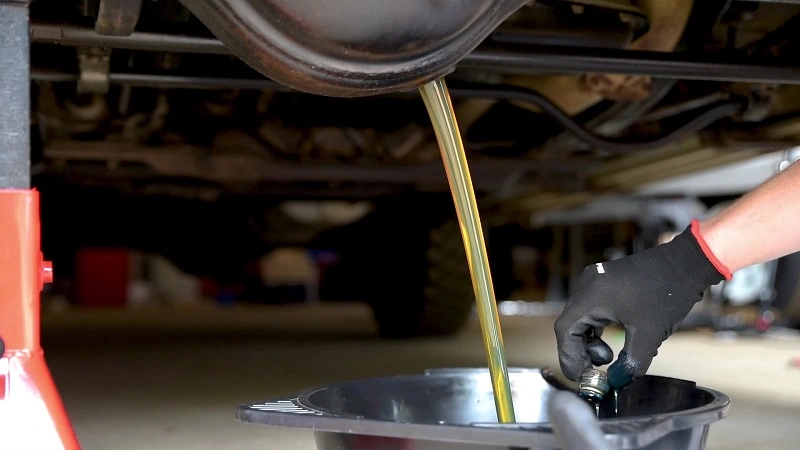
5. Inadequate "Break-In" Procedures and Fluid Choice
Many installers believe their job is done once the cover is bolted on and the oil is poured in. However, the first 500 miles are the most critical for the life of the locker and the gears. New bearings and gear sets “seat” during this time, creating microscopic heat cycles.
Furthermore, using the wrong gear oil can ruin specific types of lockers. While most mechanical lockers require a standard high-quality gear oil, some Limited Slip or hybrid lockers require friction modifiers. Using a “shock-heavy” synthetic oil in a system designed for mineral oil can sometimes affect the engagement speed or cause “chatter.”
🛠️ Professional Installation Tip
Educate the end-user on the break-in process: no heavy towing and no high-speed highway driving for the first 50 miles, followed by a complete fluid change at 500 miles. This initial oil change is vital because it flushes out the “break-in” metal dust that naturally occurs as the new components mate together. Always use the viscosity and API grade recommended by the locker manufacturer, not just what is available in the bulk drum.
The Importance of Precision in 4x4 Modification
A differential lock is an engineering marvel that allows a vehicle to overcome the laws of physics. However, its strength is entirely dependent on the quality of the installation. For a professional workshop, taking the extra time to measure backlash, clean the housing, and route lines securely is an investment in customer loyalty. When a customer is deep in the backcountry, their safety often depends on the integrity of that 1% of the vehicle’s drivetrain.
By avoiding these five mistakes, installers ensure that the locker provides maximum traction without noise, vibration, or harshness. Precision is the difference between a vehicle that conquers the trail and one that ends up on a flatbed trailer.
Quality Parts for Professional Builds
Reliable installations start with precision-engineered components. At XinJin Auto Parts, we are a dedicated factory specializing in high-performance 4×4 drivetrain solutions. Whether you are a workshop or a distributor, we provide robust differential locks designed for the toughest environments. Contact us today for wholesale inquiries or technical specifications.
