
All-wheel-drive systems have become central to modern vehicle performance, balancing traction, stability, and driver confidence across a wide range of conditions. Among the most discussed AWD technologies are Torsen and Haldex, two systems that differ significantly in design philosophy and driving behavior. Although both improve grip and safety, they represent two different interpretations of how power should be distributed between axles.
This article provides a deeply detailed, technically grounded, yet easy-to-read explanation of Torsen and Haldex, with a slightly stronger focus on the Torsen differential due to its mechanical purity and enduring reputation among enthusiasts and engineers. If you are evaluating AWD systems, comparing performance characteristics, or simply seeking a comprehensive understanding of these technologies, this guide will help clarify what sets them apart.
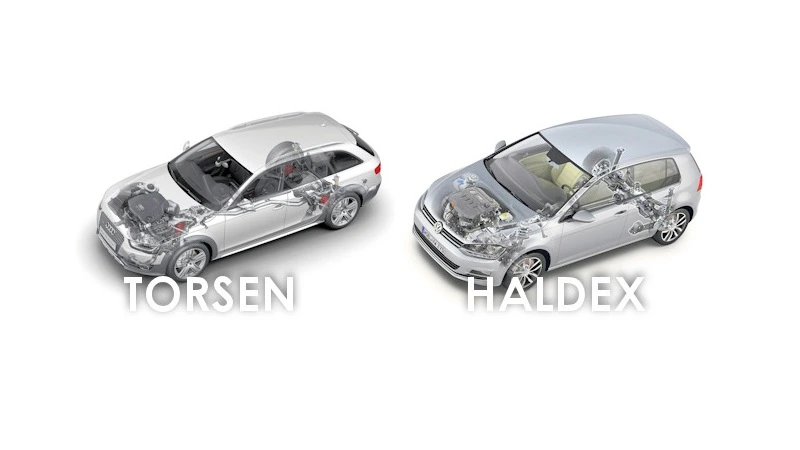
Torsen Differential Overview
The Torsen differential, known for its mechanical elegance, is a self-locking limited-slip differential used in many permanent AWD systems. The name “Torsen” derives from “torque-sensing,” describing the system’s ability to instantaneously detect wheel-slip and redistribute torque to the wheels with greater traction. Unlike clutch-based or electronically controlled systems, Torsen relies purely on its helical gear arrangement, meaning torque management happens without delay, software, or external inputs.
Torsen is widely regarded for its robustness, consistency, and real-time torque modulation. It excels in scenarios where drivers demand predictable handling, especially under performance or challenging road conditions. This is why many high-performance sedans and off-road vehicles have historically relied on Torsen-based drivetrains.
How a Torsen Differential Works
Inside a Torsen differential, sets of worm gears and worm wheels interact to create resistance when an axle or wheel begins to slip. This gear geometry allows the system to proportion torque based on available traction. When one wheel loses grip, the gears automatically send more torque to the wheel or axle that still has traction. All of this happens mechanically, without the need for sensors or hydraulic pressure.
Because of this design, Torsen offers:
Immediate response time
Continuous all-wheel drive instead of on-demand engagement
Exceptional durability due to its all-gear construction
Highly predictable torque transfer
Stable handling, especially under hard acceleration
These characteristics make Torsen especially desirable in vehicles focused on driver engagement or environments requiring strong traction consistency.
Haldex System Overview
In contrast to the mechanical nature of Torsen, the Haldex AWD system uses an electronically controlled multi-plate clutch to manage torque distribution between the front and rear axles. Most Haldex-based vehicles operate primarily as front-wheel drive, sending power to the rear only when wheel-slip occurs or when the system anticipates traction loss.
Haldex became widely used due to its compact size, efficiency, and compatibility with transverse engine layouts. As vehicle platforms became smaller and more fuel-efficient, Haldex offered manufacturers an AWD option without dramatically altering packaging or increasing drivetrain losses.
The system relies heavily on sensors—including wheel speed, throttle position, steering input, and traction control feedback—to engage the rear axle. Recent generations have significantly improved predictive engagement, making the system responsive and smooth during transitions.
How a Torsen Differential Works
At the heart of Haldex is a hydraulic clutch pack controlled by an electronic unit. When slip is detected at the front wheels, pressure builds in the clutch, engaging the rear axle. Depending on generation and calibration, Haldex can send a substantial amount of torque rearward, but it is always based on the system’s logic and sensor inputs.
Its notable strengths include:
Compact and lightweight design
Efficient fuel economy during normal driving
Quick reaction time due to advanced electronic control
Good integration with stability and traction systems
While Haldex is highly effective for everyday driving, it behaves very differently from a full-time system like Torsen and tends to feel more front-biased in many conditions.
Driving Characteristics
Torsen Driving Characteristics
A Torsen-equipped vehicle delivers a distinctly stable and balanced driving experience, especially noticeable during acceleration, cornering, and on uneven or loose surfaces. Because the system distributes torque continuously and mechanically, the driver receives immediate traction benefits without waiting for sensors or clutch engagement.
Key qualities include:
Instant torque transfer thanks to the mechanical gear interaction
Natural rear-engaged feel, enhancing corner exit confidence
Predictable and linear behavior, particularly under spirited driving
Superior consistency on mixed terrains such as gravel, snow, and mud
High stability when throttle input changes abruptly
This makes Torsen well suited for performance-oriented vehicles, off-road platforms, and any scenario where uninterrupted traction management is critical.
Haldex Driving Characteristics
Haldex-based vehicles generally feel more front-wheel-drive in normal operation, engaging the rear axle only when slip is detected or predicted. This creates a smoother, more efficiency-focused character suited for everyday commuting.
Common characteristics include:
Front-biased handling during relaxed acceleration
Smooth and often unnoticed transitions between FWD and AWD
Responsive rear engagement when roads get wet or slippery
Stable and predictable behavior for daily use
Less rear-driven dynamics compared to Torsen, except in aggressive calibrations
While modern Haldex systems have become increasingly quick to respond, the fundamental difference remains: the system is primarily reactive, whereas Torsen is inherently proactive.
Core Differences Between Torsen and Haldex
A structured comparison helps illustrate how these systems diverge fundamentally in philosophy and on-road behavior.
| Feature | Torsen | Haldex |
|---|---|---|
|
Drive Type |
Full-time mechanical AWD |
On-demand AWD with electronic clutch |
|
Primary Layout |
Longitudinal engines |
Transverse engines |
|
Response Time |
Instant (mechanical gears) |
Very quick but sensor-based |
|
Normal Torque Bias |
Balanced or rear-biased |
Primarily front-wheel drive |
|
Handling Feel |
Predictable, stable, performance-oriented |
Smooth, efficient, commuter-friendly |
|
Maintenance |
Minimal; gear oil changes |
Requires fluid, pump, and filter service |
|
Durability |
Extremely high due to gear design |
Dependent on clutch health and servicing |
|
Best Use Case |
Performance and off-road driving |
Compact vehicles and daily-use crossovers |
Which Is Better: Haldex or Torsen?
Determining which system is “better” depends heavily on driving style, vehicle type, and performance expectations. However, evaluating them through real-world scenarios helps clarify their strengths and limitations.
Performance Driving
For drivers who value sharp response, cornering confidence, and uninterrupted torque delivery, Torsen consistently stands out. Its mechanical design means it reacts instantly, providing torque where it is needed without the slight delay inherent in electronically controlled systems. Torsen-equipped cars typically feel more rear-engaged and dynamic, giving enthusiasts a more connected driving experience.
Haldex, while capable when tuned aggressively, still relies on predictive logic and clutch engagement. This makes it smoother and more controlled for everyday use but less inherently performance-focused.
Daily Commuting and Urban Driving
In normal city or highway driving, Haldex often feels more relaxed. Its FWD-biased layout improves efficiency, and most drivers will not notice the system activating unless traction becomes limited. This makes Haldex a strong fit for compact crossovers, small sedans, and vehicles designed around fuel economy and comfort.
Torsen-equipped vehicles, meanwhile, provide continuous AWD, which adds stability but cannot decouple for efficiency. Drivers who prioritize fuel savings may prefer the behavior of Haldex.
Traction in Harsh Conditions
On snow, ice, gravel, and uneven terrain, Torsen demonstrates superior consistency. Because it does not require slip to activate torque transfer, it maintains grip even before wheels lose traction. Off-road and rally-style driving benefit significantly from this full-time behavior.
Haldex can perform well in slippery environments once engaged, but because it typically waits for slip or sensor prediction, it may feel less immediate in the initial moment of traction loss.
Long-Term Durability and Maintenance
Torsen’s all-gear design means fewer wear components and lower long-term maintenance concerns. In contrast, Haldex requires fluid changes, filter cleaning, and pump health monitoring. While Haldex can be highly reliable when properly maintained, it demands more attention.
Vehicle Design and Packaging
Manufacturers choose systems based on platform architecture. Haldex’s compact design works perfectly with transverse engines, allowing small vehicles to offer AWD. Torsen, with its longitudinal layout, aligns with larger sedans, SUVs, and performance cars.
Overall Evaluation
While both systems have their place, Torsen generally appeals more to drivers who value consistency, durability, and mechanical engagement. Haldex shines in efficiency-oriented vehicles and provides excellent everyday stability. Choosing the “better” system depends on priorities, but for performance and demanding environments, Torsen holds a noticeable advantage.
Final Thoughts
Torsen and Haldex represent two fundamentally different approaches to all-wheel-drive technology. Torsen’s mechanical, full-time design provides unmatched immediacy and stability, making it a favorite among performance-oriented and off-road vehicles. Haldex offers a compact, efficient solution suited for modern transverse platforms and everyday driving.
Understanding how each system works allows drivers and enthusiasts to make informed decisions about vehicle selection, driving expectations, and long-term maintenance. Whether your priority is dynamic handling or daily practicality, knowing the strengths of each system ensures you choose the AWD technology that best fits your needs.
