
A limited slip differential (LSD) plays a crucial role in modern vehicle drivetrains, offering improved traction, stability, and performance under varying road conditions. While open differentials allow unrestricted wheel speed variation and locking differentials fully restrict it, LSDs strike the perfect balance between control and flexibility. For manufacturers, automotive distributors, and workshop professionals, understanding the construction, selection, and performance of LSDs is key to ensuring long-term reliability and efficiency.
This article explores everything from the core working principle to manufacturing quality, selection parameters, and installation best practices—helping professionals make informed decisions when sourcing or installing LSD systems.
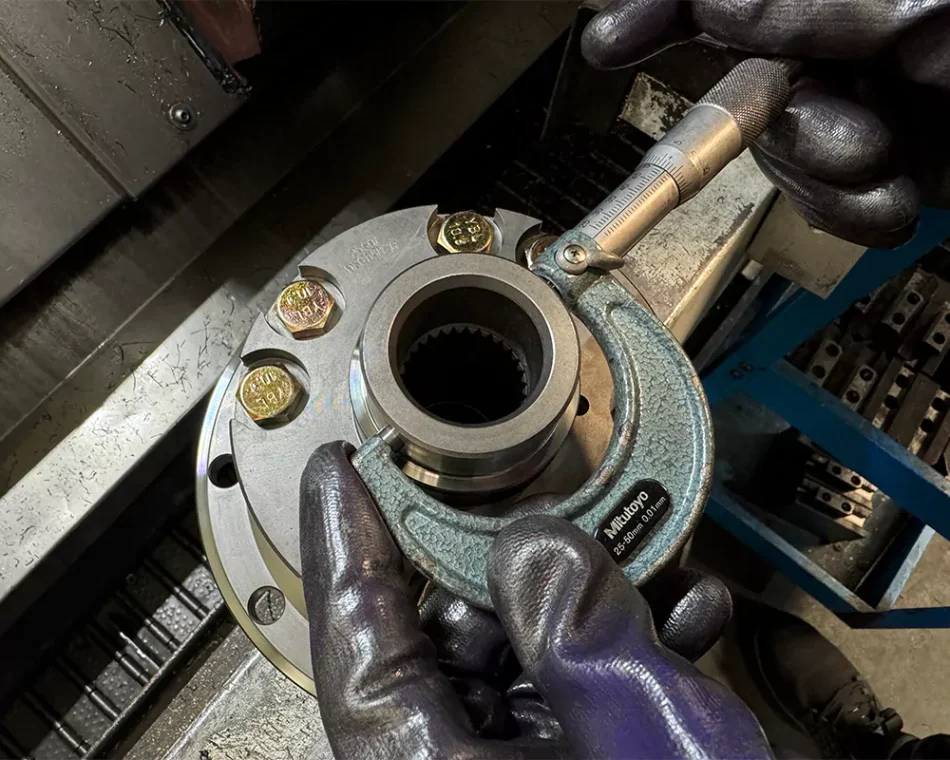
What Is a Limited Slip Differential
A limited slip differential is a mechanism designed to distribute torque between the drive wheels while limiting the speed difference between them. This means that when one wheel loses traction—such as on wet or uneven surfaces—the LSD automatically transfers torque to the wheel with better grip. The result is smoother acceleration, enhanced stability, and improved handling performance.
Unlike an open differential, which freely allows one wheel to spin without torque transfer, or a locking differential, which forces both wheels to rotate together, an LSD maintains a controlled balance between the two. This makes it ideal for everyday driving, off-road performance, and heavy-duty industrial use.
Types of Limited Slip Differentials
LSDs are categorized based on their internal mechanisms and torque distribution methods. The most common types include:
|
Type
|
Mechanism
|
Key Advantages
|
Typical Applications
|
|---|---|---|---|
|
Clutch-type LSD
|
Uses friction clutch packs to limit slip
|
Smooth torque transfer, adjustable preload
|
Passenger cars, light trucks
|
|
Helical gear LSD (Torsen type)
|
Employs worm gears and spur gears
|
No clutches to wear out, low maintenance
|
Performance vehicles, sports cars
|
|
Cone-type LSD
|
Uses conical friction surfaces
|
Compact design, responsive engagement
|
Compact SUVs, utility vehicles
|
|
Electronic LSD (eLSD)
|
Uses sensors and electronic control
|
Fast response, precise torque vectoring
|
Modern SUVs, premium cars
|
Each design offers specific advantages depending on the vehicle’s power output, weight distribution, and intended use. For example, a helical gear LSD provides smooth operation and is ideal for high-performance applications, while a clutch-type LSD offers tunable torque bias and remains popular in both factory and aftermarket setups.
Key Technical Parameters to Evaluate
When assessing an LSD for purchase or for in-house production, a decision should be driven by measurable parameters and testable performance, not only by marketing labels. Below are the most critical parameters, what they mean in practice, how to measure them, and common failure modes to watch for.
Torque Bias Ratio (TBR)
What is this: Torque Bias Ratio (sometimes called bias ratio) quantifies how much more torque the differential can send to the wheel with traction compared to the slipping wheel. It’s the fundamental number defining the LSD’s ability to maintain traction under asymmetric grip.
Why it matters: Higher TBR improves traction in low-grip situations (off-road, snowy roads, towing). However, very high bias ratios can increase driveline stress, reduce steering feel on pavement, and accelerate component wear.
How to verify:
- Torque bench test: Mount the LSD on a test rig that applies controlled torque to one output flange while measuring torque transmitted to the other flange. Plot transmitted torque vs. applied torque to determine bias behavior across the operating range.
- Dynamic (vehicle) validation: Instrumented road test or dynamometer test with wheel slip scenarios to confirm real-world behavior and drivability.
- Reporting: Supplier should provide torque transfer curves and repeatability data across multiple samples and temperatures.
Common failure or mismatch indicators:
- Claims of very high bias without bench test data.
- Inconsistent bias between units (manufacturing variability).
- Excessive heat generation at bias limits.
Preload and Friction Material
What it is: Preload is the initial torque required to cause slip—or how “tight” the LSD sits before it begins to transfer torque. Friction material refers to the composition and backing of clutch plates/cones.
Why it matters: Preload affects drivability: too light feels vague; too heavy causes binding and increases wear. Friction material determines life, temperature tolerance, and consistent engagement.
How to evaluate:
- Bench preload test: Measure static preload torque at ambient and elevated temperatures to confirm consistency with specification.
- Material characterization: Request data sheets for friction materials—coefficient of friction vs. temperature, wear rate, and compatibility with specific lubricants. Sintered, ceramic-inorganic, and specialty polymer compounds all behave differently under heat and shear.
- Endurance testing: Accelerated life cycles with repeated slip events to evaluate fade, wear depth, and friction coefficient retention.
Response Time
What it is: How quickly the LSD reacts to a change in wheel slip state—this can be milliseconds for eLSD or perceptible fractions of a second for mechanical clutch designs.
Why it matters: Fast response improves vehicle stability during sudden loss of grip; slow response can feel laggy and reduce effective traction in transient conditions.
How to measure:
- High-speed instrumentation: Apply step changes in input torque or wheel speed and record torque transfer using torque sensors and high-frequency data acquisition.
- Vehicle dynamics tests: Compare lap or traction recovery times in controlled slip events.
Practical considerations: eLSDs can deliver superior transient control but require integration with vehicle electronics and fail-safe strategies; mechanical LSDs are simpler but must be tuned for acceptable response.
Heat Dissipation
What it is: The LSD’s ability to shed heat generated by friction during torque transfer, including clutch pack heating, gear mesh heating, and bearing losses.
Why it matters: Excessive temperature leads to friction material fade, oil breakdown, and accelerated wear—particularly in towing, repeated launches, or demanding off-road use.
How to evaluate:
- Thermal soak and cycling tests: Run the unit under sustained slip conditions and measure internal temperatures, oil temperature rise, and time to reach steady-state.
- Lubricant compatibility testing: Verify oil performance (viscosity retention, anti-foaming, friction modifier stability) under expected thermal range.
- Design review: Check for thermal pathways—adequate housing mass, fins, oil circulation, or forced cooling in demanding applications.
Noise, Vibration, and Harshness (NVH)
What it is: NVH covers audible gear whine, rattle, and vibration transmitted into the vehicle structure during operation.
Why it matters: NVH impacts perceived quality for passenger vehicles and is critical for aftermarket acceptance. For commercial fleets, excessive vibration accelerates component fatigue and reduces customer satisfaction.
How to measure and control:
- Backlash and contact pattern inspection: Precise crown wheel and pinion setup (contact pattern, correct backlash) reduces whine and impact loads.
- NVH testing: Conduct in-house or third-party NVH analysis using accelerometers and microphones at specified RPM/load conditions; measure in dB(A) and compare to baseline references.
- Balance and alignment checks: Rotational balance and concentricity tolerances should be verified; imbalance contributes to vibration at specific RPMs.
Manufacturing and Quality Control
Producing a reliable limited slip differential requires strict adherence to precision engineering and quality assurance. The performance of the unit is directly tied to the accuracy of its internal components, particularly the crown wheel, pinion gears, clutch packs, and housing assembly.
Gear Cutting and Heat Treatment
The crown wheel and pinion must be cut using CNC machining and then heat-treated to achieve optimal hardness and wear resistance. Inconsistent heat treatment can lead to premature gear failure or noise under load.
Surface Finishing
Precision grinding and shot peening reduce surface roughness, minimize friction, and extend service life. These processes also help maintain consistent engagement behavior in clutch-type LSDs.
Noise and Vibration Testing
Every unit should undergo rotational balance and noise testing. Excessive gear backlash or poor alignment often leads to vibration, which can accelerate wear and reduce driver comfort.
Lubrication and Assembly
Proper lubrication is essential. Manufacturers often use specialized differential oil with additives that maintain friction balance and prevent metal-to-metal contact. During assembly, maintaining clean environments and correct torque specifications ensures consistent product quality.
Quality Verification
Before shipping, LSD units should pass torque testing, sealing checks, and dimensional verification. This ensures every component meets OEM and aftermarket requirements.
Installation and Common Mistakes
Even a high-quality LSD can fail prematurely if installed incorrectly. Below are some of the most common installation errors and how to avoid them:
|
Mistake
|
Consequence
|
Prevention
|
|---|---|---|
|
Incorrect preload or backlash
|
Excessive noise, premature wear
|
Always follow manufacturer torque specs
|
|
Incompatible lubricant
|
Clutch slip, overheating
|
Use LSD-compatible differential oil
|
|
Poor sealing during assembly
|
Oil leakage
|
Inspect O-rings and gasket surfaces
|
|
Unbalanced crown wheel installation
|
Vibration, gear damage
|
Use alignment tools during setup
|
|
Ignoring break-in procedure
|
Reduced lifespan
|
Follow recommended running-in guidelines
|
Proper installation requires precision tools and adherence to torque values. After assembly, technicians should verify engagement smoothness and ensure there is no abnormal resistance or metallic sound during rotation.
Maintenance and Troubleshooting
Routine inspection and maintenance are essential for maintaining consistent LSD performance.
- Oil Change: Replace the differential oil at regular intervals—typically every 30,000–50,000 km, or as specified by the manufacturer.
- Check for Leaks: Any oil residue near the housing or seals may indicate improper installation or gasket wear.
- Noise Inspection: Grinding or whining noises often point to gear misalignment or worn bearings.
- Torque Testing: Measuring output torque periodically helps evaluate clutch wear and engagement quality.
Timely maintenance not only extends component lifespan but also reduces long-term costs for fleet operators and distributors.
Evaluating Suppliers and Manufacturers
For distributors and B2B clients sourcing limited slip differentials or related components, supplier evaluation is just as critical as product testing. Consider the following criteria when selecting a manufacturer:
- Production Capabilities: Does the manufacturer perform gear cutting, heat treatment, and assembly in-house?
- Testing Equipment: Ensure they conduct torque bias, noise, and endurance testing.
- Customization Options: Some projects require tuning bias ratios or integrating specific crown wheel and pinion sets.
- Quality Certifications: Look for ISO or IATF 16949 standards compliance, which ensures consistent production quality.
- After-Sales Support: A professional manufacturer should provide installation guidance, material certificates, and technical consultation.
Collaborating with a reliable supplier like XJX Parts ensures consistent performance, high-quality components, and exceptional service. We specialize in limited slip differentials and related parts—including crown wheel and pinion gears, locking differentials, and axle assemblies—providing integrated solutions tailored to your specific requirements. For businesses seeking dependable products and professional support, contact us anytime to discuss your needs.
How to Choose the Right Limited Slip Differential
When deciding which LSD best suits your application, consider these practical steps:
- Define the Operating Environment: Street, off-road, or heavy-duty use all require different torque bias characteristics.
- Match the Differential Type to Vehicle Power: Higher torque outputs may benefit from helical or cone-type LSDs due to their durability.
- Assess Maintenance Requirements: Mechanical LSDs may require periodic friction plate servicing, while gear-based designs are nearly maintenance-free.
- Evaluate Noise and Comfort Levels: In passenger vehicles, smoother engagement is more desirable than aggressive torque locking.
- Compare Supplier Specifications: Review material grades, heat treatment processes, and gear tolerances before finalizing your choice.
A systematic evaluation not only ensures performance but also minimizes warranty claims and customer dissatisfaction.
Conclusion
The limited slip differential remains one of the most essential components for achieving balance between traction and drivability. For automotive professionals, understanding how to evaluate, install, and maintain LSD systems ensures both short-term reliability and long-term efficiency.
By focusing on manufacturing precision, correct installation, and proactive maintenance, businesses can offer their clients superior performance and durability—whether the application involves passenger vehicles, commercial trucks, or high-performance upgrades.
For companies seeking dependable and precisely engineered LSD assemblies, partnering with a trusted manufacturer of differentials, crown wheel and pinion gears, and related components provides the assurance of quality and performance that modern markets demand.
