
Getting more power is easy—putting it down on the road is the real challenge. Whether you’re cornering at speed, climbing loose terrain, or aiming for consistent lap times, traction is everything. That’s where the Limited Slip Differential (LSD) steps in.
This guide goes beyond the basics to help you unlock the full potential of your LSD. From advanced tuning strategies to real-world application tips, you’ll learn how to optimize your differential for your specific vehicle, driving style, and performance goals. If you’re ready to take control, let’s dive into the techniques that separate experienced drivers from the rest.
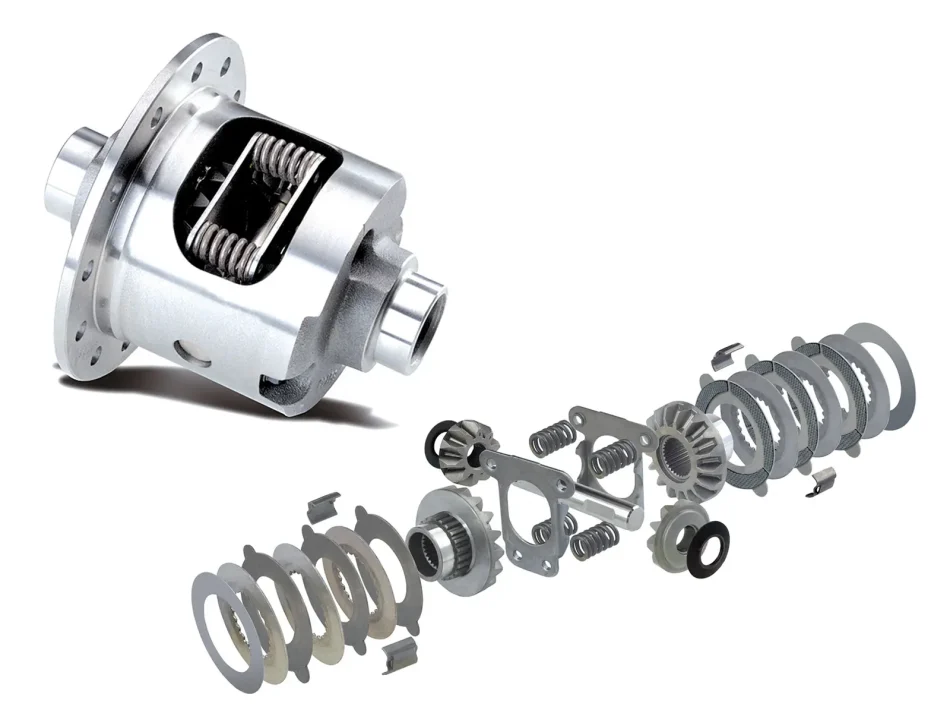
How a Limited Slip Differential Truly Works
Before diving into advanced techniques, it’s important to understand the foundation. While many drivers know what an LSD is in principle, understanding its inner mechanics and variations is essential for getting the most out of it in real-world scenarios.
Types of LSD:
Clutch-Type LSD
Clutch-type differentials use a series of friction plates to limit wheel slip. When one wheel begins to lose traction, the clutch plates engage and redirect torque to the wheel with better grip. These LSDs are highly adjustable and ideal for aggressive driving styles like drifting or track racing. However, they require regular maintenance due to friction surface wear.
Torsen (Torque-Sensing) LSD
Torsen LSDs utilize helical gears to detect resistance differences between wheels. They seamlessly distribute torque to the wheel with greater grip. Known for their smooth and predictable behavior, Torsen LSDs are a favorite among high-performance street cars and offer excellent handling in dry conditions.
Viscous LSD
These rely on a silicone-based fluid that becomes thicker under heat and pressure. As wheel speed differences increase, the fluid transfers torque to the wheel with traction. While not as responsive as clutch or Torsen types, viscous LSDs are commonly found in OEM applications due to their low cost and minimal maintenance needs.
| Type | Mechanism | Pros | Cons | Best Use Case |
|---|---|---|---|---|
|
Clutch-Type |
Friction plates |
Tunable, aggressive locking |
Requires maintenance |
Drifting, track |
|
Torsen |
Helical gears |
Smooth, low maintenance |
Can fail with no grip |
Street performance |
|
Viscous |
Fluid resistance |
Smooth, OEM-style comfort |
Slow to respond |
Daily driving, wet roads |
LSD vs. Open and Locked Differentials
Unlike an open differential, which sends torque to the wheel with the least resistance (often the slipping one), an LSD maintains traction by sending torque to both wheels as needed. Unlike a locked differential—which can be harsh in turns and damage driveline components on dry pavement—LSDs offer balanced performance, combining comfort with capability.
Getting the Most from Your LSD in Every Driving Scenario
A high-performance differential is only as effective as the conditions it’s tuned for. From rain-soaked streets to high-speed track corners and rugged terrain, your LSD can either become your best ally—or a misunderstood component. Here’s how to make it work for you.
Wet or Slippery Roads
LSDs significantly improve driving stability when road surfaces are wet, icy, or loose. In such conditions, throttle control becomes critical. Smooth application of power and steering inputs helps the LSD function effectively by maintaining consistent torque transfer without abrupt breakaways. Drivers should also consider tires with strong lateral grip and avoid aggressive downshifting that might destabilize traction.
High-Speed Cornering
At higher speeds, LSDs play a critical role in managing understeer or oversteer. When combined with a tuned suspension setup, they allow for sharper turn-in and improved corner exit speed. Small tweaks like adjusting tire pressure or adding negative camber can further enhance LSD response. For front-engine, rear-drive vehicles, a properly set LSD minimizes power loss through inside wheel spin.
Off-Road Terrain
In off-road conditions—gravel, mud, snow, or rock—an LSD helps maintain momentum over uneven terrain. When one wheel lifts or loses grip, the differential redirects torque to the grounded wheel, preventing stalls and allowing the vehicle to climb or descend more confidently. Drivers should use steady throttle inputs and avoid jerky motions that can stress the LSD and other driveline components.
| Driving Condition | LSD Behavior | Driving Tip |
|---|---|---|
|
Wet pavement |
Limits wheelspin |
Gentle throttle & smooth inputs |
|
Tight corners (track) |
Reduces understeer |
Tune suspension and tire pressure |
|
Off-road terrain |
Maintains momentum |
Avoid abrupt inputs |
Matching the Right LSD to Your Drivetrain Layout
Not all vehicles benefit equally from the same LSD setup. Front-, rear-, and all-wheel-drive platforms each have distinct requirements, and your choice of LSD must reflect the unique dynamics of your drivetrain layout.
Front-Wheel Drive (FWD)
LSDs in FWD vehicles help control torque steer and improve cornering. Clutch-type LSDs are ideal for competitive FWD racing, while viscous units provide smoother daily performance. For hot hatches or tuned front-drive cars, choosing the right LSD can transform both lap times and street drivability.
Rear-Wheel Drive (RWD)
Rear-drive platforms benefit significantly from LSDs, especially under heavy acceleration. For grip-focused driving, a Torsen LSD offers stable, linear torque distribution. In drifting or motorsports, higher lock-up clutch LSDs allow for more predictable slide initiation and exit control.
All-Wheel Drive (AWD)
AWD vehicles with multiple differentials (front, center, rear) can utilize LSDs for better balance and power distribution. Tuners may choose different LSD types for front vs. rear, based on handling goals. For example, a center Torsen LSD offers seamless power shifts between axles, while a rear clutch-type LSD improves rear traction during aggressive cornering.
Fine-Tuning LSD Behavior to Fit Your Driving Style
An LSD isn’t just a mechanical device—it’s part of your driving personality. Whether you chase clean racing lines or initiate controlled slides, understanding how to tune your LSD to your preferred style can transform your experience behind the wheel.
Drifting
Drifting requires LSDs that provide immediate and consistent lock-up. Increasing the preload and lock-up rate helps maintain continuous slides. Regular maintenance is crucial—frequent clutch engagement leads to heat buildup and wear. Using high-quality oil and checking for wear signs after every few events is recommended.
Track Racing
Track drivers benefit from an LSD tuned for consistency. Whether on tight circuits or high-speed courses, adjustability is key. Drivers often tailor lock-up levels and preload based on corner entry and exit behavior. LSD settings should complement suspension geometry and tire choice, with track testing used to fine-tune for best lap times.
Daily Driving with Performance Intentions
Drivers who enjoy spirited driving without sacrificing comfort can choose LSDs with mild characteristics. A helical or low lock-up clutch LSD offers smoother engagement, quieter operation, and minimal compromise in everyday scenarios. Routine inspection of differential oil ensures longevity and suppresses noise.
Advanced Adjustments and Long-Term Maintenance Tips
To keep your LSD functioning at peak performance, proactive tuning and upkeep are essential. This section explores how to precisely dial in your LSD’s behavior and maintain its reliability over the long haul.
Fine-Tuning Preload and Lock-Up
Performance-focused LSDs allow for detailed adjustment of preload (resistance before slip begins) and lock-up percentage (how much torque is transferred). Using shims or adjustable cam mechanisms, drivers can fine-tune response based on use case. Skidpad testing or controlled laps help validate changes.
Maintenance Best Practices
Fluid Management: Differential oil plays a crucial role in LSD longevity. For aggressive use, change oil more frequently than manufacturer intervals—every 10,000–15,000 miles is a good benchmark for track cars.
Noise and Vibration: Clunking or binding during low-speed turns may signal worn clutches or incorrect preload. Catching issues early prevents costly rebuilds.
Inspection Schedule: Include LSD checks in your regular maintenance schedule, especially after intense driving sessions.
Real-World Applications That Prove the Difference
Theoretical knowledge is one thing—real-world results are another. From motorsport professionals to grassroots tuners, here are some examples that demonstrate how the right LSD setup delivers measurable results.
Drift Champion Setup:
A competition drifter might use a 2-way clutch LSD with maximum lock-up for predictable slide control. Preload is tuned for quick response, and oil is changed after every few events.
Rally Car Example
Rally drivers often combine a front helical LSD with a rear clutch-type unit to manage varying grip levels across terrains. Adjustments are made between gravel and tarmac stages.
Customer Success Story
One tuner upgraded from an open differential to a 1.5-way LSD and reported a 1.2-second lap time improvement at their local circuit. They noted improved corner exit speed and confidence in trail braking.
Conclusion: Making LSD Work for You
Optimizing LSD usage is not just about selecting a unit off the shelf—it’s about aligning that choice with your vehicle’s layout, your performance goals, and the environments you drive in. With the right knowledge and attention to detail, an LSD becomes a true performance enhancer, delivering traction, control, and confidence in every turn.
If you’re considering an upgrade, our team can help you find the ideal solution—whether you’re building a competitive track machine, a capable off-road rig, or a responsive daily driver. We offer custom ratios, tailored advice, and global shipping to support your setup wherever you are.
