
When it comes to off-road performance, few upgrades matter as much as choosing the right crown wheel and pinion gear ratio. These gears directly affect how your vehicle handles torque, speed, and traction in rough terrain. Get it right, and your 4×4 will crawl up steep inclines like a beast. Get it wrong, and you’ll stall, spin, or burn through fuel for nothing.
What Are Crown Wheel and Pinion Gears?
The crown wheel and pinion are the gears inside your differential. The pinion is connected to the driveshaft, and it turns the crown wheel, which spins the axle shafts and wheels. The gear ratio is the number of times the pinion turns to rotate the crown wheel once. For example, a 4.10 ratio means the pinion rotates 4.1 times for every full turn of the crown wheel.
Why Gear Ratios Matter Off-Road
Off-roading isn’t about top speed—it’s about control, torque, and traction. Lower gear ratios (numerically higher, like 4.88 or 5.13) give you more torque to the wheels at lower speeds. That’s perfect for rock crawling, mud, or steep climbs. Higher gear ratios (numerically lower, like 3.73) are better for fuel economy and highway cruising but sacrifice torque.
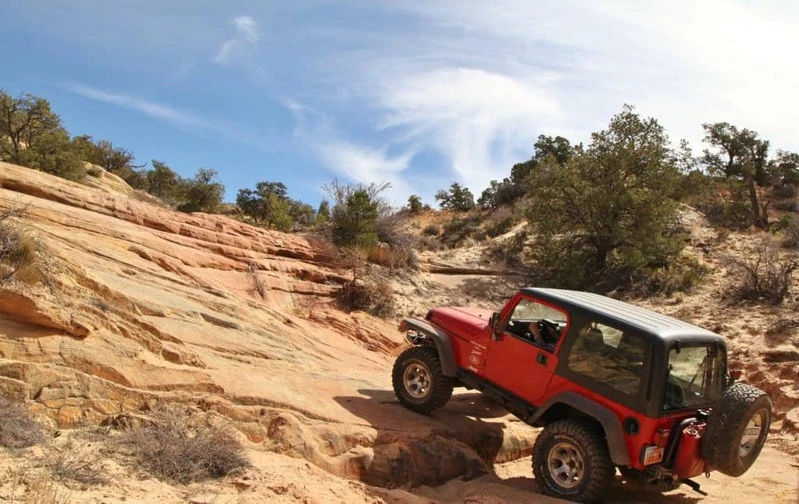
Best Crown Wheel and Pinion Gear Ratios for Off-Road
Choosing the right crown wheel and pinion ratio can make or break your off-road setup. Below are the most popular gear ratios used in off-road vehicles, broken down by driving style, tire size, and drivetrain compatibility.
4.10 Ratio
Best for: Light off-roading, daily driving mix
Ideal Tire Size: Up to 32”
Common Vehicles: Stock or mildly modified Jeep Wrangler, Toyota 4Runner, Ford Ranger
Why choose it:
4.10 is often considered a factory upgrade ratio. It offers a slight torque boost over standard 3.73 gears, which helps with mild trail work without killing your MPG. It’s great if you want better performance with slightly oversized tires, but still need highway comfort.
Pros:
Good all-around performance
Maintains highway fuel economy
Minimal drivetrain strain
Cons:
May feel underpowered with 33”+ tires
Not ideal for steep climbs or heavy loads
4.56 Gear Ratio
Best for: Moderate off-roading, overlanding, mixed terrain
Ideal Tire Size: 33”–35”
Common Vehicles: Jeep JK/JL, Toyota Tacoma, Ford Bronco (2”–3” lift)
Why choose it:
If you’ve upgraded to 33” or 35” tires, 4.56 is often the sweet spot. It brings your RPMs and power band back to stock-like behavior while giving you a solid crawl ratio for trails and rocks. It’s a popular regear option for dual-purpose rigs.
Pros:
Recovers torque lost to bigger tires
Balanced for both off-road and highway use
Compatible with many factory transmissions
Cons:
Still a compromise—doesn’t excel in hardcore off-road or pure highway
Fuel economy may dip slightly at cruising speeds
4.88 Gear Ratio
Best for: Serious trail use, rock crawling, heavy rigs
Ideal Tire Size: 35”–37”
Common Vehicles: Heavily modified Wranglers, Land Cruisers, full-size pickups
Why choose it:
4.88 gears deliver noticeably stronger low-end power, making technical terrain and steep ascents easier to handle. If you’re carrying heavy gear, armor, or towing, this ratio helps your engine breathe easier and your drivetrain work more efficiently.
Pros:
Great crawl ratio
Improves throttle response and hill control
Works well with automatic and manual transmissions
Cons:
Higher RPM at highway speeds
Not ideal if you spend most of your time on-road
5.13 and Up (e.g., 5.29, 5.38)
Best for: Hardcore crawling, big tire builds, extreme terrain
Ideal Tire Size: 37”–40”+
Common Vehicles: Custom rock crawlers, off-road-only rigs, competition builds
Why choose it:
These ultra-low ratios are for rigs that live off pavement. They provide maximum torque multiplication, which is essential for crawling rocks, powering through mud, or running slow technical trails. They’re also a must if you’ve added a lot of weight to the vehicle.
Pros:
Superior control at low speeds
Ideal for lockers, low-range transfer cases, and high-stall converters
Best performance for oversized tires and low-speed work
Cons:
High RPMs on the highway = lower fuel efficiency and more wear
Not suitable for daily drivers
Puts more stress on axles and driveline components
How to Choose the Right Ratio
Upgrading your crown wheel and pinion isn’t a one-size-fits-all decision. To choose the right gear ratio, you need to consider how your entire drivetrain works together. Here’s a more detailed breakdown:
1. Tire Size
Larger tires effectively raise your final drive ratio, meaning the engine has to work harder to turn them. This reduces torque at the wheels, hurts low-speed control, and can strain your transmission.
Stock Tires (29”–31”) → Gear ratios like 3.73 or 4.10 are usually fine.
33” Tires → You’ll want to regear to around 4.56 to maintain factory performance.
35”–37” Tires → 4.88 or 5.13 is often ideal for restoring torque and drivability.
👉 Rule of thumb: The bigger your tires, the lower (numerically higher) your gear ratio should be.
2. Vehicle Use
How you use your vehicle should drive your ratio choice:
Daily Driver with Occasional Trails
Aim for a middle ground like 4.10 or 4.56. You want improved torque but still decent fuel efficiency.Weekend Warrior / Trail Rig
Go lower—4.56 or 4.88 depending on tire size. This gives you better crawl control and power on uneven terrain.Hardcore Off-Roader or Rock Crawler
You’ll benefit from 5.13 or even lower. You’re not concerned about highway speed—you want slow, steady torque.
3. Transmission Type
Your transmission gears multiply torque differently depending on whether it’s automatic or manual, and how many speeds it has.
Old 3- or 4-speed automatics (like TH350 or 700R4): You’ll need deeper axle gears (like 4.88+) to make up for the taller transmission ratios.
Modern 8- or 10-speed automatics: These offer wide gear ranges, so you can run lower ratios without killing highway performance.
Manual transmissions: Depending on your first gear ratio, you may not need as deep of an axle gear. But for crawling, lower ratios still help.
4. Engine Output
High-horsepower engines can get away with taller (numerically lower) gears because they have enough power to push bigger tires. But if you’re running a stock V6 or small displacement four-cylinder, you’ll need more help from the axle gears.
5. Final Drive Goals
Think about what RPM you want at cruising speed. Too low a ratio, and your engine will scream on the highway. Too high, and it’ll lug off-road. Gear ratio calculators help you match tire size, axle ratio, and transmission to get ideal RPMs at 65–70 mph.
Final Thoughts
Upgrading your crown wheel and pinion gear ratio is one of the smartest moves you can make for off-road performance. Whether you’re hitting mountain trails or deep mud, the right setup gives your vehicle the power, control, and traction it needs to perform.
